



Why Injection Molds Are Costly: An Expert Guide to Pricing and Savings
If you’ve ever requested a quote for a plastic injection mold and been surprised by the price, you’re not alone. Molds can cost anywhere from under $10,000 to more than $100,000, depending on part complexity, production volume and design requirements.
This isn’t arbitrary pricing – a mold is a precision device that must withstand thousands of PSI, extreme heat, and hundreds of thousands of cycles while maintaining tolerances in the thousandths of an inch. The following guide explains what drives those costs and, more importantly, how you can manage and reduce them.
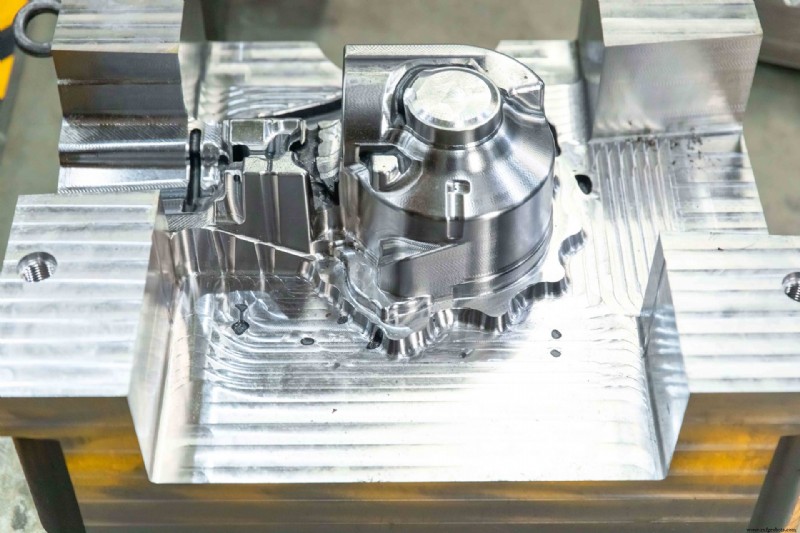
What Actually Affects Injection Mold Costs?
A mold is more than a raw metal block. It includes cooling channels, ejection systems, venting, alignment features, and often mechanical components such as slides and lifters. Each element adds design time, machine time and material expense.
Complexity and Accuracy of Mold Design
The more intricate the part, the more complex—and expensive—the mold. Undercuts, internal threads and snap‑fittings require additional mechanisms and can add 20–30% to the total cost. That’s why Design for Manufacturability (DFM) analysis before cutting steel is invaluable; changes made in CAD are far cheaper than rebuilding a mold after steel has been machined.
Highly Skilled Labor & Advanced Manufacturing (CNC & EDM)
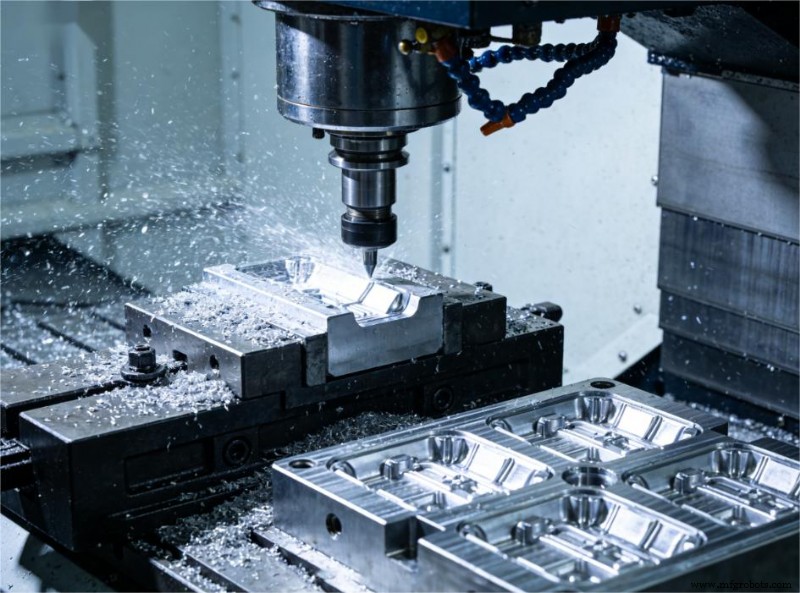
5‑axis CNC handles the primary cavity geometry but has physical limits. Electrical Discharge Machining (EDM) is required for deep ribs, sharp internal corners and fine detail. Wire EDM creates precise profiles for slides and inserts. Skilled operators then hand‑polish cavity surfaces to meet cosmetic or functional specifications. Add CAD/CAM programming, mold construction, fitting and trial‑shot testing, and you’ll see why labor is a significant portion of the cost.
Material Selection for Tools
Choosing the right tooling material depends on manufacturing volume. Buying too much up front is a cash drain; buying too little forces costly upgrades later. Below is a quick comparison of the most common tooling materials:
| Tooling Material | Upfront Cost | Machining | Expected Lifespan (Shots) | Best For |
|---|---|---|---|---|
| Aluminum | Low | Easy/Fast | Several thousand to tens of thousands | Prototyping, low‑volume |
| Pre‑hardened Steel (P20) | Medium‑High | Moderate | Hundreds of thousands | Mid‑volume production |
| Hardened Steel (H13) | Very High | Hard/Slow (EDM) | Millions+ | High‑volume, abrasive resins |
Number of Cavities and Production Volume
Single‑cavity molds have higher cost per part but lower upfront cost. Multi‑cavity molds increase the initial outlay but dramatically reduce the cost per part at scale. As volume rises, multi‑cavity molds become the most cost‑effective solution.
The Hidden Costs You Can’t Ignore
After steel is cut, design changes become expensive and sometimes impossible without a rebuild. Defects such as flash, sink marks and warpage—often the result of missed DFM considerations—are costly to correct in production. Preventing problems during design is far cheaper than fixing them after the fact.
Practical Tips for Cutting Injection Mold Costs
- Remove undercuts and simplify geometry. Redesign features to align with the mold’s draw direction whenever possible. Each undercut can save 20–30% on the required mechanism.
- Optimize wall thickness and draft angles. Uniform wall thickness (usually 0.5–4 mm) eliminates sink marks and warpage. Even 1–2° of draft on internal walls improves flow, reduces defects and extends tool life.
- Match volume to mold material. Use aluminum tooling for prototypes and early validation. Switch to P20 or H13 only after you’ve confirmed design and volume requirements.
- Perform a DFM analysis before cutting steel. Gate placement, ejection conflicts and weld line positions are inexpensive to correct in CAD but costly to fix in steel. DFM is the single largest pre‑production ROI.
How JTR Helps You Get the Right Mold at the Right Price
A trusted partner can make a significant difference in both upfront tooling costs and long‑term ROI. At JTR Machine, we combine DFM analysis, precision machining and deep manufacturing experience to help customers eliminate unnecessary expenses from the start.
JTR Machine is ISO 9001:2008 and TS 16949 certified (2015) and achieved IATF quality system transition audit certification in 2017. Our factory houses more than 70 precision CNC machines, ensuring the highest product quality.
Injection Molding Capabilities
| Service | Lead Time | Materials | Machines | Range | Tolerances | Guarantee |
|---|---|---|---|---|---|---|
| Injection Molding | 1‑4 weeks | Thermoplastics & select metals (Al & steel) | High‑performance, low scrap rate | Thermoplastic tooling, inserts, overmolding | ±0.0127 cm (±0.05 in) | Minimum 2,000 shots |
When you upload a file to JTR, you receive more than a price—our DFM review lets you compare tooling and per‑part costs across different volume scenarios, delivering the most value before any steel is committed.
Next Steps
While injection molds require a significant upfront investment, smart design decisions and a reliable manufacturing partner can dramatically improve your ROI. If you’re developing a new project, let JTR Machine review your design, optimize your tooling strategy and eliminate unnecessary expenditures before production begins. Contact us for a personalized DFM assessment.
FAQs
Q1: How much do injection molds cost?
A1: Costs range from under $10,000 to $100,000+ based on order quantity and part complexity. The most accurate estimate comes from a DFM review and quote.
Q2: What is the typical lifespan of an injection mold?
A2: JTR guarantees at least 2,000 shots, with lifespan scaling with material choice and maintenance quality.
Q3: How long does the injection molding process take?
A3: Typical lead time is 1‑4 weeks, depending on mold complexity and production volume.
Related Guides
Industrial Technology
- Miracle Imagination High Tech: Free DFM Tool for PCB Design Validation
- Understanding Surface Roughness: Key Factors & Proven Improvement Techniques
- MJF vs. FDM: A Comprehensive Comparison for 3D Printing Professionals
- MCL Celebrates 20 Years of Innovation, Quality, and Future‑Ready Solutions
- Prevent Electrical Fires: Upgrade Your Home Wiring Safely
- Top 13 Free Circuit Simulators: Trusted Tools for Accurate Design
- Unlock Precision and Efficiency: 5 Essential Benefits of 5-Axis CNC Machining
- Understanding Calibration Tolerance in Quality Control
- Intel’s Stacey Shulman Highlights Edge Insights, Cloud, and AI at MWC Barcelona
- AI Breakthrough: Predicts Pedestrian Movements for Safer Self‑Driving Cars