



CNC Aluminum vs Cast vs Forged: Which is Best for Motorcycle Parts?
Whether you’re at a bike meet or scrolling through Instagram, you’ll see billet triple clamps, CNC foot pegs, and custom levers everywhere. The question is: does CNC aluminum truly outperform cast or forged options, or is it just hype?
In reality, no single process is “the best.” The right choice hinges on your volume, budget, and performance goals.
The global motorcycle modification market reached $1.95 billion in 2026 and is projected to hit $4.24 billion by 2035—an almost 9% annual growth rate. That’s a growing number of riders and builders demanding superior parts.
In this article, we’ll break down cast vs forged vs CNC billet motorcycle parts in plain language so you can pick the process that fits your project.
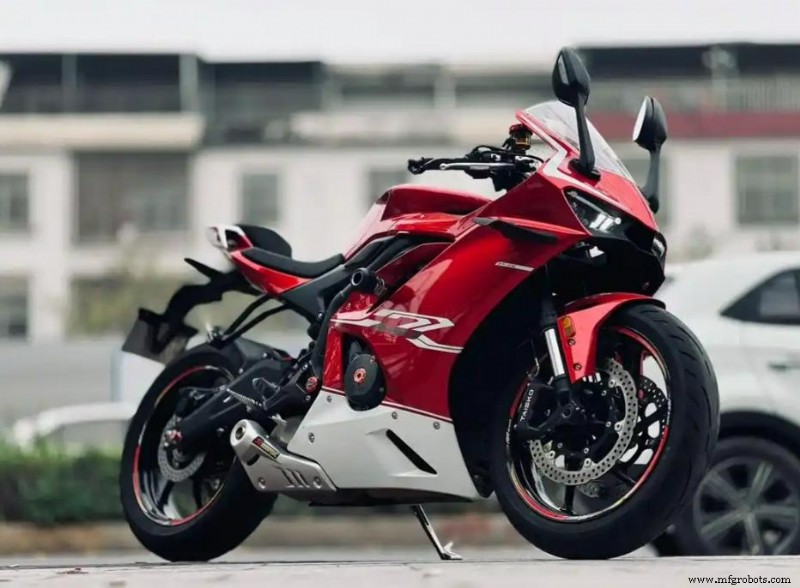
How Each Process Works
Before comparing them, let’s briefly outline how each method produces a motorcycle part.
Casting — Pouring Metal into a Mold
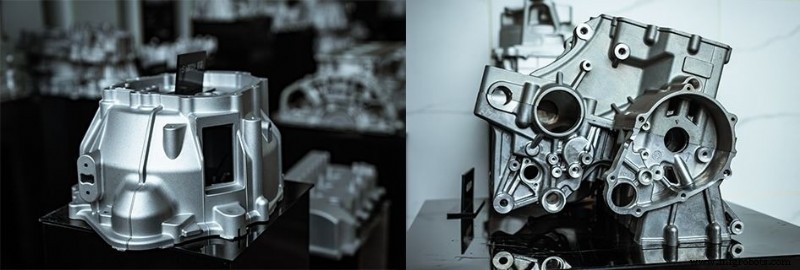
Casting is the oldest and simplest technique. Metal is melted, poured into a mold, and allowed to solidify. Once cooled, the part is removed.
Variations include die casting (high‑pressure forced fill), gravity casting (gravity alone), and low‑pressure casting (controlled pressure for even fill).
For motorcycle applications, casting is common for engine cases, stock wheels, entry‑level brake calipers, and various brackets and covers—any part that benefits from rapid, inexpensive high‑volume production.
Forging — Shaping Metal Under Extreme Pressure
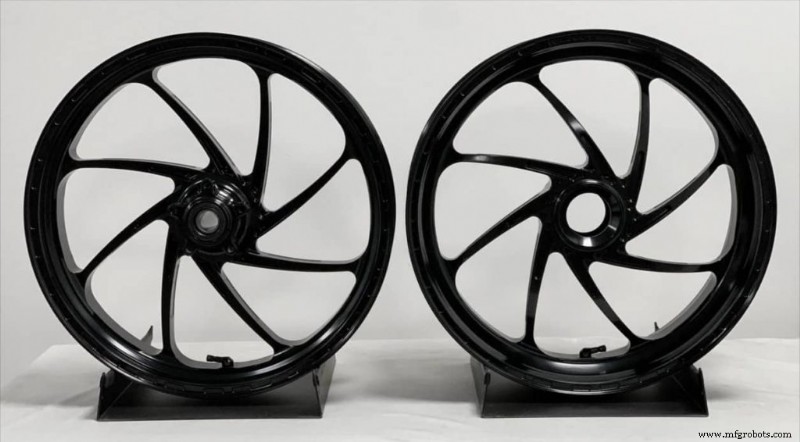
Forging differs dramatically. Instead of melting, a solid billet is heated until pliable and then compressed between dies under extreme pressure. The metal flows into the die cavity, aligning its grain structure with the part’s geometry.
This grain flow is the key advantage: it produces components that are significantly stronger along the load paths and eliminates internal voids or porosity.
Forging demands costly tooling, but for parts that endure high cyclic loads—connecting rods, crankshafts, racing wheels, high‑end calipers—the strength payoff is worth the investment.
JTR Machine offers comprehensive forging services, using computer‑controlled hydraulic presses up to 6,000 lb. They provide seamless rolled ring forging, open‑die forging, and press forging across stainless steel, carbon steel, alloy steel, and brass. With over 40 advanced CNC centers and ISO 9001 certification, JTR delivers precision finishes that meet exact specifications.
CNC Billet — Carving from a Solid Block
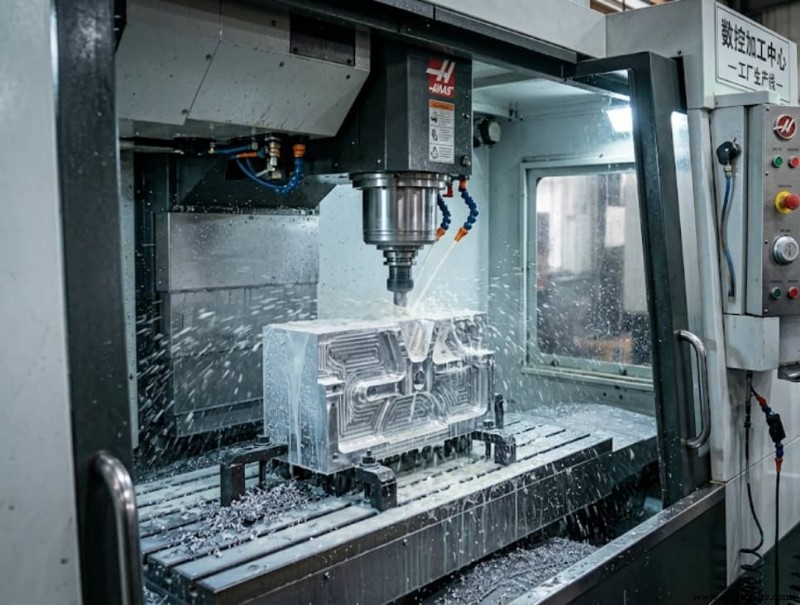
CNC machining starts with a dense, defect‑free billet—usually an extruded or rolled plate or bar that has undergone rigorous metallurgical controls. A computer‑controlled machine carves away everything that isn’t part of the final shape, much like sculpting marble with micron‑level precision.
The resulting part inherits the billet’s density and lack of internal defects, yielding excellent fatigue performance.
Trade‑off: material waste. A 10‑lb block can produce a 2‑lb part, leaving chips. That’s why billet parts typically cost more per unit than castings at high volumes.
Benefit: no hard tooling. A design change only requires a new CAD file, making CNC ideal for small batches, prototypes, and custom one‑offs where rapid iteration is essential.
JTR Machine specializes in precision CNC machining of aluminum 6061, brass, POM, PET, epoxy, and carbon fiber. Their capabilities include turning, milling, and combination operations, with finishes such as anodizing, sandblasting, and laser marking. Whether you need a single prototype or a production run, JTR’s ISO 9001‑certified facility guarantees consistent quality.
Head‑to‑Head Comparison
Below is a quick‑reference table that juxtaposes the three processes.
| Feature | Casting | Forging (± finishing) | CNC Billet |
|---|---|---|---|
| Tensile Strength | Low–medium (150–350 MPa) | High (400–600+ MPa) | Medium–high (300–550 MPa, varies by stock) |
| Fatigue Resistance | Low (porosity creates crack initiation sites) | Highest (continuous grain flow) | High (no internal voids) |
| Internal Defects | Prone to porosity and shrinkage voids | None | None |
| Design Flexibility | Mold‑limited; changes require new tooling | Moderate (shape constrained by die) | Extremely high (any CAD design) |
| Minimum Order Quantity (MOQ) | High (500–5,000+ pcs) | Medium–high (200–2,000+ pcs) | Low (1 pc up to production runs) |
| Unit Cost (Low Volume) | Very high (tooling amortization) | Very high (die + finishing) | Low–medium (no tooling) |
| Unit Cost (High Volume) | Very low | Low–medium | High (material + cycle time) |
| Lead Time (Prototype) | 30–60 days (tooling required) | 30–60 days (tooling required) | 7–15 days |
| Surface Finish | Moderate; may require secondary work | Good; usually requires CNC finishing | Excellent; ready for anodizing |
Let’s unpack a few key takeaways.
- Tensile Strength: Forged components often provide 10–20% higher tensile strength than equivalent cast grades due to grain alignment.
- Fatigue Resistance: Porosity in castings creates crack initiation sites. Forged parts exhibit higher fatigue strength and more predictable failure modes. Billet parts are also superior to cast but fall short of forging for the highest fatigue demands.
- Cost: CNC is not inherently expensive. For quantities under 200, CNC can be cheaper than casting because you avoid the tooling amortization. A typical casting mold may cost $5,000–$20,000 or more—spreading that over 100 parts adds $50–$200 per part. CNC eliminates tooling costs, making it economical for prototypes and small batches.
When to Use Each Process
Here’s a practical decision guide based on your specific needs.
Go with Casting When…
- High volumes (5,000+ parts per year)
- Complex geometry with internal cavities or thin walls
- Cost is the primary constraint
- The part does not bear extreme structural loads
Typical motorcycle parts: engine cases, covers, stock OEM wheels, non‑structural brackets and housings, entry‑level brake calipers. For example, engine cylinder blocks—filled with intricate cooling passages—are only viable through casting.
Go with Forging (± CNC finishing) When…
- High cyclic loads where fatigue is critical
- Maximum strength‑to‑weight ratio is required
- Production volume is medium to high (200–2,000+ pieces)
- Willingness to invest in tooling for long‑term runs
Typical motorcycle parts: connecting rods, crankshafts, racing wheels, high‑end brake calipers, suspension components, and triple clamps. Wiseco, a respected performance parts maker, notes that forged clutch components are lighter and exhibit superior mechanical properties compared to cast or billet alternatives.
Go with CNC Billet When…
- Prototypes or small batches (1–200 pieces)
- Design is still iterating and may change
- Premium aesthetics and flawless surface finish are desired
- Fast turnaround (7–15 days for samples)
- Building a custom brand with unique designs
Typical motorcycle parts: aftermarket foot pegs and levers, billet triple clamps, brake and clutch reservoirs, custom handlebar risers, oil filler caps, and any small‑batch custom component. CNC billet also allows branding flexibility—engraving logos, serial numbers, and selecting custom anodized colors—something casting and forging cannot match.
Hybrid Approach: Forged + CNC Finished
Many high‑quality motorcycle parts start forged and finish CNC. The forging creates a near‑net shape with optimal grain flow and no internal defects, while CNC machining adds precision—drilling, threading, flat surfaces, and aesthetic details.
This hybrid route delivers forging’s strength and CNC’s accuracy, often at a lower cost than machining a billet from scratch because less material is removed.
Common Misconceptions
Let’s debunk a few myths that persist.
- “CNC billet is always the strongest.” Strength depends on the starting material. A 6061 aluminum billet is strong, but a forged 7075 part will generally outperform it. Billet parts excel in fatigue performance due to the absence of internal defects.
- “Casting is garbage.” Modern casting—semi‑solid, low‑pressure, and improved simulation—has drastically reduced porosity. Contemporary cast aluminum chassis components exhibit fatigue performance that would have been impossible a decade ago.
- “Forging does not need CNC finishing.” Most forged parts are near‑net but still require CNC machining for mounting holes, mating surfaces, and threads. Even a forged connecting rod receives CNC‑machined bores.
- “CNC is only for rich people with small batches.” Outdated thinking. For under 200 pieces, CNC can be cheaper than casting when you factor in tooling costs, and it eliminates inventory risk. Many small‑batch manufacturers start with CNC, prove their product, and scale to casting or forging when volume justifies the tooling investment.
Conclusion
There’s no single “best” process. The optimal choice hinges on volume, budget, timeline, and performance requirements.
- Casting: Best for cost‑effective, complex parts in high volumes—engine cases, covers, non‑structural components.
- Forging: Ideal for high‑strength, fatigue‑critical parts—connecting rods, cranks, racing wheels, heavy‑load calipers.
- CNC Billet: Perfect for prototypes, small batches, custom parts, and premium branding—foot pegs, triple clamps, custom risers.
And don’t overlook the hybrid forged‑plus‑CNC approach—combining strength with precision.
Ask yourself: What am I actually building, and how many of them do I need to make? Answer that honestly, and the right process will reveal itself.
Ready to turn your design into reality? Whether you need a single prototype or a full production run, JTR Machine is ready to help. With over a decade of experience, 40+ advanced CNC centers, and ISO 9001 certification, we deliver precision parts that meet your exact specifications.
Upload your CAD file for a free DFM review and quote—or simply reach out to discuss your project. We respond within 24 hours.
Related Guides
Industrial Technology
- STK500: Your Trusted Solution for Safe AVR Microcontroller Programming
- Swanton Welding Powers Fulton County Hospital's Four-Story Office Addition
- 5 Proven Strategies for Retailers to Mitigate Shipping Market Volatility
- Building a Precise Voltage Divider with a Potentiometer
- AIaaS Demystified: The Definitive Guide to AI as a Service
- Best Practices for Positioning Cutouts Near Bends in Metal Fabrication
- Polyurethane: The Leading Choice for Superior Abrasion Resistance
- Enhance Fusion 360 Manufacturing Efficiency with Derived Operations
- Scientists Unveil 3D Holograms You Can Touch and Hear
- E3.series Electrical Projects: How to Create a Single‑Line Component View