



How Additive Manufacturing is Revolutionizing the Sporting Goods Industry
Published on October 27, 2021
Originally published on fastradius.com on October 27, 2021
While team‑sport participation fell in 2020, the rise of individual fitness activities—running, cycling, yoga—boosted demand for specialized gear. The sporting goods market reached a record $52.1 billion in 2021, driven largely by brands that cater to these niche athletes.
Today’s consumers expect gear that is lightweight, perfectly fitted, and high‑performance. Additive manufacturing (AM) delivers all three, enabling designers to craft parts that were once impossible to produce with conventional methods.
Why AM Matters in Sports Equipment
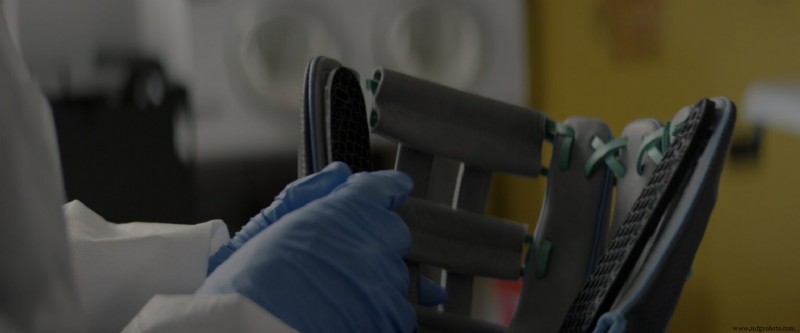
Traditional manufacturing forces a trade‑off between strength and weight. 3D printing eliminates this compromise by building complex lattice structures that retain structural integrity while shedding bulk. For example, Rawlings’ REV1X gloves use Carbon Digital Light Synthesis™ (DLS) to integrate lightweight, high‑strength inserts.
Beyond weight savings, AM allows bespoke customization. A helmet or shoe molded to an athlete’s exact measurements enhances comfort, performance, and safety.
Key AM Applications in Sporting Goods
Helmets
Custom‑fit helmets combine a strong lattice core with precise head contouring. This design not only reduces weight but also improves ventilation and impact absorption, directly translating to better player safety.
Mouthguards
Standard mouthguards often lack fit and protection. By 3D scanning a player’s dentition, manufacturers can print custom mouthguards that lock in place, delivering superior shock mitigation and reducing concussion risk.
Footwear
AM enables tailored insoles and midsole lattices that adapt to an athlete’s foot geometry. Adidas’ Futurecraft 4D shoe, printed with the Carbon DLS™ process, showcases how lattice design can fine‑tune cushioning, stability, and comfort for elite performance.
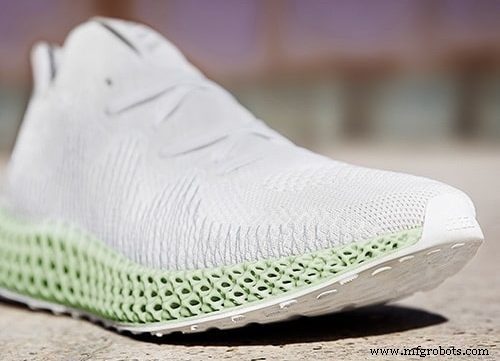 Adidas Futurecraft 4D printed using Carbon’s 3D printing process. Image provided by Carbon.
Paralympic Equipment
Prosthetics, wheelchairs, and custom sporting gear for athletes with disabilities benefit from AM’s ability to produce lightweight, strong, and highly personalized solutions—empowering athletes to compete at their best.
Getting Started with Additive Manufacturing
AM is poised to become a cornerstone of sports gear production. By partnering with a seasoned consumer‑goods manufacturer like SyBridge Technologies, companies can access our Cloud Manufacturing Platform™ and a team of designers, engineers, and advisors committed to quality and innovation.
Contact us today to explore how additive manufacturing can elevate your product line and give athletes a competitive edge.
Industrial Technology
- Traditional Metalworking: Proven Excellence in Modern Manufacturing
- Key Factors Influencing Diesel Generator Maintenance Frequency
- Boost Production Efficiency with Advanced CNC Machining Services
- How Additive Manufacturing Consolidates Parts to Cut Costs & Boost Performance
- Ficep 1003 DDVB VanGuard CNC Drill Line – Precision & Speed for Midwestern Welding
- Understanding Electric Circuits: Continuous Charge Flow and the Impact of Breaks
- How the Pandemic Reshaped Supply Chain Practices: Key Lessons & Future Strategies
- Revolutionary High-Tech Wood Cuts Building Temperatures by 10°C and Reduces Cooling Costs by 60%
- Cutting Manufacturing Overhead Costs: Proven Strategies & Smart Software
- When to Outsource PCB Assembly: A Strategic Guide for Modern Electronics