



Why Uniform Wall Thickness Is Crucial for Successful Injection Molding
Published on August 18, 2021
Originally published on fastradius.com on August 18, 2021
When you dissect a high‑quality plastic part, you’ll notice its walls are perfectly uniform. Achieving uniform wall thickness is one of the foundational rules of injection‑molding design— it can be the difference between a flawless component and one that fails prematurely. What exactly is uniform wall thickness, and why does it matter for production?
The Importance of Maintaining Uniform Wall Thickness
Uniform wall thickness means every wall of a part is the same thickness. This consistency brings a host of manufacturing advantages: it enhances part‑to‑part repeatability, shortens cycle times for both high‑ and low‑volume runs, eliminates costly rework, improves stress distribution, reduces material usage, and minimizes post‑production shrinkage.
Neglecting wall‑thickness uniformity can trigger a cascade of defects that waste time and resources:
- Warping — twists or bends caused by uneven shrinkage.
- Flow lines — visible ridges from variable flow rates during mold filling.
- Sink marks — craters that form when thicker sections cool too slowly.
- Short shots — missing sections when the molten plastic fails to fill the cavity.
- Gating challenges — uneven flow can block gates, leading to incomplete fills.
- Cooling rate issues — variable cooling times increase cycle duration and may produce unusable parts.
By rigorously enforcing uniform wall thickness, you preempt these problems and secure a smoother, more reliable production cycle.
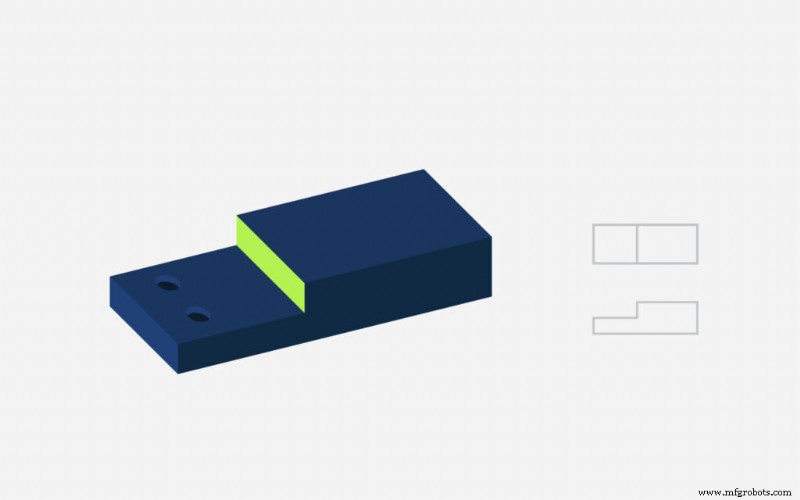 Variations in wall thickness can lead to sink marks, voids, and warping.
 How to Avoid Uneven Walls
Before you can guarantee even walls, you need to determine the optimal thickness for your part. The goal is to balance structural integrity with manufacturing efficiency. Here are industry‑accepted guidelines:
- General wall thickness should fall between 1.2 mm and 3 mm, though specific materials may warrant slight adjustments.
- Keep overall wall thickness below 5 mm to avoid extended cycle times and potential functional or aesthetic drawbacks.
- Adjacent walls should not differ by more than 40‑60 % of each other.
Thicker walls provide strength, but thinner walls— when uniform—offer multiple advantages: less material, lower cost, faster cycle times, reduced warping, and easier handling during shipping. A rule of thumb for transition zones is to allow a taper length of at least three times the change in thickness.
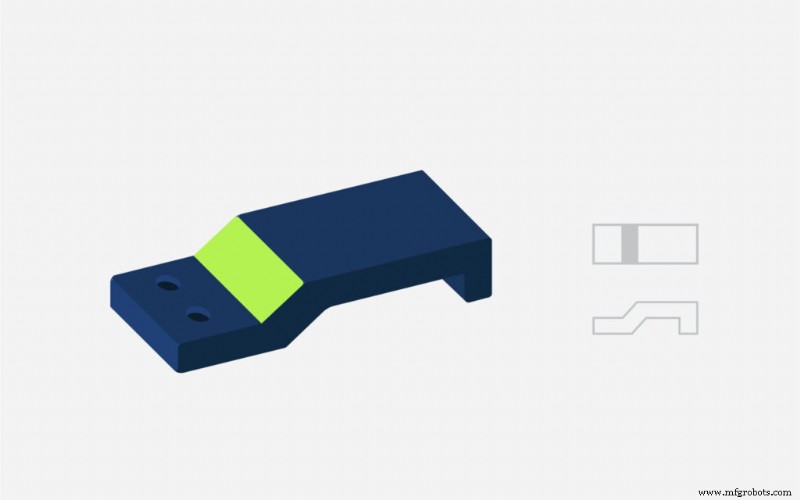 As a general rule, the length of the transition between sections with differing wall thickness should be 3x the change in wall thickness.
 Build Better Parts with SyBridge
Uniform wall thickness isn’t just a design nicety; it’s a critical factor that ensures consistent quality, reduces defects, and extends product life. At SyBridge, our experienced team guides you through every stage—from design and material selection to production and post‑production support—helping you achieve uniform walls and eliminate costly injection‑molding mistakes. Contact us today to start building high‑quality, cost‑effective components.
Industrial Technology
- Investment Casting: Key Advantages Over Wax Pattern Making
- Abrasive Cutting: Pros & Cons for Precision Metal Cutting
- Exploring the Spectrum of PCB Colors and Their Significance
- Exploring the Limits of AI: Capabilities, Scope, and Constraints
- Mastering G17, G18, and G19 Plane Selection for Ultra‑Smooth 5‑Axis CNC Machining
- Precision CAD Modeling: Streamline Manufacturing & Reduce Costs
- Master Precision Medical Machining: 8 Essential Techniques for Titanium, Cobalt‑Chrome, and Stainless Steel Parts
- Telescoping Stackers & Radial Conveyors: Durable Solutions for Heavy Material Handling
- How Businesses Are Harnessing Blockchain for the Next Digital Revolution
- DVIRC Launches Workforce Demand Study to Strengthen Manufacturing Talent Pipeline