



Maximizing Impact, Noise, and Shock Absorption with 3D‑Printed Lattice Structures
Published on August 19, 2021
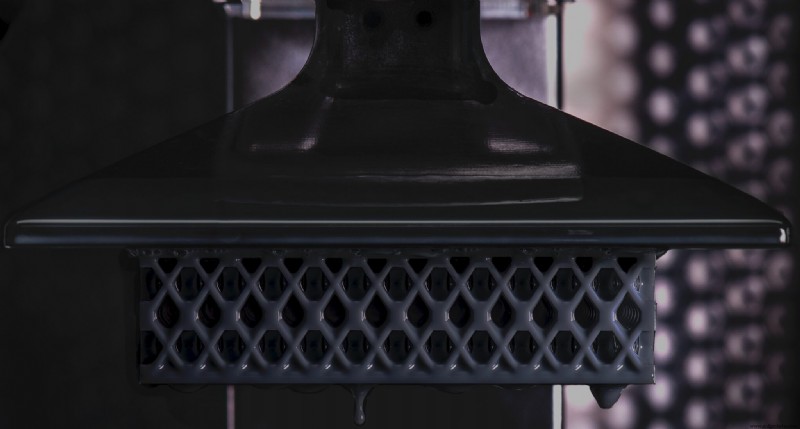
Lattices are 3‑D micro‑architectures composed of repeating unit cells formed by intersecting beams and nodes. Over the past decade they have become a cornerstone of lightweight design, delivering the strength and stiffness of traditional components while using significantly less material. Beyond weight savings, lattices excel at absorbing impact, dampening vibration, and reducing noise because their low‑stiffness networks can deform and recover under load.
A striking example of their real‑world impact is the Adidas Futurecraft 4D midsole. Partnering with Carbon, whose Digital Light Synthesis™ technology allows precise lattice fabrication, Adidas engineered a midsole that balances resilience, flexibility, and superior rebound. The result is a high‑performance shoe that minimizes shock for athletes while maintaining a lightweight profile.
Product managers looking to harness lattice technology for vibration and energy damping should consider three key factors: material selection, lattice design, and additive‑manufacturing constraints.
Understanding Lattices
Traditional subtractive methods struggle to produce the intricate geometry of lattices, making 3‑D printing the method of choice. Additive manufacturing enables an “inverse design” approach—designing the optimal material layout for a specific application rather than fitting an existing material to the job.
Material choice is critical. For example, EPU 40 offers superior vibration damping compared to EPU 41, so selecting a material that matches the desired damping characteristics can dramatically improve performance.
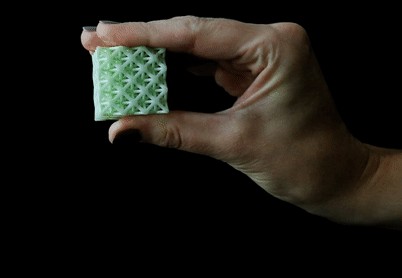
While material matters, the lattice geometry often dictates damping effectiveness. Bending lattices are highly elastic and springy, whereas buckling lattices allow individual beams to flex, providing exceptional energy dissipation. Additional surface treatments can further enhance damping.
On a micro‑scale, the unit cell—the repeating pattern of beams and nodes—drives the lattice’s behavior. Open, sparse cells produce soft lattices; denser cells with more triangles and beams yield rigid structures. The cell type, size, orientation, and beam thickness relative to the cell size all influence the material’s damping ratio and, consequently, its impact absorption.
Designing for Additive Manufacturing
Successful lattice production hinges on Design for Additive Manufacturing (DFAM) principles. Engineers must ensure that the lattice is printable by accounting for process, orientation, and necessary supports.
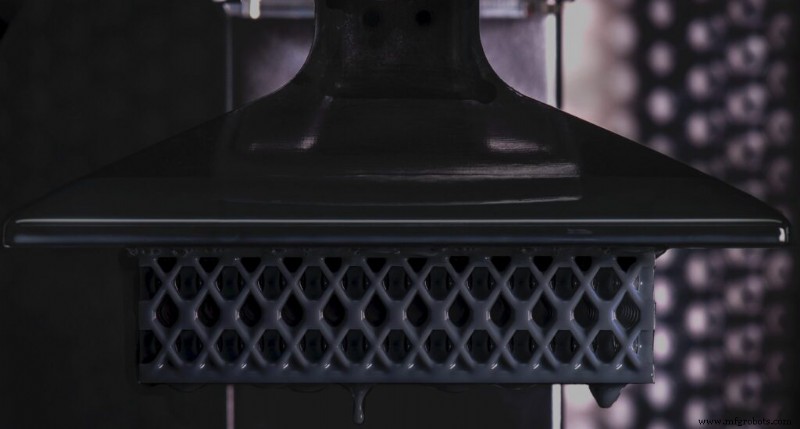
Lattice orientation introduces anisotropy—properties differ along different axes. While this isn’t inherently a drawback, aligning the orientation with the intended load direction (e.g., buckling behavior) can optimize performance.
When DFAM is applied correctly, additively manufactured lattice parts often match or exceed the quality of legacy‑manufactured components, unlocking new possibilities that were previously unattainable.
SyBridge: Driving Innovation in Lattice Manufacturing
Creating effective lattice structures requires clear upfront requirements, material selection aligned with performance goals, and meticulous architectural design. By starting with the right damping material, you maximize a part’s energy dissipation and impact absorption.
SyBridge blends cutting‑edge technologies with proven methods to enhance every stage of manufacturing. We partner with customers to optimize designs for both performance and manufacturability, delivering high‑quality components on time and within budget. Contact us today to explore how we can help your next project.
Industrial Technology
- AC Capacitor Circuits: Capacitive Reactance, Phase Shift, and Power Behavior
- CNC Machining Design Guide: Maximize Precision & Efficiency
- Capacitor Types: Polarized, Non-Polarized, and Variable Explained
- Understanding the Shockley Diode: A Comprehensive Guide to PNPN Thyristors
- RGBSI Leads Keystone to Business Summit, Strengthening Industry Partnerships in Oakland County
- Mastering Fusion 360's Machining Extension: Advanced Features for Precision Manufacturing
- Turnkey PCB Assembly Unveiled: Key Facts and Benefits
- Excited State: A New Era of High-Efficiency Solar Cells
- Supply Chain Crisis: Middle America Faces the Biggest Impact
- Top 3 CNC Vacuum Suction Cups for Precision Wood Machining