



Capacitor Types: Polarized, Non-Polarized, and Variable Explained
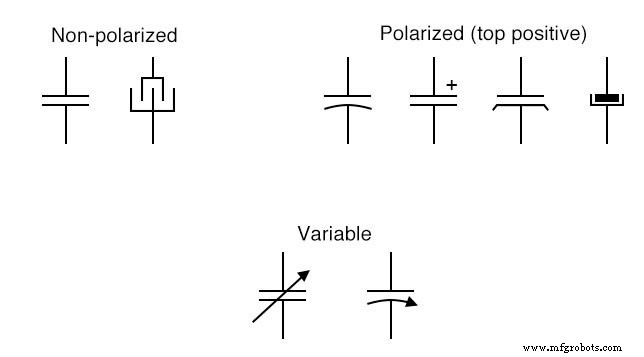
A capacitor is a passive two‑terminal electronic component that stores electrical energy in an electric field. They are classified as polarized or non‑polarized.
\nPolarized (Electrolytic) Capacitors
\nElectrolytic capacitors have a defined polarity due to their construction. They can only be connected with the correct orientation, otherwise they may fail or become damaged.
\nNon‑Polarized (Bipolar) Capacitors
\nNon‑polarized capacitors lack an inherent polarity, allowing them to be wired in either direction. They are commonly used in AC circuits and signal paths.
\nVariable Capacitors
\nA variable capacitor allows its capacitance to be adjusted mechanically or electronically. This feature is useful in tuning circuits such as radios and oscillators.
Resistor Types Explained: From Potentiometers to Thermistors
Inductors Explained: Types, Functions, and Applications
Industrial Technology
- Tantalum Capacitors: Key Characteristics & Applications
- Resistor Types Explained: From Potentiometers to Thermistors
- Understanding Electrical Switches: Types, Functions, and Applications
- Peak Detector: How It Works and Practical Applications
- Practical Considerations for Selecting and Using Capacitors
- How Equivalent Series Inductance (ESL) Impacts Capacitor Performance in High‑Speed Digital Circuits
- Understanding Variables in C#: Types, Storage, and Usage
- Electrolytic Capacitors Explained: Formation, Benefits, and Applications
- Tantalum Capacitor Marking: A Comprehensive Guide to Types and Identification
- Capacitor Leakage Testers: Understanding Their Purpose and Operation