


Industrial manufacturing
Industrial Technology


Waterjet cutting has become a go-to manufacturing process for industries needing precision cutting across a range of materials, from metals to glass, composites, and even stone. If your company doesn’t have the equipment in-house, outsourcing to a waterjet cutting supplier can be a smart solution. H
How Waterjet Cutting Saves Time and Money in Manufacturing In today’s competitive manufacturing landscape, efficiency and cost-effectiveness are crucial for staying ahead. Companies are constantly looking for ways to reduce lead times, minimize waste, and improve product quality without inflating co
Waterjet cutting is renowned for its precision, versatility, and ability to cut through a wide range of materials with ease. However, one often overlooked but crucial element in ensuring the accuracy and quality of the cuts is fixturing. Proper fixturing—how the material is held in place during the
In precision manufacturing, tolerances define how closely a finished part must match its intended design. Understanding tolerance is especially important when specifying parts for waterjet cutting, where material thickness, cutting speed, and machine accuracy all play a role. At Intelligent Cutting

Both crimping and soldering are used to create connections for cables. Ethernet cables, for example, typically feature RJ-45 connectors at the ends. To add an RJ-45 connector to an Ethernet cable, you can either crimp or solder it. While both methods can produce high-performing, long-lasting c
Publish Date: July 9, 2019 | Category: Fabrication Have you heard of the metal treatment process known as pickling? When most people hear the word “pickling,” they immediately envision the edible vinegar-preserved food of its namesake. However, pickling also refers to a metal treat
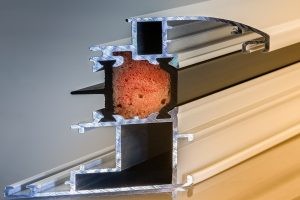
Also known as magnetic field-assisted finishing, magnetic abrasive finishing is a finishing process that involves the use of a magnetic field to apply particulate matter onto the surface of a workpiece or object. The purpose of magnetic abrasive finishing is to apply a powder coating. Of cour
Publish Date: August 27, 2019 | Category: Fabrication Have you heard of metal etching? Although it’s been around for centuries, it’s become an increasingly common process used in the manufacturing industry. Metal etching allowing manufacturing companies to create permanent designs
Also known as spray deposition, spray forming is a manufacturing process that involves coating a workpiece with semi-solid particles of metal. It’s designed to create a protective coating over the surface of the workpiece, thereby protecting it from rust, corrosion and other forms of degradatio
Also known as abrasive blasting, sandblasting is a surface finishing process that involves the use of a powered machine — typically an air compressor as well as a sandblasting machine — to spray abrasive particles under high pressure against a surface. It’s called “sandblasting” because it bla

Buffing and polishing are two common finishing processes used in the manufacturing industry. They both involve smoothing the surface of a workpiece to improve its aesthetics as well as its physical properties. Unbeknownst to many people, however, buffing and polishing aren’t the same. Each fin
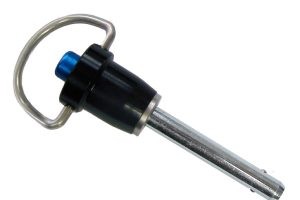
Quick release pins offer a simple and effective way to secure, as well as release, machinery parts. When inserted, they will hold the respective part in place. You can release the part, on the other hand, by removing the quick release pin. Quick release pins make it easy to secure and release
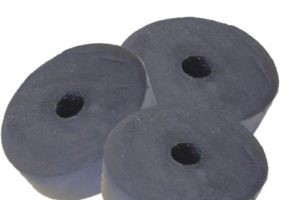
When shopping for molded parts, you may come across rubber parts. They are made of molded rubber. Rubber bumpers are small rubber pads that are highly versatile. You can use them in a variety of recreational and commercial applications. Overview of Rubber Bumpers Also known as grommet bumpers
Springs come in different shapes and sizes. While most of them consist of coiled pieces of metal, others do not. Some of them consist of a flat, ring-shaped piece of metal. Known as flat springs, they can store mechanical energy like all other springs. Flat springs are simply flat, whereas oth
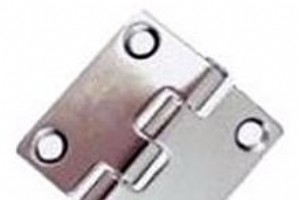
When shopping for hinges, you must consider the environment in which you intend to use them. Most hinges share a similar construction consisting of two leafs and a pin-secured knuckle. Some hinges, though, are better suited for specific environments than others. You may want to choose marine
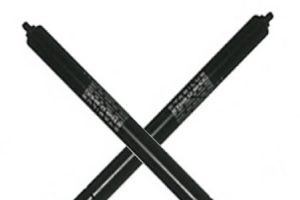
Gas spring dampers are used in a wide range of products. You can find them on office chairs, trunk hatches, cabinet doors, medical equipment and more. While they can store mechanical energy like all other springs, though, gas springs feature a unique design. What Are Gas Spring Dampers? Gas s
When shopping for bolts, you may come across carriage bolts. Also known as coach bolts, they are used in fastening applications. You can use carriage bolts to fasten metal workpieces to other metal workpieces, or you can use them to fasten wooden workpieces to metal workpieces. What Are Carri
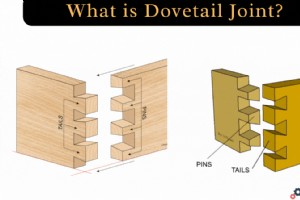
A dovetail joint is one of the most common woodworking techniques for joining wood with good tensile strength. the joint is appealing and effective at joining two pieces of wood at the right angle. There is a different method of making the joint, and it can be cut by hand, which must be done by an
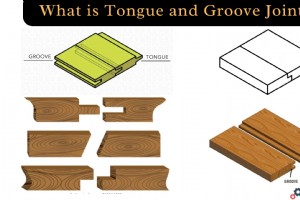
Tongue and groove joints are special types of woodworking connections that are used to attach two or more timber pieces edge to edge. One of the edges of the piece consists of a slot (groove) that runs down the entire length of the timber, and the tongue is fit into it. Well, in this reading, we’l
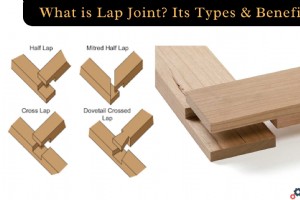
A lap joint is a popular joining method that is done on wood, metal, or plastic. But a lap joint may be a full or half lap in woodworking. In a full lap, there is no material removed from either of the pieces to be joined. In a half-lap joint, which is also called a halving joint, material is remo
Industrial Technology

How Steel Powers Safe, Thrilling Summer Water Parks

Understanding Office Maintenance: Key Tasks & Outsourcing Benefits
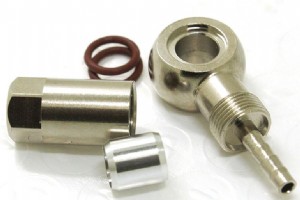
Choosing Banjo Hose Fittings: When and Why They're Essential
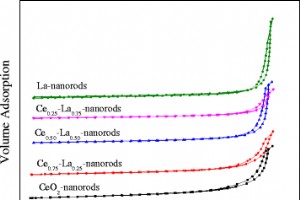
High‑Performance Au/Ce‑La Nanorod Catalysts for Low‑Temperature CO Oxidation: Synthesis, Characterization, and Mechanistic Insights
