


Industrial manufacturing
Industrial Technology

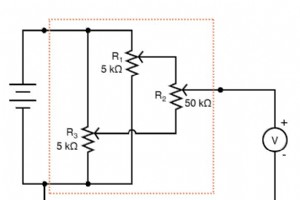
Parts and Materials Two single‑turn, linear‑taper potentiometers, 5 kΩ each (Radio Shack catalog #271‑1714) One single‑turn, linear‑taper potentiometer, 50 kΩ (Radio Shack catalog #271‑1716) Plastic or metal mounting box Three “banana” jack‑style binding posts, or equivalent terminal hardware (Radi
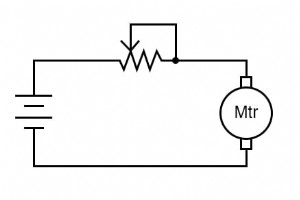
Learning Objectives Understand the role of a rheostat in variable resistance applications. Wire a potentiometer to function as a two‑terminal rheostat. Demonstrate basic motor speed control using a series rheostat. Use a voltmeter, not an ammeter, to verify circuit continuity safely. Identify the p
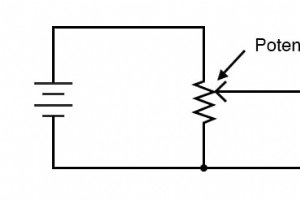
PARTS AND MATERIALS Two 6‑volt batteries Carbon pencil “lead” (graphite‑clay rod) for a mechanical‑style pencil Single‑turn, 5 kΩ – 50 kΩ, linear‑taper potentiometer (Radio Shack # 271‑1714 – 271‑1716) Multi‑turn, 1 kΩ – 20 kΩ, linear‑taper potentiometer (Radio Shack # 271‑342, 271‑343, 900‑8583, 9
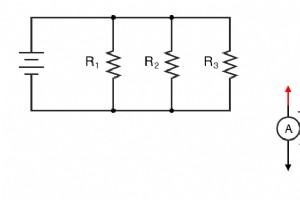
Parts and Materials Calculator or pencil & paper for calculations 6‑volt battery (rechargeable or fresh) Resistors ranging from 1 kΩ to 100 kΩ Cross‑References Lessons In Electric Circuits, Volume 1, Chapter 6: “Divider Circuits and Kirchhoff’s Laws.” Learning Objectives Accurately use a volt
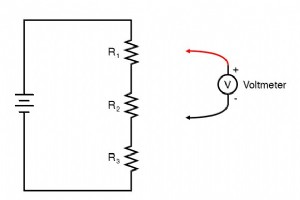
PARTS AND MATERIALS Calculator (or pencil and paper for arithmetic) 6‑volt battery Resistors ranging from 1 kΩ to 100 kΩ For precise readings, we confine resistor values to the 1 kΩ–100 kΩ band. Extremely low resistances can cause the ammeter’s internal resistance to distort current measurements,
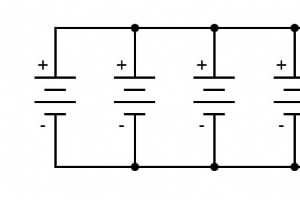
Parts and Materials Four 6‑volt batteries 12‑volt lamp (25 W or 50 W) Lamp socket (standard 120‑V household type) High‑wattage 12‑V lamps can be sourced from recreational vehicle (RV) and boating supply retailers. Common sizes are 25 W and 50 W, and they serve as a demanding load that draws signif
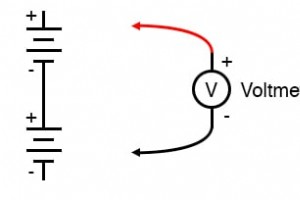
PARTS AND MATERIALS Two 6‑V batteries One 9‑V battery Any battery sizes will work, but using two different voltages makes the experiment more illustrative. CROSS‑REFERENCES Lessons In Electric Circuits, Volume 1, chapter 5: “Series and Parallel Circuits” Lessons In Electric Circuits, Volume 1, cha

“DC” stands for Direct Current, a form of electrical flow that maintains a constant polarity and direction for both voltage and current. In a DC circuit, electrons move steadily in one direction, enabling predictable behavior essential for countless devices. In this introductory module, you’ll explo
PARTS AND MATERIALS Electromagnet from previous experiment Permanent magnet See previous experiment for instructions on electromagnet construction. CROSS-REFERENCES Lessons In Electric Circuits, Volume 1, chapter 14: “Magnetism and Electromagnetism” LEARNING OBJECTIVES
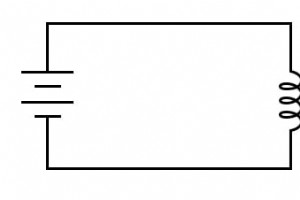
PARTS AND MATERIALS 6‑volt battery Magnetic compass Small permanent magnet Spool of 28‑gauge magnet wire (enamel‑insulated copper) Large bolt, nail, or steel rod (preferably soft iron) Electrical tape Magnet wire is a thin, enamel‑insulated copper wire that allows hundreds of turns to be wound int
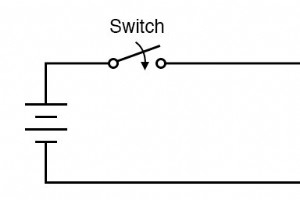
Parts and Materials 6‑volt battery Low‑voltage incandescent lamp (e.g., Radio Shack #272‑1130 or equivalent) Long lengths of 22‑gauge or larger wire Standard on‑off toggle switch (available at any hardware store) Why Use a Household Switch? Standard toggle switches are inexpensive, durable, and sa
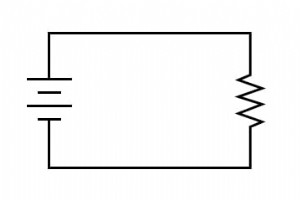
PARTS AND MATERIALS Calculator (or pencil and paper for arithmetic) 6 V battery Two ¼‑watt resistors: 10 Ω and 330 Ω (±5 % tolerance) Small thermometer (medical or infrared) Exact resistor values are not critical; keep them within ±5 % (±0.5 Ω for the 10 Ω, ±16.5 Ω for the 330 Ω). The color codes
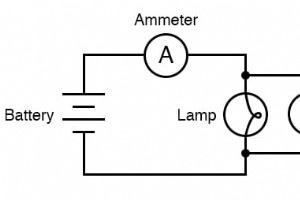
PARTS AND MATERIALS Calculator (or pencil and paper for arithmetic) 6‑volt battery Low‑voltage incandescent lamp (Radio Shack catalog #272‑1130 or equivalent) CROSS‑REFERENCES Lessons In Electric Circuits, Volume 1, chapter 2: “Ohm’s Law” LEARNING OBJECTIVES Use of voltmeter, ammeter, and ohmmete
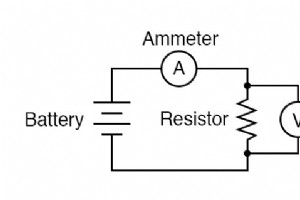
Materials Needed Scientific calculator or a pencil and paper for arithmetic calculations 6‑volt battery (fresh and fully charged) Resistors ranging from 1 kΩ to 100 kΩ (preferably precision metal‑film types) We recommend staying within the 1 kΩ–100 kΩ range. At lower values the ammeter’s internal
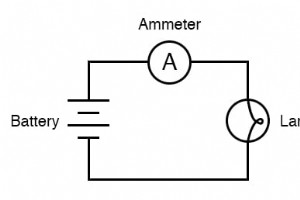
Parts & Materials 6‑volt battery 6‑volt incandescent lamp Basic circuit construction components—breadboard, terminal strip, jumper wires—are assumed to be available. Only the items above are unique to this experiment. Further Reading Lessons In Electric Circuits, Volume 1, Chapter 1: “Basic Concep
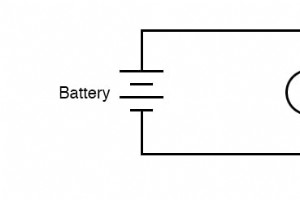
Parts and Materials 6‑volt battery 6‑volt incandescent lamp Jumper wires Breadboard Terminal strip From this experiment onward, a multimeter is assumed to be required and will not be listed among the mandatory components. In all subsequent illustrations, a digital multimeter will be shown unless a
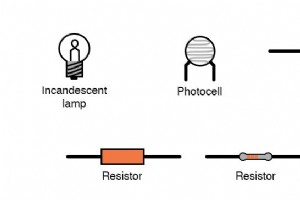
Parts and Materials Digital or analog multimeter Assorted resistors (Radio Shack catalog # 271-312 – 500‑piece assortment) Rectifying diode (1N4001 or equivalent; Radio Shack catalog # 276-1101) Cadmium Sulphide photocell (Radio Shack catalog # 276-1657) Breadboard (Radio Shack catalog # 276-174 or
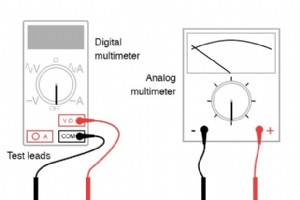
PARTS AND MATERIALS Multimeter – digital or analog Assorted batteries One LED (Radio Shack catalog #276-026 or equivalent) Small hobby motor, permanent‑magnet type (Radio Shack catalog #273-223 or equivalent) Two jumper wires with alligator clips (Radio Shack catalog #278‑1156, #278‑1157, or equiva
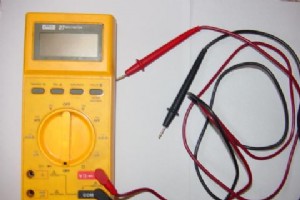
To build the circuits covered in this volume, you’ll need a dedicated workspace, a handful of essential tools, and key supplies. This section outlines how to set up a reliable home electronics laboratory. Work Area Your bench should be a spacious table or desk—ideally wooden—to host circuit assembly
Electronics is a scientific discipline that stands out for its accessibility. Unlike many fields that demand costly instruments, most meaningful experiments in electronics can be conducted with components and tools costing less than a few hundred dollars. This affordability makes hands‑on learning b
Industrial Technology

Top 5 Spring Cleaning Strategies to Revitalize Your Facility

Personal vs. Business Workflow Automation: Why Both Are Essential for Success
Eco‑Friendly Perovskite Solar Cells Using 1,3‑Dimethyl‑2‑Imidazolidinone as a Polar Solvent Additive

Mastering Selective Laser Sintering: From Fundamentals to Real‑World Applications
