



Optimizing Battery Performance: Parallel & Series‑Parallel Configurations for High‑Load Lamps
Parts and Materials
- Four 6‑volt batteries
- 12‑volt lamp (25 W or 50 W)
- Lamp socket (standard 120‑V household type)
High‑wattage 12‑V lamps can be sourced from recreational vehicle (RV) and boating supply retailers. Common sizes are 25 W and 50 W, and they serve as a demanding load that draws significant current from the battery bank.
A conventional 120‑V lamp socket works perfectly for these low‑voltage “RV” lamps.
Cross‑References
- Lessons In Electric Circuits, Volume 1, Chapter 5: “Series and Parallel Circuits”
- Lessons In Electric Circuits, Volume 1, Chapter 11: “Batteries and Power Systems”
Learning Objectives
- Demonstrate voltage‑source regulation under load
- Show how parallel connections increase current capacity
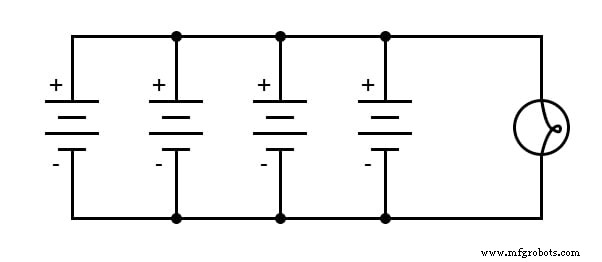
Schematic Diagram
Illustration
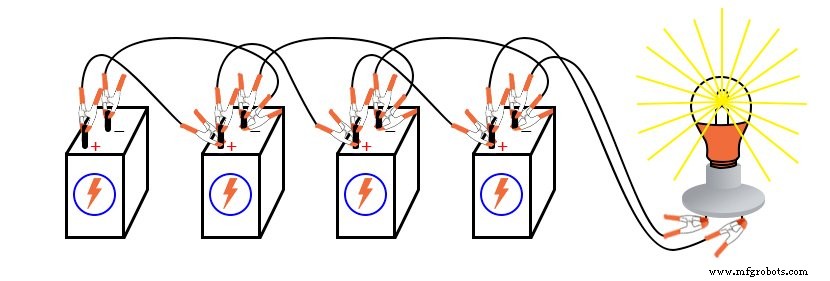
Instructions
Start by connecting a single 6‑V battery to the lamp. The lamp, designed for 12 V, will glow dimly when powered by the single battery. Use a voltmeter to read the lamp voltage across its terminals:
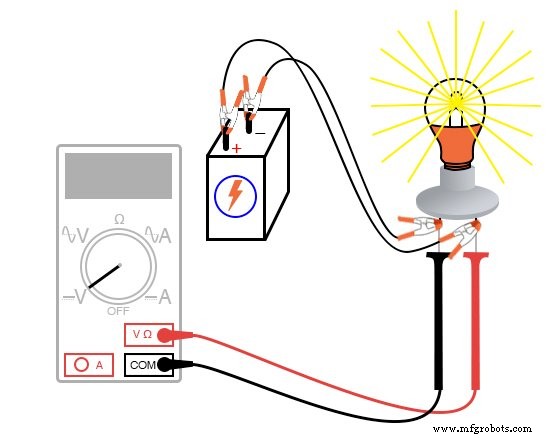
The reading will be noticeably lower than the battery’s nominal voltage. This voltage sag occurs because the lamp’s high current demand causes the battery’s internal resistance to drop voltage.
To mitigate this, connect batteries in parallel. By tying all positive (+) terminals together and all negative (−) terminals together, each battery shares the load, reducing individual current draw and voltage sag.
Incrementally add batteries in parallel, noting the lamp voltage after each addition:
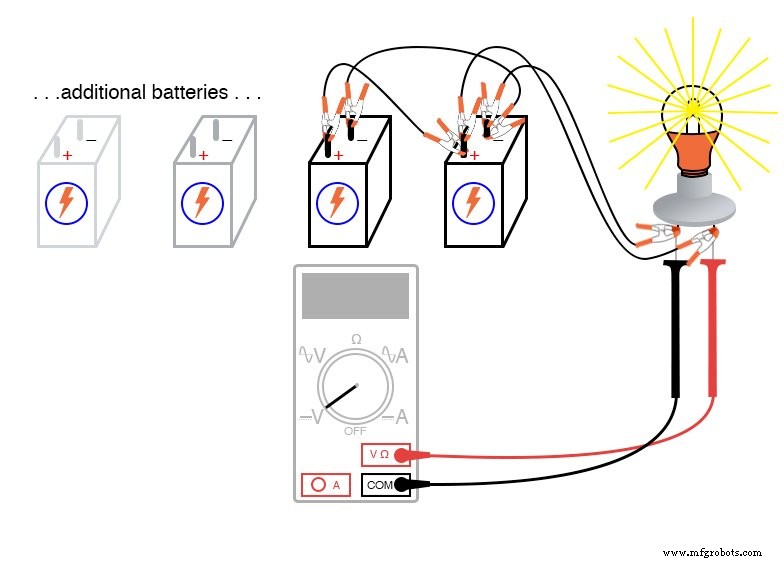
You will observe a rise in lamp brightness as voltage sag diminishes.
Measure single‑battery current by inserting an ammeter in series with one battery’s circuit, and compare it to the total current drawn by the lamp:
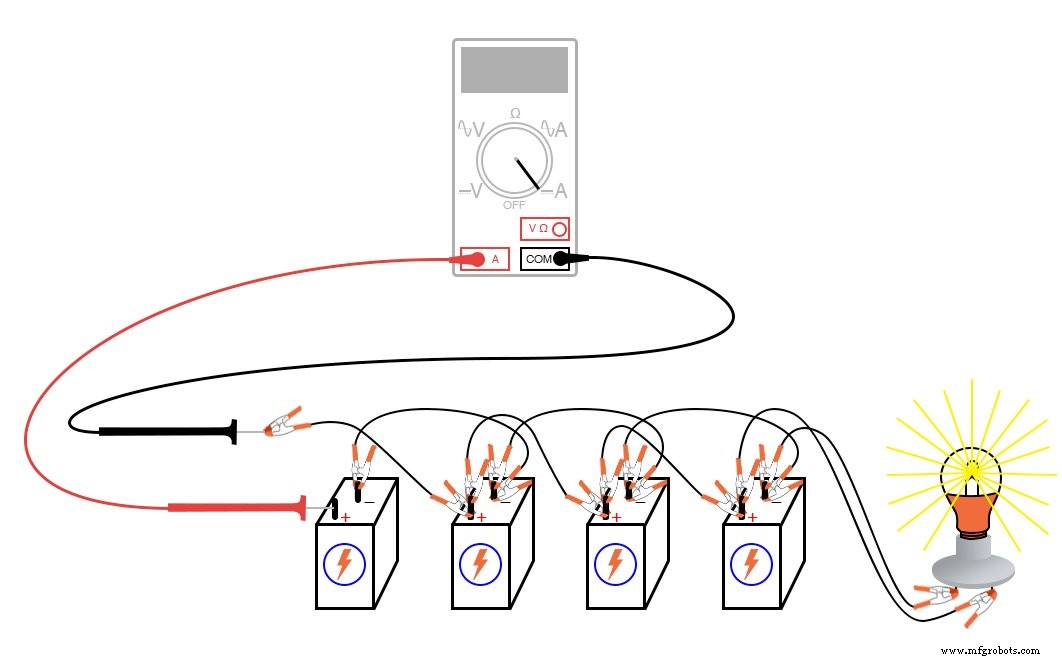
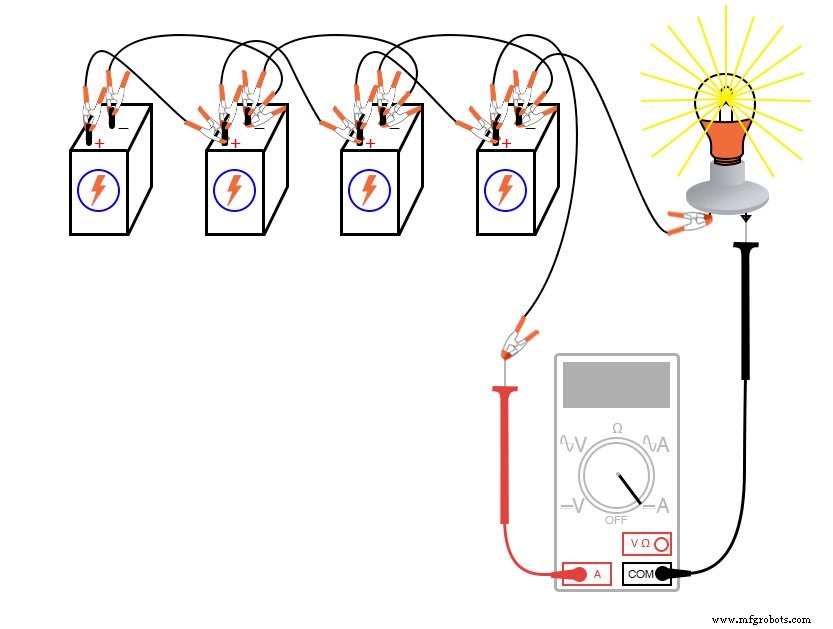
Notice that the single‑battery current is significantly lower than the total current, confirming the benefit of parallelization.
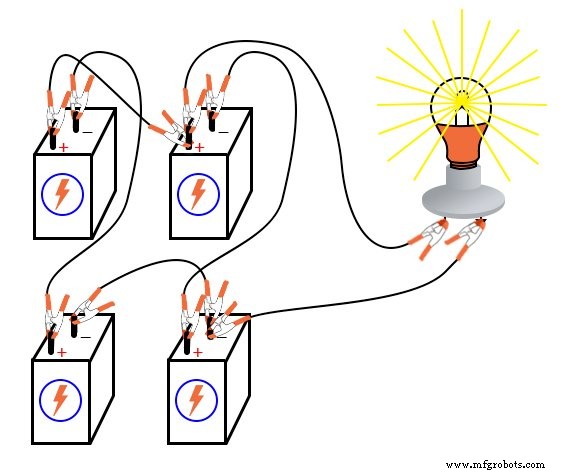
For maximum brightness, a series‑parallel arrangement is ideal. First, connect two 6‑V batteries in series to achieve the required 12 V. Then, connect two such series pairs in parallel to enhance current delivery and further reduce voltage sag:
Related Worksheets
- Batteries Worksheet
By following these steps, you’ll see how thoughtful battery configuration improves performance for high‑current applications.
Industrial Technology
- Understanding Battery Capacity: Amp-Hour Ratings and Condition Testing
- Practical Battery Bank Design: Series vs Parallel, Protection, and Charging Best Practices
- Series vs. Parallel Inductors: How Inductance Adds or Diminishes
- Key Testing Parameters for Electric Vehicle Batteries
- Graphene Batteries Explained: The Future of Long-Lasting Energy
- Advancing EVs: Lightweight Composites for Structural Batteries
- Choosing the Right Battery Connection: Series, Parallel, and Series‑Parallel Configurations
- Essential Guide to Battery Types for Electronics Projects
- Battery Types Explained: Key Definitions & Insights
- Inside the Making of Car Batteries: From Cells to Power Packs