



Series vs. Parallel Inductors: How Inductance Adds or Diminishes
When inductors are wired in series, the total inductance equals the sum of each component’s inductance. This occurs because the same current flows through each coil, and the voltage drop across the series string is the algebraic sum of the individual drops. Consequently, a given rate of current change produces a larger total voltage, indicating a higher overall inductance.
In contrast, when inductors are connected in parallel, the total inductance is less than the smallest individual value. Here, the voltage across each branch is identical, but the current divides among the branches. For a fixed rate of current change, the voltage across the parallel network is lower, reflecting a reduced inductance.
These relationships are captured by the same mathematical forms used for resistors:
Series: 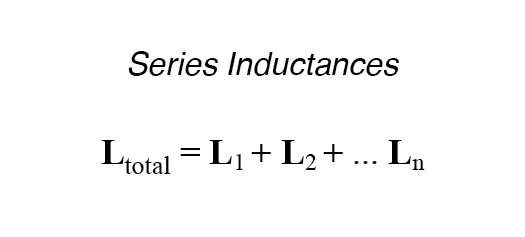
Parallel: 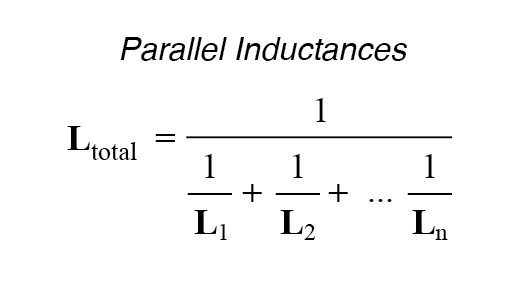
To recap:
- Inductances add when connected in series.
- Inductances reduce when connected in parallel.
These principles are fundamental to AC circuit analysis and are taught in all introductory electromagnetics courses.
Industrial Technology
- Optimizing Battery Performance: Parallel & Series‑Parallel Configurations for High‑Load Lamps
- Series and Parallel Component Calculations – Resistances, Inductances, Capacitances
- Understanding Voltage and Current: The Foundations of Electrical Flow
- Understanding Series and Parallel Circuits: How They Work and Why They Matter
- Understanding Series and Parallel Capacitors: How Capacitance Adds or Diminishes
- Inductors & Calculus: How Current Change Drives Voltage
- Mastering Series RLC Circuit Analysis: From Impedance to KVL
- Analyzing a Parallel R‑L‑C Circuit: Impedance, Current, and SPICE Simulation
- Choosing the Right Battery Connection: Series, Parallel, and Series‑Parallel Configurations
- Mastering Parallel Transistors: A Comprehensive Guide to Safe and Efficient Circuit Design