


Industrial manufacturing
Industrial Technology


SPICE, the Simulation Program with Integrated Circuit Emphasis, was created to model analog electronic circuits, especially for IC design. The program’s lineage traces back to CANCER, a circuit simulator built by Professor Ronald Rohrer and his students at UC Berkeley in the late 1960s. After contin
“With Electronics Workbench, you can create circuit schematics that look just the same as those you’re already familiar with on paper—plus you can flip the power switch so the schematic behaves like a real circuit. With other electronics simulators, you may have to type in SPICE node lists as text f
Unlike algebraic equations whose solutions are single numbers, a differential equation seeks a function as its solution. The equation contains at least one derivative of an unknown function, making the function’s rate of change an essential component of the relationship. In solving differential equa
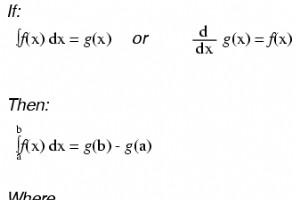
Explore the core concepts of definite integrals and how the Fundamental Theorem of Calculus links integration with differentiation. Visual aids below illustrate key ideas. RELATED WORKSHEET: Calculus for Electric Circuits Worksheet
Constant Rule Rule of Sums Rule of Differences
Note: this is a very unique and useful property of e. As in the case of derivatives, the antiderivative of such a function is that same function. In the case of the antiderivative, a constant term “c” is added to the end as well.
Below is a concise reference of common antiderivatives used in integral calculus. These formulas are essential for solving integrals in physics, engineering, and economics.
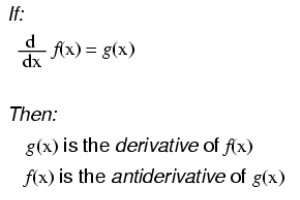
Notice something important here: taking the derivative of f(x) may precisely give you g(x), but taking the antiderivative of g(x) does not necessarily give you f(x) in its original form. Example: Note that the constant c is unknown! The original function f(x) could have bee
This guide offers a concise overview of the fundamental derivative rules, illustrated with clear images to reinforce your understanding. Constant rule When differentiating a constant, the result is zero. Rule of sums The derivative of a sum equals the sum of the derivatives. Rule of differences Th
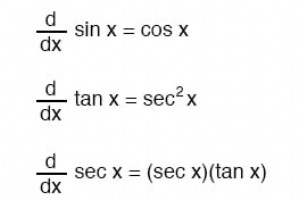
Trigonometric derivatives form the backbone of calculus, enabling precise modeling of oscillatory phenomena across physics, engineering, and finance. Mastering these derivatives equips students with tools to tackle real‑world problems—from wave mechanics to alternating‑current circuits. Key derivat
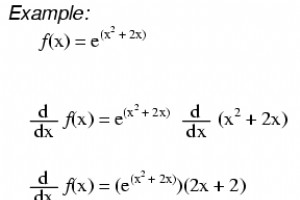
Example Derivatives of e Proportionality Constant When we say that a relationship or phenomenon is “exponential,” we mean that the rate of change of a quantity grows proportionally with the quantity itself. Consequently, the derivative of an exponential function equals the original function multip
Mastering Common Derivatives Understanding derivatives is the cornerstone of calculus and a vital skill for engineers, scientists, and mathematicians alike. In this concise guide, we walk through the most frequently encountered derivative rules, illustrate each with clear examples, and offer practic
When you differentiate a constant value—denoted by the symbol c—the result is always zero. This fundamental rule is a cornerstone of differential calculus and is used across engineering, physics, and mathematics. Mathematically, the derivative of a constant is expressed as: \frac{d}{dx}\,c = 0 Beca
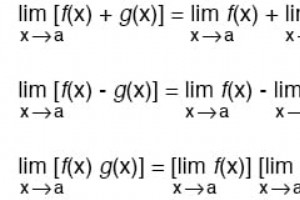
Limits form the backbone of calculus, enabling precise evaluation of functions as inputs approach specific values. Mastering the foundational rules is essential for tackling more advanced topics such as derivatives, integrals, and differential equations. In this guide, we review the most frequently
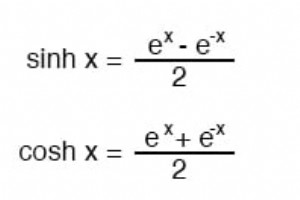
Hyperbolic Functions Hyperbolic functions—sinh, cosh, tanh, coth, sech, and csch—mirror the properties of circular trigonometric functions but are defined using exponential expressions. They are essential in fields such as complex analysis, differential equations, and engineering design. Angle unit
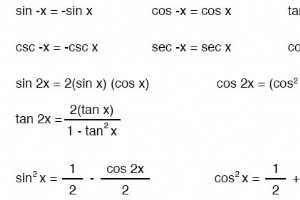
Overview Trigonometric equivalencies—often called identities—are the cornerstone of solving equations, simplifying expressions, and modeling real‑world phenomena in mathematics, physics, and engineering. Mastering these relationships provides the analytical toolkit required for higher‑level coursew
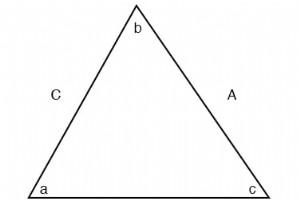
Welcome to a concise guide on two cornerstone trigonometric identities that empower you to solve any triangle—whether it’s right‑angled or not. These laws are the backbone of geometric problem‑solving and are used in fields ranging from engineering to navigation. The Law of Sines The Law of Sines st
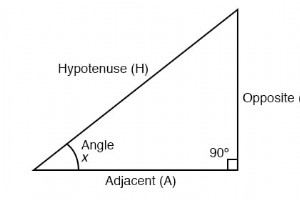
A right triangle contains exactly one right angle (90°). Trigonometric Identities In the standard notation, the hypotenuse (H) is always opposite the right angle. For a given acute angle x, the side opposite x is denoted O, and the side adjacent to x is A. Inverse trigonometric functions—arcsin, a
What are Simultaneous Equations and Systems of Equations? The terms simultaneous equations and systems of equations refer to conditions where two or more unknown variables are related to each other through an equal number of equations. Example: For this set of equations, there is but
What is a Factorial? A factorial is a mathematical operation denoted by the exclamation mark “!” following a positive integer. It represents the product of that integer and every positive integer below it down to one. How to Compute a Factorial For example, the factorial of 5 is calculated as follow
Industrial Technology

Efficient 3‑Pin Wireless Sensor Transmission with nRF24L01+ and ATtiny85

Can Maintenance and Operations Coexist? Lessons from a Postal Service Plant Reorganization

Explore CNC Machining Surface Finishes: Types, Benefits & Selection Guide

Common Heavy Fabrication Projects: Railroads, Power Plants, and More
