


Industrial manufacturing
Industrial Technology

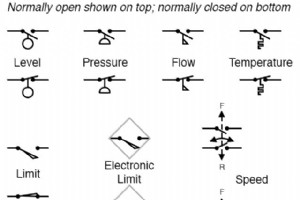
In safety‑critical systems, understanding the behavior of process‑actuated switches is essential. Unlike simple on‑off relays, these devices rely on the presence or absence of a process variable—such as flow, pressure, or position—to determine their contact state. What Is the “Normal” Contact Statu
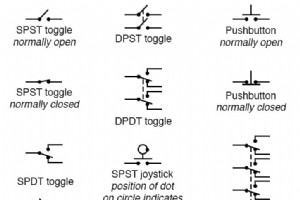
Switches are essential electrical components that either make or break a circuit. When operated manually by hand contact, they are referred to as hand‑actuated switches. Common Hand‑Actuated Switches Single‑Pole, Single‑Throw (SPST) – The simplest on/off switch. Its two terminals are either connec
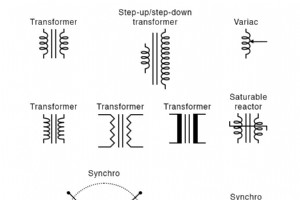
Understanding Mutual Inductors Mutual inductors leverage the phenomenon of mutual inductance—the induction of a magnetic field in one coil by the magnetic field of a neighboring coil. This coupling is the fundamental principle behind transformer operation. Key Concepts Mutual Inductance (M): The r
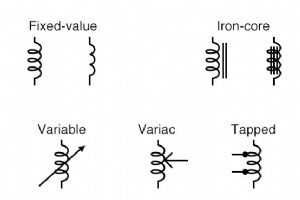
An inductor is a passive two‑terminal component that stores energy in a magnetic field when electric current flows through it. Commonly called a choke, coil, or reactor, inductors come in two primary varieties: air‑core and iron‑core. The image above shows several readily available types. Air‑core
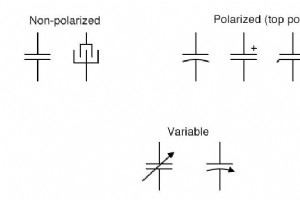
\nA capacitor is a passive two‑terminal electronic component that stores electrical energy in an electric field. They are classified as polarized or non‑polarized.\nPolarized (Electrolytic) Capacitors\nElectrolytic capacitors have a defined polarity due to their construction. They can only be connec
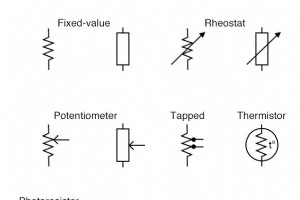
Resistors come in a variety of shapes and functions, each tailored to specific electronic needs. Understanding the key differences between these common types—potentiometers, rheostats, thermistors, and photoresistors—helps engineers choose the right component for any circuit. Potentiometers are thr
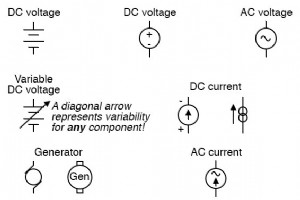
Power sources in electronics come in many varieties. The most common categories are alternating current (AC) and direct current (DC), each with its own subtypes and applications. DC voltage can be delivered by a battery or by a dedicated power supply circuit. A power supply circuit can be fixed or
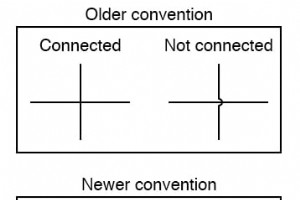
In electrical schematics, the way wires intersect communicates whether they are electrically connected or merely crossing. Historically, designers used a simple visual cue: a half‑circle mark over the crossing line to indicate a non‑connection, while a straight crossing implied a connection. This o

Fallacious reasoning and weak interpersonal skills often derail troubleshooting far more than technical shortcomings. A seasoned troubleshooter must recognize and sidestep these common missteps. Assuming a brand‑new component is always reliable. While new parts are typically sound, mislabeled or def
All men are liable to error; —John Locke While seasoned systems tend to fail from wear and tear, brand‑new installations often crash because of human error in design or assembly. This section examines the most frequent early‑life failures and offers practical prevention tips. Wiring Problems Incorre
The following problems are listed from most to least likely, based on extensive troubleshooting experience in automotive, industrial, and residential applications. The list applies to systems that have operated successfully for a substantial period before failing; newly assembled circuits may exhibi

After narrowing a problem’s scope with basic checks, these targeted techniques help isolate root causes with confidence and precision. Swap Identical Components When identical or parallel subsystems share the same parts, exchange components between them to see if the fault follows the swapped item.
When encountering a malfunctioning system, the first step for a novice troubleshooter is to systematically identify the root cause. Below is a concise checklist of essential questions that guide the initial isolation of the issue—an invaluable starting point. These suggestions are high‑level pointer
Before You Start Troubleshooting In high‑stakes environments—whether a chemical plant, an aircraft, or a live medical procedure—careful preparation is not optional; it’s a prerequisite for safety and efficiency. Has the system performed successfully in the past, and if so, have any changes since th
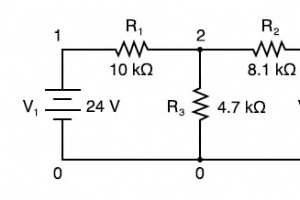
The following circuits are pre-tested netlists for SPICE 2g6, complete with short descriptions when necessary. (See Chapter 2’s Computer Simulation of Electric Circuits for more information on netlists in SPICE.) Feel free to “copy” and “paste” any of the netlists to y
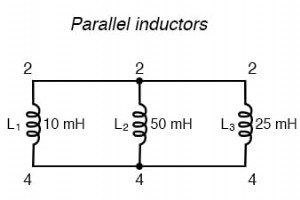
Garbage in, garbage out. —Anonymous SPICE is a dependable simulation engine, yet it has a handful of idiosyncrasies that can trip up even experienced users. In this article we’ll focus on the subtle file‑format and circuit‑topology rules that SPICE enforces, not on bugs that produce incorrect resul
AC ANALYSIS: General form: .ac [curve] [points] [start] [final] Example 1: .ac lin 1 1000 1000 Comments: The [curve] field can be “lin” (linear), “dec” (decade), or “oct” (octave), specifying the (non)linearity of the frequency sweep. specifies how many points
While this guide focuses on the essentials, SPICE offers a comprehensive set of features for accurate circuit simulation. The following overview condenses key syntax rules and examples to help you write clean, error‑free netlists. Every SPICE element is introduced by a single-letter keyword: R for
If you’re familiar with DOS or Unix command‑line shells, you may wonder why SPICE requires the “<” symbol before the netlist filename. Unlike a text editor, where you can pass a file name as a direct argument, SPICE offers an interactive mode: any line you type is interpreted immediately from standa
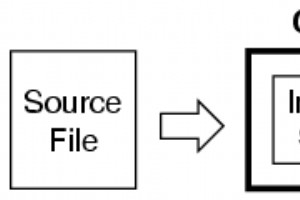
Programming a circuit simulation with SPICE follows the same principles as any other text‑based programming language. You write commands in a plain‑text file, save it, and then run an interpreter that translates the source into actions the computer can perform. In SPICE, the interpreter is a dedicat
Industrial Technology
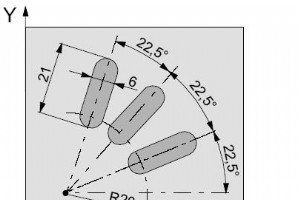
Fanuc G68 Coordinate Rotation: Practical Subprogram Example for CNC Machining

Pioneering Progress in Two-Dimensional Spintronics: Cutting-Edge Research and Future Horizons

Top Safety Accessories That Keep Warehouse Workers Safe

Are Your Plastic Fasteners Ready for Winter? A Technical Review of Weather‑Proof Materials
