



Process‑Actuated Switches: How They Work and When They Change State
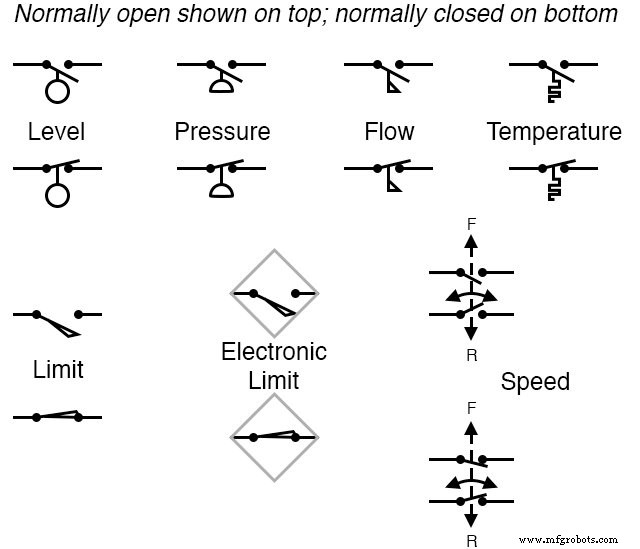
In safety‑critical systems, understanding the behavior of process‑actuated switches is essential. Unlike simple on‑off relays, these devices rely on the presence or absence of a process variable—such as flow, pressure, or position—to determine their contact state.
What Is the “Normal” Contact Status?
The term “normal” in this context does not refer to the expected operational condition. Instead, it denotes the state the switch occupies when the process it monitors is either absent or inactive. For example, a normally‑closed (NC) low‑flow detection switch on a coolant pipe stays open (actuated) during regular flow. If the flow stops, the switch returns to its normal state—closed—indicating the loss of the process.
Common Types of Process‑Actuated Switches
- Limit Switches – These are triggered by physical contact with a moving machine part. When the part reaches a predetermined position, the switch changes state.
- Electronic Limit Switches – Instead of direct contact, these sensors detect motion using light, magnetic fields, or other non‑contact methods, providing a cleaner and often more reliable solution.
Why It Matters
Accurate knowledge of a switch’s normal status ensures correct logic in control systems and prevents false alarms. Engineers use this information to design fail‑safe circuits, set appropriate trip points, and maintain regulatory compliance in industries ranging from chemical processing to power generation.
Related Resources
For deeper technical guidance, consult industry standards such as IEC 60947‑3 or API 610, which outline detailed specifications for process‑actuated switches.
Industrial Technology
- Understanding Membrane Switches: Design, Function, and Benefits
- Hand‑Actuated Switches: Types, Symbols, and Applications
- Switches, Electrically Actuated (Relays): The Ladder Logic Legacy
- Understanding Electrical Switches: Types, Functions, and Applications
- Understanding Normal Positions and Contact Sequences in Process Switches
- Step‑by‑Step Guide to Wiring 2‑Way & 3‑Way Neon Pilot Light Switches
- Professional Wiring Guide for Combo Switch/Outlet Devices – Diagrams & Installation Tips
- Expert Guide to Electronic Relay Switch Circuits: NPN, PNP, and N/P Channel Designs
- Mastering Limit Switches: A Comprehensive Guide for Safety and Efficiency
- Understanding Proximity Switches: How They Detect and Control Motion