Industrial manufacturing
Industrial Technology

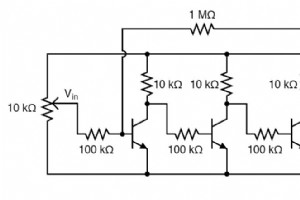
In this tutorial we build a three‑stage common‑emitter amplifier that demonstrates how negative feedback can tame high voltage gain and improve stability. Parts and Materials Three NPN transistors (2N2222 or 2N3403; Radio Shack catalog #276‑1617 is a convenient 15‑piece kit). Two 6‑V batteries (or
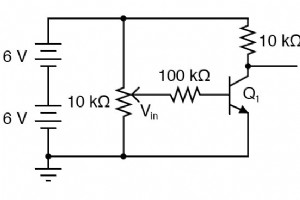
Parts and Materials One NPN transistor (model 2N2222 or 2N3403 recommended; a 15‑unit pack is listed in the Radio Shack catalog #276‑1617) Two 6‑V batteries One 10 kΩ potentiometer, single‑turn, linear taper (Radio Shack catalog #271‑1715) One 1 MΩ resistor One 100 kΩ resistor One 10 kΩ resistor On
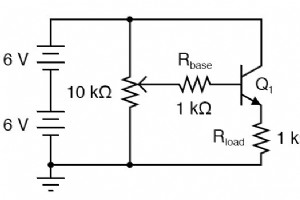
PARTS AND MATERIALS One NPN transistor – models 2N2222 or 2N3403 are recommended. A 15‑piece pack (Radio Shack catalog # 276‑1617) is ideal for this and other projects. Two 6‑volt batteries Two 1 kΩ resistors One 10 kΩ single‑turn linear potentiometer (Radio Shack catalog # 271‑1715) Transistor pi
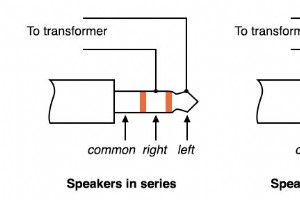
Parts and Materials Two 6‑volt batteries One NPN transistor—2N2222 or 2N3403 (Radio Shack catalog # 276‑1617 offers a 15‑pack ideal for this and similar experiments) One light‑emitting diode (Radio Shack catalog # 276‑026 or equivalent) Audio detector with headphones If you don’t already have an a
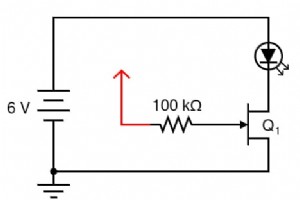
PARTS AND MATERIALS One N‑channel junction field‑effect transistor (JFET), such as the 2N3819 or J309 (Radio Shack catalog #276‑2035). One 6‑V battery. One 100 kΩ resistor. One light‑emitting diode (LED) (Radio Shack catalog #276‑026 or equivalent). Plastic comb. The specific JFET model is flexibl
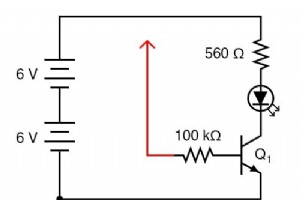
PARTS AND MATERIALS Two 6‑V batteries One NPN transistor (2N2222 or 2N3403 recommended; Radio Shack catalog #276‑1617 offers a pack of fifteen) One 100 kΩ resistor One 560 Ω resistor One LED (Radio Shack catalog #276‑026 or any standard LED) Resistor values and the specific LED type are not critic
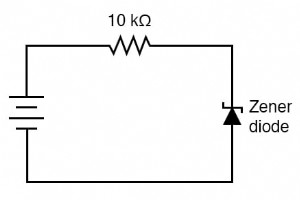
Parts and Materials Four 6‑V batteries (total 24 V when connected in series) 12‑V Zener diode (e.g., 1N4742, Radio Shack catalog #276‑563 or equivalent) 10 kΩ resistor For this experiment, any low‑voltage Zener diode will work. We recommend a diode whose Zener voltage exceeds the voltage of a sing
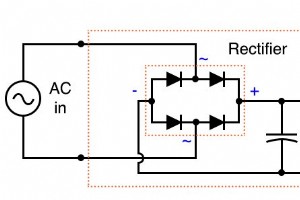
PARTS AND MATERIALS Low‑voltage AC power supply (6 V RMS, 120 VAC input) Bridge rectifier pack (e.g., Radio Shack #276‑1185 or equivalent) Electrolytic capacitor, 1000 µF, ≥25 V DC (Radio Shack #272‑1047 or equivalent) Four “banana” jack binding posts or similar terminal hardware (Radio Shack #274‑
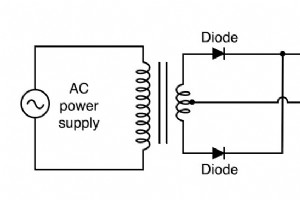
Parts and Materials PARTS AND MATERIALS Low‑voltage AC power supply (6‑volt output) Two 1N4001 rectifying diodes (Radio Shack catalog # 276‑1101) Small “hobby” motor, permanent‑magnet type (Radio Shack catalog # 273‑223 or equivalent) Audio detector with headphones 0.1 µF capacitor One toggle switc
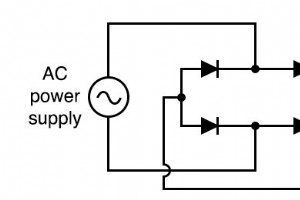
Parts and Materials Low‑voltage AC supply (6 V RMS) Four 1N4001 rectifier diodes (Radio Shack catalog #276‑1101) Small permanent‑magnet hobby motor (Radio Shack catalog #273‑223 or equivalent) Cross‑References Lessons In Electric Circuits, Volume 3, Chapter 3: “Diodes and Rectifiers” Learning Obje
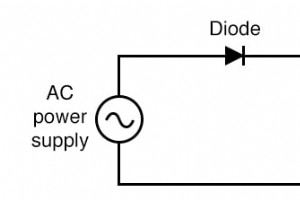
Overview In this hands‑on laboratory you will construct a half‑wave rectifier that converts a low‑voltage AC supply into a DC‑biased signal to drive a small permanent‑magnet motor. You will learn how to measure the resulting DC bias and ripple voltage, listen to the ripple with an audio detector, an
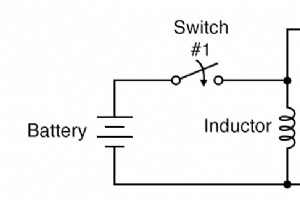
Parts and Materials 6 V battery Power transformer: 120 VAC step‑down to 12 VAC (Radio Shack catalog # 273‑1365, 273‑1352, or 273‑1511) 1N4001 rectifying diode (Radio Shack catalog # 276‑1101) – any 1N400X series diode will work Neon lamp (Radio Shack catalog # 272‑1102) Two SPST toggle switches (Si

A semiconductor device is crafted from silicon or other specialized materials designed to harness the unique behavior of electrons within a crystal lattice. In these structures, electrons are more mobile than in insulators but less free than in conductors, enabling controlled current flow. A discret
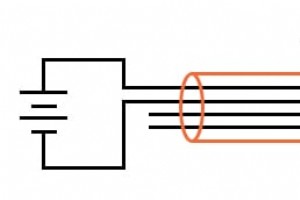
PARTS AND MATERIALS 6 V battery 0.22 µF capacitor (Radio Shack catalog #272‑1070 or equivalent) 0.047 µF capacitor (Radio Shack catalog #272‑134 or equivalent) Small hobby motor, permanent‑magnet type (Radio Shack catalog #273‑223 or equivalent) Audio detector with headphones Several feet of teleph
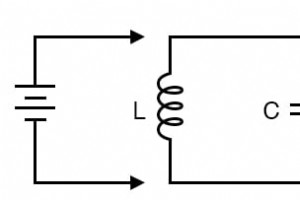
PARTS AND MATERIALS Oscilloscope (high‑voltage compatible) Non‑polarized capacitors (0.1 µF–10 µF) Step‑down power transformer (120 V / 6 V) – use only one winding as an inductor 10 kΩ resistors 6‑V battery The transformer functions solely as an inductor; leave the unused winding open. If a dedica
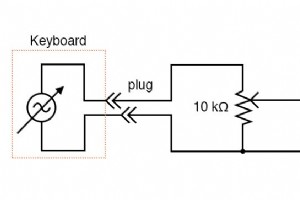
PARTS AND MATERIALS IBM‑compatible personal computer with a sound card, running Windows 3.1 or later. Winscope – a free, downloadable oscilloscope‑style application. Electronic musical keyboard. Mono (single‑channel) headphone jack for the keyboard. Mono jack for the computer’s microphone input, wi
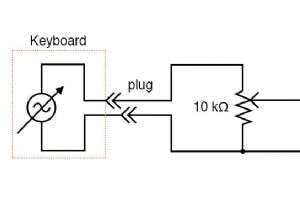
PARTS AND MATERIALS IBM‑compatible PC with a sound card, running Windows 3.1 or newer Winscope software – free download from the internet (author: Dr. Constantin Zeldovich) Electronic musical keyboard Mono headphone plug for keyboard output Mono headphone plug for computer sound‑card microphone inp
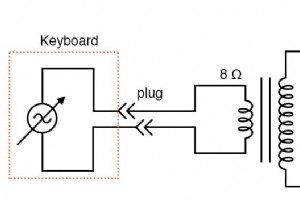
Materials Needed Electronic musical keyboard (ideally with a range of voices such as piano, flute, harp) Mono (single‑channel) headphone jack adapter Impedance‑matching transformer (1 kΩ to 8 Ω, e.g., Radio Shack #273‑1380) 10 kΩ resistor This experiment demonstrates how a standard musical keyboar
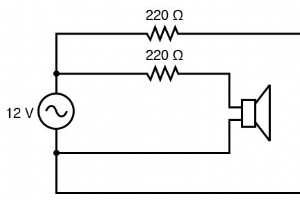
Sound Cancellation Experiment Components and Materials Low‑voltage AC power supply Two identical woofer‑type speakers Two 220 Ω resistors (to limit power to each speaker) For best results, use matching speakers enclosed in standard speaker cabinets. The resistors prevent over‑driving the drivers w
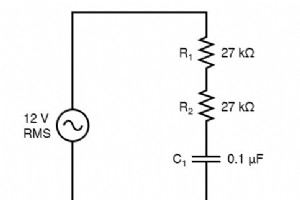
PARTS AND MATERIALS Low-voltage AC power supply Two capacitors, 0.1 µF each, non-polarized (Radio Shack catalog # 272-135) Two 27 kΩ resistors I recommend ceramic disk capacitors because they are insensitive to polarity (non-polarized), inexpensive, and durable. Avoid capacitors with
Industrial Technology