Industrial manufacturing
Industrial Technology

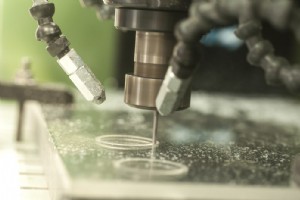
Published on November 16, 2022 Previously published on fastradius.com on November 16, 2022Acrylic, also known as plexiglass or polymethyl methacrylate (PMMA), and polycarbonate are both lightweight, transparent plastics suitable for manufacturing parts via CNC machining. Acrylic is known for its str

Published on November 23, 2022 Previously published on fastradius.com on November 23, 2022Many 3D printed parts aren’t 100% ready straight out of the printer, which is where additive post-processing comes in. Post-processing techniques like sanding and smoothing can improve the look and feel of your
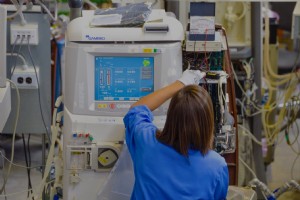
Published on February 24, 2023 Modern medicine relies on a variety of different tools and instruments. Ranging from flexible tubing to gauze to durable metal clamps and prosthetic limbs, these devices take many shapes. Just as the FDA regulates which materials can be used in our food and drug supply
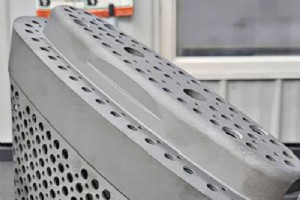
Published on March 23, 2023 A common challenge when designing parts for injection molding is factoring in cooling rates for distinct areas within a part’s design. In order for the mold to eject the part properly, of course it must be cooled. However, with high-volume or geometrically-complex parts,
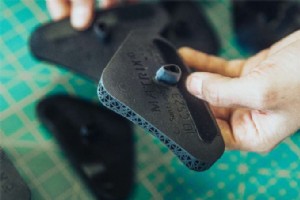
About EPU 45EPU 45 is a new energy-damping elastomer developed by the material science engineers at Carbon. It prints four times faster than traditional elastomeric polyurethanes and is a strain-rate sensitive material that stiffens to absorb energy at higher impact rates, enabling the design of hig

Published on November 6, 2023 When designing a part, it’s important to understand critical differences between comparable materials. For instance, substituting a thermoplastic instead of a thermoset to create a product that’s meant to withstand high temperatures would have disastrous results. The te
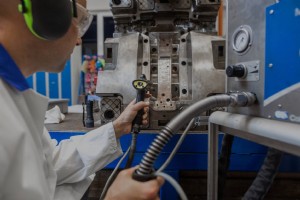
Published on January 18, 2024 Injection molding is an efficient production method when high volumes of identical parts are needed. However, it also requires a high degree of technical expertise to master. With so many different variables in play, small, seemingly minor mistakes in early phases of pr
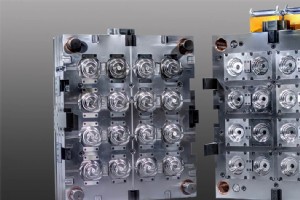
Published on April 11, 2024 How SyBridge Expertise Optimizes Your Process and Lowers CostsIn the fast-paced world of manufacturing, efficiency is paramount. Every second shaved off a cycle time translates directly to higher profits and a competitive edge. And when it comes to injection molding, tool
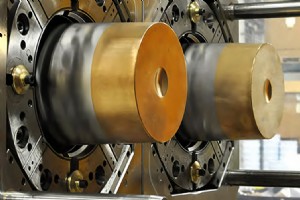
Published on April 30, 2024 Optimizing Your Injection Molding Process for Cost-Effective Manufacturing ExcellenceIn today’s competitive landscape, manufacturers are constantly seeking ways to streamline their processes, reduce costs, and increase output. At SyBridge, we understand these challenges a
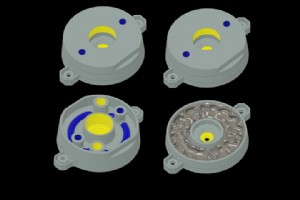
Published on May 23, 2024 Today, designers and engineers are accustomed to working with digital tools in their day-to-day jobs. Yet, over the last decade, these tools have evolved and unlocked new capabilities and productivity gains, enabling part and injection mold designs to be more complex and da

Published on June 20, 2024 From left to right: Brayden Janak (apprentice); Logan Vifaquain (CNC machining, Programming and CMM); Ron Maillet (GM); Jakob Rickan (CNC machining, CNC lathe, Programming and Electrode milling); Jack Carignan (CNC machining, Programming and Apprentice Mold maker)Ron Maill
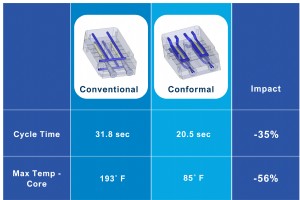
Published on July 1, 2024 Forget typical cycle times. We’re pushing the boundaries of conformal cooling. While traditional approaches deliver reductions, at SyBridge, we see further. By combining our expertise in 3D printing, mold tooling design, and in-house manufacturing, we engineer conformal c

The circuit board assembly process is the heart of nearly every electronic device we use today—from smartphones to medical equipment. If you’ve ever wondered how these complex gadgets come to life, it all starts with a precise and highly technical process that transforms raw components into fully
The history of circuit boards is a fascinating journey through time, technology, and innovation. What began as a rudimentary method for connecting electrical circuits has evolved into a highly precise, miniaturized process that powers nearly every modern electronic device. At Nova Engineering, we
Printed Circuit Boards (PCBs) are at the heart of nearly every modern electronic device, from smartphones and medical equipment to industrial machinery and automotive systems. Understanding the PCB manufacturing process is crucial for engineers, product developers, and businesses seeking reliable
As electronics become more essential to daily life, so does the need to understand the pcb environmental impact. Printed circuit boards (PCBs) are foundational to nearly all electronic devices, but their production and disposal can have significant environmental consequences. From material sourcin
Printed circuit boards (PCBs) are the core of nearly every modern electronic device—from smartphones and laptops to medical equipment and industrial systems. But behind every functioning PCB is a carefully executed series of PCB assembly processes that bring the board to life. If you’re wondering
From the smartphone in your pocket to the industrial systems that run factories, circuit boards are at the heart of nearly all electronic technology. Yet most people know surprisingly little about what makes these boards work—or why they’re so important. Here are six essential circuit board facts
Understanding when to outsource printed circuit board assembly is critical in today’s fast-paced electronics industry. As product designs become more complex and demand fluctuates, many companies are rethinking whether to keep PCB assembly in-house or partner with a trusted contract manufacturer.
The quality control of printed circuit boards is one of the most critical factors in producing reliable, high-performing electronic devices. From consumer electronics to medical equipment and industrial systems, printed circuit boards (PCBs) serve as the foundation for functionality. As designs be
Industrial Technology