Industrial manufacturing
Industrial Technology

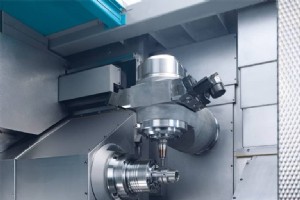
As an example, consider aerospace engines: include components made of titanium with complex contoured surfaces and precision milled pockets interlaced with turned profiles. 10 years ago, manufacturing such a part would have required a lathe, turned rotary block, and a milling machine, each wi
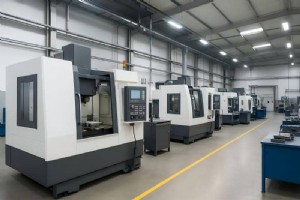
CNC machining is the primary technology used in modern production to produce high-precision, consistent products. Dimensional tolerance is a key aspect in determining part quality. How we manage these tolerances has a direct impact on the size accuracy, assembly fit, and overall performance o
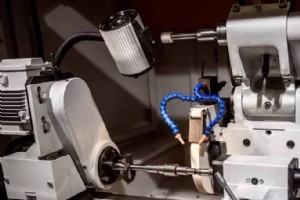
In the last 10 years, many industries around the world have begun changing rapidly due to the digital revolution and AI-enabled automation and intelligent systems. In the turning and milling of precision components of aerospace, robotics, medical, automotive, energy, and consumer electronics,
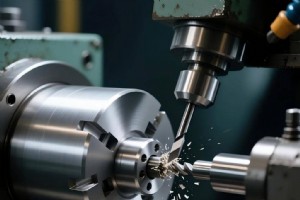
High-precision construction is necessary to continue developing new medical devices, producing new aerospace devices, and manufacturing advanced medical devices. Compact and complex devices that demand high levels of safety require CNC turning to meet the necessary production levels. Consiste
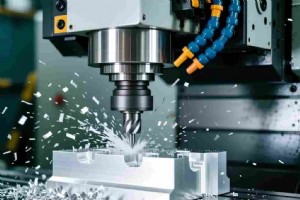
There is a serious change happening in global manufacturing right now. Many companies are beginning to use service-based and outsourced manufacturing instead of spending a lot of money on new equipment, hiring new workers, and opening new factories. This flexibility allows companies to change

Due to their excellent strength-to-weight ratio, resistance to corrosion, and ease of machining, aluminum parts are widely applied in the automotive, aircraft, industrial machinery, electronics, and power sectors. However, the question remains the same for both engineers and buyers during the
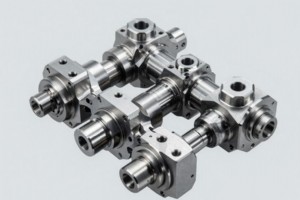
In the medical sector, CNC machining is not just a step in the production process but a crucial and risky one in the medical supply chain. The choice of a CNC machining supplier for medical applications has a direct impact on product safety, regulatory compliance, and the long-term manufactur
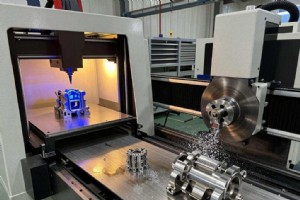
The waste of material has always been a difficult problem in the production of articles. Substantial amounts of material are wasted in various industries, such as aerospace, medical implants, and high-precision tooling; not only that, but the situation also violates the goals of eco-friendlin
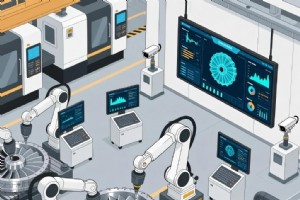
For procurement managers in the aerospace industry, few components carry as much cost, risk, and strategic importance as the turbine disk. As a core rotating component in aero engines, the turbine disk operates under extreme temperature, stress, and fatigue conditions, leaving zero tolerance
Medical device manufacturing continues to push the bounds of precision, and medical CNC machining remains at the forefront of this development. By 2026, the increasing demand for minimally invasive procedures, personalized implants, and intelligent surgical systems will have reshaped how manu
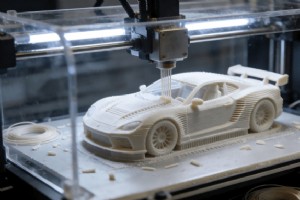
Automotive manufacturing once relied entirely on molds and assembly lines, churning out standardized parts in high volumes. This approach was costly, time-consuming, and left little room for customization. Now, 3D printing is entering the industry as a game-changer. It enables on-demand part
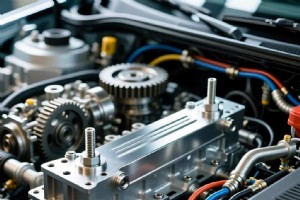
Today, precision, speed, and flexibility are even more essential in the automotive landscape. CNC automotive parts now form the bridge between high-performance design and efficient production-they are the very backbone of modern vehicle production. The appeal of CNC machining in automotive in
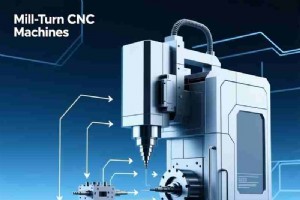
Mill-Turn CNC machines, which combine turning and milling in one setup, have become a key part of modern manufacturing in a world that is changing quickly. With these high-tech devices, you may configure them to do several tasks without moving the workpiece. CNC programming is at the heart of
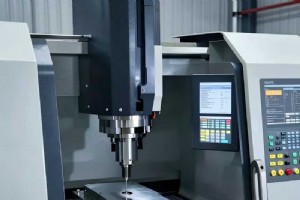
Today, CNC machining automation is more than just optimizing spindle speed and feed rate. The machine’s ability to handle tools, control logic flow, and repeat complicated tasks quickly is what makes it truly automated. CNC M06, CNC M98, and CNC M99 are some of the most important control inst
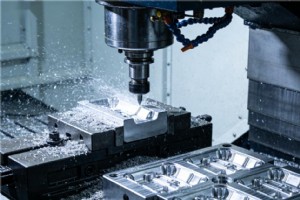
Walk into any die casting facility in Asia, and ADC12 dominates the conversation. In North America, it’s all about A380. Both alloys are workhorses of the die casting industry, but choosing between them affects not just how well the molten metal fills your mold—it also determines how easily t
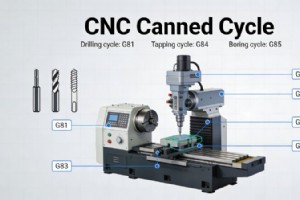
In the domain of Computer Numerical Control (CNC) programming, the efficiency of material removal and hole-making operations is dictated by the strategic application of G-codes. While linear and circular interpolation (G01, G02, G03) form the geometry of a part, CNC canned cycles serve as pre
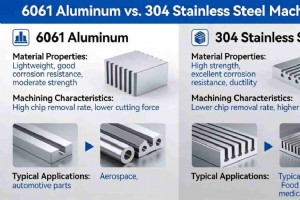
The choice of cutting tools for CNC machining operates as the main factor that determines production expenses, operational efficiency, and final product quality. The two most commonly used materials in precision manufacturing, 6061 aluminum and 304 stainless steel, require separate tooling me
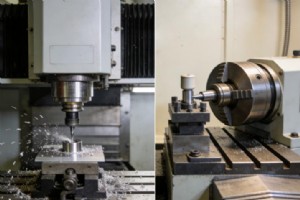
Choosing between CNC milling and CNC turning for a small component isn’t just about machine capabilities—it directly affects your cost, lead time, and part quality. When parts get tiny, the rules change. A design that looks simple on screen might become unexpectedly expensive if the process d
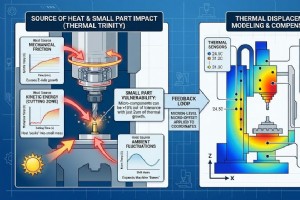
In the world of precision CNC machining, heat is often the silent enemy. Imagine you are working on a batch of small turned parts where the total tolerance is thinner than a human hair. Everything looks perfect on the first few units, but as the afternoon sun hits the workshop or the spindle
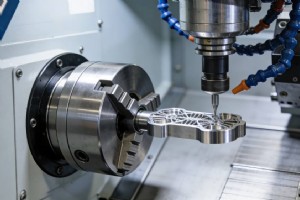
The 2026 industrial manufacturing sector defines aerospace precision machining. through its need to machine advanced alloys into complex shapes, which must achieve micron-level dimensional accuracy. Aerospace precision components mainly use titanium alloys and nickel-based superalloys as thei
Industrial Technology