



Air Freshener: From Ancient Scents to Modern Plug‑In Technology
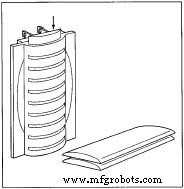
An air freshener is a product engineered to eliminate or mask unpleasant indoor odors. By releasing fragrance and odor‑neutralizing agents through aerosols, candles, potpourri, gels, or plug‑in devices, these products create a pleasant atmosphere. In the United States, sales exceeded several hundred million dollars annually by the late 1990s, with Glade Plug‑Ins becoming one of the most successful formats. Fragrance compounds have been used for millennia to scent spaces—ancient Egyptians blended musks and natural resins in tombs, and later civilizations employed spices and floral extracts. The first modern air freshener appeared in 1948, a pressurized spray that leveraged military insecticide technology. It contained roughly 1 % perfume, 24 % alcohol or other solvents, and 75 % chlorofluorocarbon (CFC) propellant, delivering a long‑lasting mist that became the industry standard. By the 1950s, manufacturers added odor‑neutralizing chemicals—unsaturated esters, long‑chain aldehydes, and polymeric agents—to actively destroy unpleasant scents such as cigarette smoke, urine, cooking aromas, and fishy amines. Throughout the next 25 years, formulations were refined for performance and cost, but the 1970s saw a shift away from CFC‑based aerosols due to ozone‑depletion concerns. Reformulated products persisted, yet alternative formats grew in popularity. The 1990s witnessed a renaissance of potpourri and candles, and companies like Kalib Enterprises introduced fan‑circulated dry spice blends, while Arizona Natural Resources released odor‑killing and aromatherapy candles. Among the most innovative developments is the Glade Plug‑In, a heat‑driven system that vaporizes a gel‑based fragrance concentrate from a small plastic tray. When the tray is inserted into the warmer unit and connected to an outlet, the heat causes the fragrance to diffuse through a laminated membrane, providing a steady release for several weeks. Plug‑Ins consist of a compact tray holding a gel‑like fragrance matrix and a heat‑generating unit. The tray’s laminated lid features a removable barrier layer and a permeable membrane that together control the fragrance release rate. The unit’s housing—typically made from thermoplastics such as phenol‑formaldehyde or polycarbonate—is molded into a single piece with metal‑coated prongs for electrical contact. Fragrance options span Honey‑Suckle, Mountain Meadow, Country Breeze, Powder Fresh, and Country Garden, each formulated to last weeks before the gel visibly dries and signals replacement. The tray’s central ridge guides insertion, while the one‑piece carton packaging, refined through 25 design iterations, showcases the warmer’s blades and fragrance pack with a panoramic polyester window. Fragrance oils are blended from aldehydes, green notes (e.g., galbanum, violet leaf), floral accords (jasmine‑rose, lily of the valley), herbal‑spice elements (lavender, sage, cinnamon, clove, sandalwood, cedar), and oriental bases (musk, amber). Synthetic components—ketones, esters, alcohols, terpenes—are combined with gelling agents to form an organic or inorganic matrix that preserves fragrance integrity during heating. Quality checks occur at multiple stages. Incoming raw materials are assayed for purity and compliance with California Air Quality Board (CARB) VOC limits—defined as compounds with vapor pressure >0.1 mm Hg at 20 °C or containing ≤12 carbon atoms. Similar regulations in states like New York also influence formulation. Plastic components are inspected for edge integrity and structural soundness. Regulatory developments will shape the next generation of air fresheners, as VOC restrictions may limit fragrance ingredients. Technological advances in packaging and dispersion—such as refillable chambers and precision‑controlled membranes—promise longer‑lasting, cleaner releases. SC Johnson is actively developing plug‑in variants that allow users to refill fragrance oil, further extending product life and sustainability.
Background
History
Design
Raw Materials
The Manufacturing Process
Fragrance Pack Construction
Heater Construction
Final Assembly and Packaging
Quality Control
The Future
Manufacturing process
- Air Purifiers: Design, History, and Future Trends
- Oxygen Tank Manufacturing: From Raw Materials to Quality Assurance
- Oxygen: From Ancient Discovery to Modern Industrial Powerhouse
- Air Conditioning Systems: Design, Manufacturing, and Future Trends
- Hot Air Balloons: From Montgolfier to Modern Flight
- Air Bag Systems: Design, History, and Future Innovations
- Air Surfer: DIY Air Quality Monitoring System with Arduino Mega 2560
- Advanced Cryogenic Air Separation: Efficient Extraction of Nitrogen and Oxygen
- Understanding Air Cylinder Actuators: Fundamentals and Applications
- Air Suspension Systems: Overview, Components, and Benefits for Heavy-Duty Vehicles