



The Evolution and Production of Comic Books: From Ancient Art to Modern Industry
Background
Comic books convey narratives through a series of sequential illustrations paired with concise text—dialogue, sound effects, or brief narration—spanning genres from humor to adventure, mystery, and fantasy. They are typically released on a regular schedule and feature recurring characters that anchor each storyline across multiple issues.
History
The tradition of storytelling through sequential images dates back to prehistoric cave paintings and Egyptian hieroglyphics. In the 1800s, hand‑drawn cartoons began appearing in newspapers and magazines, often lampooning public figures and laying the groundwork for modern comics.
The United States’ first newspaper comic strip, The Yellow Kid by Richard F. Outcault, debuted in the Hearst New York American on February 16, 1896. Its Sunday supplement sparked a boom in comic strips, leading newspapers to publish small books of reprints to attract readers.
In 1934, Eastern Color Printing sold the first book of reprinted strips—Famous Funnies No. I—directly to the public for ten cents. After an initial distribution setback, American News ordered 250,000 copies, making it the first comic book sold at newsstands.
Late 1930s saw the birth of iconic superheroes, driving sales as good triumphed over evil. By the early 1950s, audience fatigue with superheroes led some publishers to embrace lurid crime and horror stories. The resulting controversy prompted a federal investigation and the creation of the Comics Code Authority in 1954, which set industry standards for appropriate content.
Comic books experienced a renaissance in the 1980s, thanks to fresh artistic talent that introduced new heroes and complex narratives. Today, the industry remains a thriving million‑dollar enterprise that extends into movies, television, toys, costumes, and more.
Raw Materials
Creating a comic book involves a range of materials: various paper types, pencils, inks, markers, and paints for the original hand‑drawn masters. After scanning and digital coloring, four color guide films—cyan, magenta, yellow, and black—are generated for the printing process.
The finished pages are printed on paper using CMYK inks in a dot‑matrix pattern that our eyes interpret as a full spectrum of colors. Pages are then bound with staples or glue to form the final product.
Design
Each new issue requires fresh artwork, making design an integral part of production. For debut titles, the process mirrors that of any new creative work: idea generation, sketching, refinement, and final character and theme development.
The prototype comic book, historically called an “ashcan,” was originally a quick way to secure copyright by attaching a new title to recycled pages. Modern publishers occasionally release limited ashcan editions as collectible promos.
The Manufacturing Process
Publishers vary from small indie operations to large studios producing multiple titles monthly. Below is a typical workflow for a medium‑sized company.
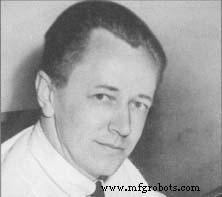 Charles M. Schulz
Born in Minneapolis on November 26, 1922, Charles M. Schulz began freelancing for Catholic magazines after World War II and taught at the Art Instruction Institute. His early work appeared in the Saturday Evening Post, and he created the cartoon Li’l Folks.
United Feature Syndicate rebranded the strip as Peanuts, debuting it in seven newspapers in 1950. By 1956, it was in over 100 papers, and by 1965, more than 2,300 newspapers worldwide. Schulz received the Reuben Award in 1955 and 1964, the Yale Humor Award in 1956, and honorary degrees from Anderson College (1963) and St. Mary’s College of California (1969). The Charles M. Schulz Award honors aspiring comic artists, established by the Syndicate in 1980. Schulz passed away on February 12, 2000, the night before his final original Peanuts strip announced his retirement.
Writing
- While visuals dominate, the written plot drives the story’s direction. Writers and artists collaborate, exchanging ideas on index cards or storyboard boards to outline scenes, settings, and characters.
- Given a fixed page count, they decide how to allocate scenes and dialogue for optimal pacing and impact, guided by industry conventions or personal style.
- Once refined, the writer produces a script—akin to a film or play script—detailing scene descriptions, dialogue, and directions for the artist.
Drawing
- The artist reviews the script and creates thumbnail sketches to plan panel layout and composition.
- Using the thumbnails, the artist drafts each page in pencil on standard 8.5 × 11 in. paper, then enlarges to 11 × 17 in. illustration boards for final inking.
- After establishing main elements with a hard pencil, the artist darkens key lines, adds backgrounds, and marks dialogue areas with blue pencil.
- Editors review the pencils, suggesting revisions to tighten dialogue or clarify visuals.
- Completed pencils are enlarged, sent to inkers, who refine line work, add shadows, and apply texture, producing a finished black‑and‑white page.
- Letterers add dialogue, sound effects, and narration, choosing typefaces that reflect tone and emphasis.
Coloring
- Colorists receive finished pages and craft color guides by hand‑coloring photocopies with markers, pencils, or paints.
- Using custom software, they digitally paint each page, starting with backgrounds and layering colors to match the guide or create effects.
- Colors are encoded with CMYK percentages (e.g., M80Y87 for a specific red) to ensure consistency across issues.
- After coloring, a proof copy is printed for final approval. The computer then generates four film negatives—cyan, magenta, yellow, black—for each page.
Printing
- Pages are arranged in printing order, with multiple pages printed on each side of a sheet to optimize press usage.
- Film negatives expose aluminum plates via light projection; where light passes, ink is removed, creating the printing matrix.
- Each color plate is mounted on a drum; inked rollers press the corresponding CMYK color onto paper as it feeds through the press.
- All four colors are applied—either in separate passes or a single pass on a roll of paper—then cut, stacked, folded, and bound into the final comic book.
The Future
The future of comic books remains as dynamic as its most iconic heroes, offering a visual gateway to humor, action, and adventure that continues to spark readers’ imaginations.
Manufacturing process
- The Evolution and Production Process of Modern Books
- Book Review: Digitise or Die – A Blueprint for IoT-Driven Transformation
- Retaining Humanity in the Age of Disruptive Technology
- Mastering C Structures: Organize Complex Data Efficiently
- C Typedef Explained: Simplify Your Code with Custom Type Names
- C++ Data Structures: Building Efficient Programs with Arrays, Structs, and More
- Understanding C# Structures: How to Define and Use Value Types
- New 5-Axis CNC Machining Guide Published – Expert Insights for Machinists
- All-in-One Inspection Checklists for Every Equipment Type
- Silencio: A 3D-Printed Tactile Poetry Book for Sighted and Blind Readers