



Retaining Humanity in the Age of Disruptive Technology
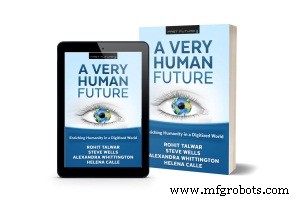
With its expansive scope and substantial length, this book tackles a single, vital question: how can we preserve humanity amid the rapid advance of disruptive technologies?
Rather than dispensing grandiose predictions, the authors provide objective, data‑rich analysis. Their tone is neutral, avoiding controversial claims while presenting the interconnected challenges in clear detail.
Designed for accessibility, the book is divided into seven sections of concise chapters. Though easy to read, the material is dense enough to warrant multiple sittings and reflective pauses.
In this sense the work functions like an evolving encyclopedia—an ever‑relevant reference for topics such as the future role of women in technology, risk management, and societal adaptation.
Advanced technologies—including Artificial Intelligence—are powered by the exponential growth of computing capacity predicted by Moore’s Law, which forecasts a 128‑fold increase in performance over the coming decade. This reality forces organizations to adopt exponential thinking.
Central to the authors’ argument is the relentless pace of technological acceleration and its implications for humanity. AI’s unique ability to learn, evolve, and act autonomously fuels debates over job displacement, but the core question remains: who controls the future, and what voice do ordinary citizens have?

While the conclusion chapter does not resolve this ownership debate, it outlines a concise manifesto of 12 critical action areas. These recommendations target individuals, societies, businesses, and governments to mitigate the risks of being overwhelmed by the scale of impending change.
- 1. Extraordinary leadership and expanded personal capabilities.
- 2. Digital literacy across all sectors.
- 3. Overhauling education systems, corporate training, and adult learning.
- … (additional areas omitted for brevity)
- 12. Fostering open, human‑centered dialogue.
The twelfth area—open dialogue—captures the essence of this comprehensive work. Ongoing debate about the societal impact of new technologies will persist; the imperative is to raise public literacy and involve citizens in shaping the future, ensuring that technology serves humanity’s best interests.
This book is reviewed by freelance technology writer, Bob Emmerson
Internet of Things Technology
- How Composites Are Shaping the Future of Sporting Goods
- How Aluminum Affects the Human Body: Exposure, Health Impacts, and Safety
- IoT & Home Automation: Shaping the Smart Living of Tomorrow
- The Future of Drones: Capabilities, Opportunities, and Risks
- Dominique Cardon Unveils Workbook, Antoine Janot’s Colours: A Practical Guide to 18th‑Century French Dyeing
- Automation: Driving Business Success into the Future
- How Automation Is Revolutionizing Aviation: The Future of Flight
- IoT in 2020: How Advancements Are Shaping Our Future
- Future Trends in Printed Circuit Boards: Innovations and Applications
- MEMS Microphones: Shaping Tomorrow’s Audio Solutions