



Scalable Production with IoT: Smart Strategies for Upgrading Manufacturing Efficiency
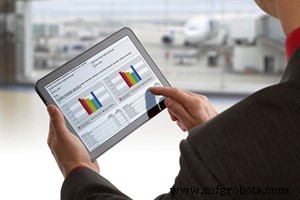
Upscaling a manufacturing facility doesn’t always demand a full equipment overhaul. Software—especially Internet of Things (IoT) solutions—plays a pivotal role. Martyn Williams, Managing Director of industrial‑software specialist Copa‑Data UK, explains how IoT can elevate production volumes while preserving existing assets.
Expanding output often involves significant capital on new machinery, yet the first step toward high‑volume manufacturing can be achieved by integrating smart sensors, data analytics and automation software. Modern production gains hinge on an IoT infrastructure that scales with the business, rather than a static machine fleet.
Doing More with Less
Smart sensors embedded in industrial machinery continuously record operating parameters—temperature, speed, productivity and energy consumption—and transmit this data to a central controller. From there, intelligent control platforms such as Copa‑Data’s zenon enable the machinery to auto‑adjust, maintaining optimal output levels.
By linking sensors, PLCs and visualization tools into a high‑quality HMI, operators gain real‑time insight into resources, energy use, performance and output. This visibility is essential for pinpointing waste and unlocking production improvements.
Manufacturers seeking to increase output with their existing equipment must scrutinise current processes to reclaim wasted resources. For example, the seven manufacturing wastes—overproduction, waiting, transporting, inappropriate processing, unnecessary inventory, excess motion and defects—can be identified and mitigated with zenon’s analytics.
Imagine a conveyor that frequently runs empty due to a bottleneck upstream. zenon can detect this pattern, suggest an optimal solution to eliminate waiting and excess motion, and empower operators to make data‑driven decisions that enhance throughput.
Intelligent Synchronisation with IoT
Scaling is driven by demand, but investing in new equipment carries the risk of surplus capacity if demand fluctuates or if a machine fails. IoT software mitigates these risks by providing a coordinated view of all field devices.
In a beverage plant, for instance, flow meters and level sensors can be cross‑analysed to ensure pump output matches tank fill levels. Such real‑time harmonisation guarantees that every component operates at its intended output.
As the number of IoT devices grows, so does the necessity for streamlined maintenance. An IoT‑based model places machine status on the HMI, enabling early detection of performance changes and proactive intervention before costly downtime occurs.
IoT’s “do more with less” philosophy is poised to accelerate worldwide adoption. By prioritising waste reduction and resource reclamation, manufacturers can achieve high‑volume production without the need for a complete equipment overhaul—leveraging the latest technology to unlock efficiency.
This article was written by Martyn Williams, Managing Director of Copa‑Data UK.
Internet of Things Technology
- Over‑the‑Air Software Updates in IoT: Why SOTA Matters
- Revolutionizing Container Tracking with IoT: Cost‑Effective, Real‑Time Visibility
- Selecting the Optimal Cellular IoT Technology
- The 5‑Layer IoT Technology Stack: A Product Manager’s Blueprint
- IoT Product Management Course – Stanford Continuing Studies
- The Rise of IoT: Why Security Must Be Built In from Day One
- How IoT Is Transforming Consumer Business and Manufacturing
- Elevate Your Operations: Leveraging IoT Tank Monitoring for Safer, Smarter, and More Profitable Petroleum Management
- How IoT Drives Transformational Change in Freight Logistics
- IoT-Enabled Fuel Tank Monitoring: Accurate, Real-Time Home Level Tracking