



Aluminum vs. Stainless Steel: Machining Challenges and Best Practices
Choosing the right material is a cornerstone of efficient CNC machining. It directly influences cutting speeds, tool longevity, cycle times, and final part quality. Two of the most frequently compared metals—aluminum and stainless steel—offer distinct advantages and pose unique machining hurdles across aerospace, automotive, and industrial sectors.
Understanding these differences empowers engineers and purchasing managers to align material selection with performance goals and cost targets.
Material Characteristics and Their Impact on Machining
Aluminum stands out for its light weight, excellent thermal conductivity, and moderate hardness, making it exceptionally friendly to machining. It supports high spindle speeds, rapid chip evacuation, and consistently smooth surface finishes.
Stainless steel, by contrast, is markedly harder and stronger, delivering superior corrosion resistance and durability. These benefits come at the cost of higher cutting forces, elevated temperatures, and increased tool wear.
In practice, aluminum favors speed and productivity, while stainless steel demands precision and careful parameter control.
Cutting Speed and Tool Life
Aluminum can be cut at high spindle speeds with relatively low cutting resistance, resulting in shorter cycle times and extended tool life when optimal conditions are maintained.
Stainless steel, however, requires reduced cutting speeds to mitigate heat buildup. Its toughness and work‑hardening tendency accelerate tool wear if parameters are not carefully tuned, leading to higher tooling costs.
Heat Generation and Thermal Management
Stainless steel’s lower thermal conductivity concentrates heat in the cutting zone, increasing the risk of tool overheating, surface discoloration, and dimensional drift due to thermal expansion.
- Tool overheating and premature wear
- Surface discoloration or thermal damage
- Dimensional inaccuracies from thermal expansion
Aluminum dissipates heat more effectively thanks to its high conductivity, reducing localized overheating. Nevertheless, excessive heat can still soften the material or promote built‑up edge formation.
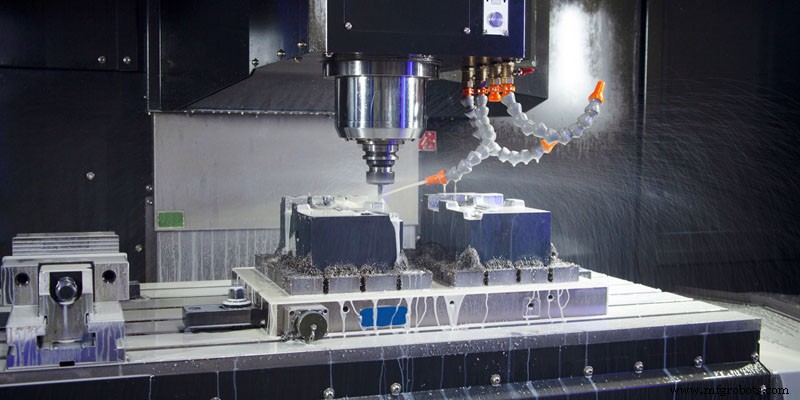
Coolant application is essential for both materials, but it is especially critical when machining stainless steel.
Chip Formation and Evacuation
Aluminum typically produces soft, continuous chips that are easy to evacuate with proper tooling. Poor chip management, however, can lead to built‑up edge and surface finish defects.
Stainless steel generates tougher, stringy chips that may wrap around the tool or workpiece, raising the risk of surface damage and tool breakage. Selecting the right tool geometry and employing effective chip‑breaking strategies are essential.
Surface Finish Quality
Because of its softness, aluminum generally yields smoother cuts and finer finishes when sharp tools and optimized parameters are used.
Stainless steel’s tendency to work‑harden can produce rough surfaces, tears, or tool marks if cutting conditions are not consistently maintained. Often, additional finishing steps are required to meet stringent surface specifications.
Tool Selection and Geometry
For aluminum, high‑rake, sharp‑edged tools with polished flutes reduce friction and prevent chip adhesion.
Stainless steel demands robust, wear‑resistant carbide tools—often with special coatings—to withstand higher temperatures and forces. Tool geometry is tailored to minimize heat buildup and improve chip control.
Choosing the correct tool for each material dramatically improves machining performance and cost efficiency.
Workholding and Stability
Aluminum’s softness means it can deform under excessive clamping. Balanced clamping is necessary to avoid distortion, especially for thin‑walled parts.
Stainless steel’s strength requires rigid setups to handle increased cutting forces. Instability can trigger vibration, negatively impacting tool life and surface finish.
Effective fixture design is critical for both materials, but is particularly vital when machining stainless steel.
Cost Implications
Aluminum is generally more economical to machine—faster cuts, longer tool life, and reduced cycle times lower overall production costs.
Stainless steel’s superior strength and corrosion resistance come with higher machining costs due to slower speeds, increased tool wear, and more complex process control.
Material selection should balance performance needs with manufacturing efficiency and budget constraints.
Choosing the Right Material for Your Application
Opt for aluminum when lightweight, rapid prototyping, or cost‑effective production are paramount.
Choose stainless steel for parts that demand high strength, corrosion resistance, and durability, even if machining is more complex and costly.
By understanding each material’s machining challenges, manufacturers can optimize processes and achieve superior results.
Conclusion
Aluminum and stainless steel each bring unique benefits and machining challenges. Aluminum excels in speed and ease of machining, while stainless steel offers strength and durability at the expense of increased complexity.
Success hinges on selecting the appropriate material for the application and applying material‑specific machining strategies to overcome challenges, ensuring both performance and cost‑effectiveness in CNC operations.
Manufacturing process
- Creating Frictionless User Experiences: A UX Design Blueprint
- CNC Machining: Proven Strategies for Achieving Tight Tolerances
- 11 Essential Facts About CNC Engraving Machining You Should Know
- Exploring Measuring Tools: Types, Uses, and Best Practices
- CNC Machining: Transforming Modern Manufacturing
- Hydraulic Braking Systems Explained: How Your Car Stays Safe
- Mastering Surface Grinding: Key Principles for Superior Finish
- Pantyhose: The Ultimate Guide to Elegant Women’s Hosiery
- The Complete Manufacturing Process of Electronic Cables
- Optimizing Coal Carbonization for High-Quality Metallurgical Coke