



12 Key Insights for Modernizing Maintenance in Oil & Gas
In today’s high‑pressure oil and gas landscape, technology is the catalyst that drives operational excellence. Maintenance is now the frontline arena where firms secure a competitive advantage, especially as plants adopt CMMS and other digital tools to boost efficiency.
Last week, we hosted a webinar that delved into unlocking the power of modern maintenance during the 2019 Digital Transformation in Oil and Gas Conference. Fiix experts Sandy D’Souza, Director of Strategic Alliances, and Stuart Fergusson, Solutions Engineering Lead, shared strategies for leveraging maintenance technology to enhance asset performance. Although the discussion centered on oil and gas, the lessons are broadly applicable to any maintenance organization.
We put together 12 initial thoughts on the session and more ways to explore the topic of modern maintenance.
Improving asset performance in the oil and gas industry, and beyond
1. The higher-level benefits of modern maintenance
The webinar opened by outlining why enterprises are investing in maintenance software. D’Souza identified three core advantages: higher throughput, greater output, and reduced downtime. While the day‑to‑day benefits of a CMMS are obvious, the true value lies in its ability to translate routine tasks into predictable, increased production that every stakeholder values.
For modern plants, digital tools are the decisive factor for extracting maximum value from assets, positioning maintenance as the critical battleground for sustaining competitiveness.
2. The missing link has been found
Predictive maintenance has long been hailed as the cornerstone of Industry 4.0, yet its implementation has been hampered by data silos. D’Souza and Fergusson explain that while maintenance data has always existed, capturing, sharing, and analyzing it efficiently has been elusive. Today, advanced CMMS solutions bridge the gap, linking maintenance, production, and business systems so that real‑time sensor data fuels actionable insights.
3. “Excellence is a habit, not an act.”
Modernizing maintenance is not a one‑off initiative; it requires a culture of continuous improvement. Viewing digital transformation as a destination rather than an evolving journey risks falling back into outdated practices. Transitioning from paper‑based, reactive workflows to automated, predictive systems demands incremental, sustained effort.

4. The best and the rest
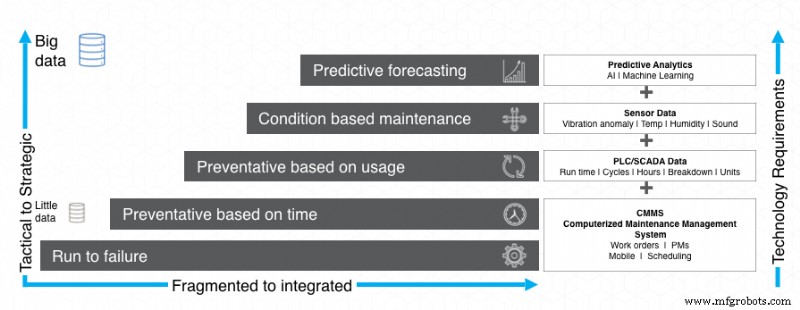
D’Souza and Fergusson distinguish two groups: run‑to‑failure teams and best‑in‑class preventive teams. Roughly 50 % of organizations still rely on the former, but the performance gap is narrowing thanks to software that can execute increasingly sophisticated tasks, such as delivering real‑time asset analytics.
5. A maintenance dream team
Three pillars underpin a successful modern maintenance program: data, software, and connectivity. Reactive teams suffer from limited data, manual processes, and isolation. In contrast, predictive maintenance thrives when organizations identify essential data, deploy software to capture it, and interconnect systems to analyze and act on the information.
6. Being picky is the key to modern maintenance success
Choosing a CMMS should be driven by user experience and data integrity. D’Souza and Fergusson advise against overly complex tools that technicians cannot master. The platform must be intuitive, promote consistent use, and seamlessly integrate with enterprise systems to ensure accurate, comprehensive data capture.
7. The good kind of failure
The goal isn’t to eradicate all failures but to align each asset with the most appropriate maintenance strategy. High‑quality data enables informed decisions about acceptable downtime, allowing facilities to tolerate a calculated level of failure while optimizing overall performance.
8. Connecting the dots on integration
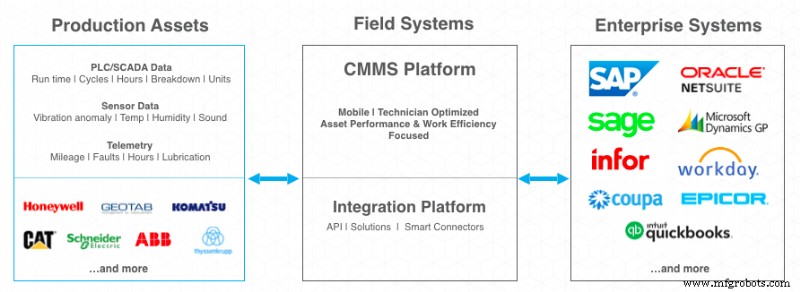
If CMMS integration still feels abstract, consider this framework: a CMMS must interface with production systems—PLCs, SCADA, and sensors—and enterprise systems—ERP, finance, and procurement. These integrations create a 360° view of equipment health and synchronize maintenance activities with broader business objectives.
9. Slow and steady wins the race
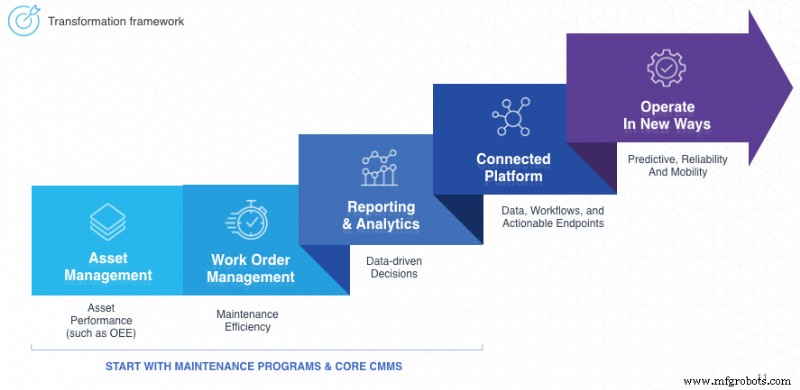
Jumping directly from reactive to predictive maintenance is akin to leaping across a canyon. Fiix recommends starting with an assessment of current capabilities and data availability. Build a structured maintenance program on existing assets, digitize processes where possible, and then chart medium‑ and long‑term plans for modernization.
10. Start with the fundamentals
D’Souza emphasizes grounding the evolution of your maintenance strategy in two core metrics: planned maintenance percentage and preventive maintenance compliance. By tracking how many tasks are scheduled and adhered to, teams can progressively refine and expand their preventive programs.
11. There’s strength in numbers
When determining who should access a CMMS, the answer is purpose‑driven. Fergusson and D’Souza note that every individual tied to a maintenance goal—whether technicians, managers, supervisors, or inventory staff—should be granted access. The focus is on aligning user access with the desired outcome, such as reducing downtime.
12. A checklist for digital transformation
To guide maintenance teams through digital transformation, the webinar concluded with a concise checklist:
- Start right – Assess business needs, engage stakeholders, and partner with a trusted vendor.
- Leverage data – Identify key sources, define KPIs, and clean, analyze, and act on the information.
- Manage change – Empower users, maintain open communication, and provide ongoing training.
- Implement thoughtfully – Develop a clear plan, assign roles, populate data, and prioritize adoption.
- Expand strategically – Integrate systems, build dashboards, analyze work, and continuously improve processes.
Equipment Maintenance and Repair
- Understanding the Corrosion Resistance of Stainless Steel
- Prevent Oil Sampling Errors: 6 Common Mistakes in Accurate Oil Testing
- Hydraulic Institute & Pump Systems Matter Launch One‑Day Course on Pumping System Optimization
- Is Reactive Maintenance Right for Your Facility? Balancing Cost, Safety, and Reliability
- Key Tools for Effective Predictive Maintenance in Modern Industries
- Safeguard Your Industrial Electronics: 4 Proven Strategies Against Lightning Damage
- Minimizing Scheduled Maintenance Impact on Business Operations
- Cloud vs On‑Premise CMMS: Which System Delivers the Best ROI?
- Utility Partners Enhances Operations with eMaint CMMS
- MTTF vs MTBF: Mastering Failure Metrics for Superior Maintenance