



Minimizing Scheduled Maintenance Impact on Business Operations
Physical assets inevitably wear out from routine use, so scheduled maintenance is a core part of any facility’s operational rhythm. While essential, it can interrupt normal workflow—think a key machine offline during an oil change or filter replacement.
Effective scheduling, however, can keep downtime to a minimum, preserving productivity and system availability.
What Is Scheduled Maintenance?
Scheduled maintenance refers to any pre‑planned work that must be completed within a defined timeframe. Common examples include air‑filter changes, oil top‑ups, and other recurring tasks. It can also arise from a maintenance ticket, where downtime is pre‑arranged, allowing teams to allocate tools, parts, technicians, and a precise timetable.
Not all scheduled work requires a shutdown. Vibration monitoring, for instance, can run while equipment operates, whereas rewinding an electric motor demands a complete halt.
Business Impact of Scheduled Maintenance
When a machine is offline, upstream processes may stall, while downstream stages sit idle—an inefficient use of resources. Some sectors, like IT, have mitigated this by shifting live workloads to redundant servers during maintenance. The trade‑off is the cost of extra hardware.
Scheduled Maintenance Critical Percent (SMCP)
SMCP is a quantitative tool that ranks maintenance tasks by urgency, helping technicians prioritize when not all tasks can be performed in the allotted window. The formula is:

Here, the "number of days in the maintenance cycle" reflects the routine interval, while "number of days late" tracks how overdue the task is. SMCP turns abstract urgency into actionable numbers, enabling teams to focus on the most critical interventions.
Strategies to Schedule Maintenance with Minimal Business Disruption
- OEM guidelines: Follow manufacturer‑recommended intervals for optimal equipment lifespan.
- Real‑time operating conditions: Adjust schedules based on current load and performance data.
- Historical data & experience: Leverage past maintenance outcomes to refine future plans.
While predictive models are improving, maintenance planning remains an art grounded in data, expertise, and on‑the‑ground judgment.
Modern predictive tools can identify potential failures early, yet their adoption requires technical know‑how and investment.
Leveraging a Computerized Maintenance Management System (CMMS)
A CMMS centralizes all maintenance activities, from work orders to inventory forecasting. Key benefits include:
- Automated work request handling
- Real‑time MRO inventory tracking
- Resource‑optimized scheduling via a shared calendar
- Instant access to SOPs, checklists, and logs, reducing troubleshooting time
- Cloud‑based accessibility for remote teams
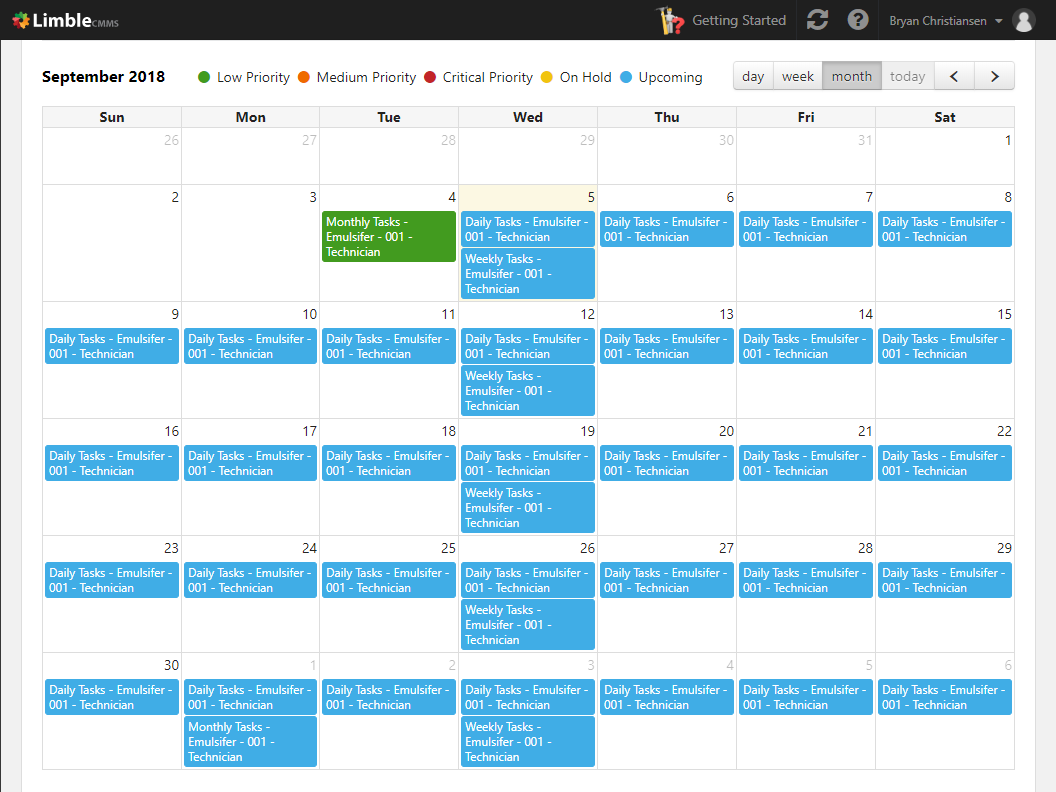
Maintenance calendar snapshot in Limble CMMS
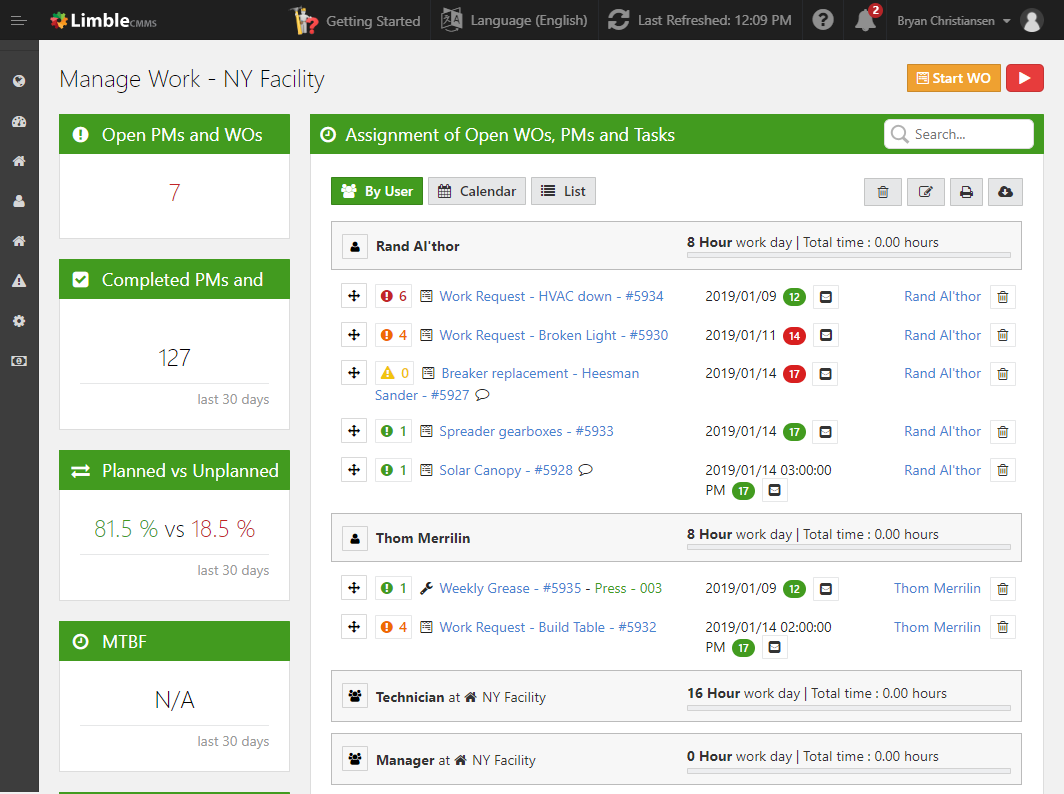
Scheduled tasks overview in Limble CMMS
By automatically assigning tasks to technicians based on availability and skill, CMMS ensures that planned maintenance dovetails smoothly with production schedules.
Prioritizing with SMCP
Apply the SMCP formula to all time‑sensitive tasks. High‑SMCP jobs are executed first, while lower‑priority items can be deferred, reducing the risk of critical bottlenecks.
Reducing Downtime Through Training and Standardization
Standard Operating Procedures (SOPs) and checklists eliminate variability between technicians. Properly trained staff can execute maintenance swiftly and accurately, cutting downtime and preventing costly rework.
Minimizing Excessive Maintenance with Condition Monitoring & Predictive Analytics
By continuously monitoring asset health—via vibration sensors, temperature probes, and other IoT devices—maintenance teams can shift from routine schedules to data‑driven interventions. Predictive analytics highlight exactly when a task is necessary, allowing resources to be aligned with production without unnecessary interruptions.
Conclusion
Scheduled maintenance is indispensable for sustaining high asset availability, but poorly timed work can erode productivity and profit margins. The combination of SMCP for task prioritization, a robust CMMS for planning, and predictive analytics for precise scheduling forms a best‑practice framework that keeps operations running smoothly while safeguarding equipment.
Equipment Maintenance and Repair
- Aligning Operations & Maintenance: A Proven Formula to Slash Downtime and Boost Profits
- Building a Strong Operations‑Maintenance Partnership for Sustainable Production
- Elevating Maintenance Management: Building Business‑Savvy Leaders
- Optimizing Maintenance: Cost‑Effective Predictive Strategies for Manufacturing Leaders
- Transform Maintenance from Cost Center to Reliability Partner
- How Motor Condition Drives Efficiency, Reliability, and Cost Savings
- Elevating Maintenance Leadership: A Proven 2‑Year Mentoring Program
- Enhancing Operations‑Maintenance Collaboration for Superior Manufacturing Outcomes
- How Automation Enhances Equipment Reliability: Boosting Maintenance, Data, and Quality
- Boost Business Efficiency: How Predictive Analytics Optimizes Operations & Maintenance