



Maintenance Neglect Drives U.S. into a Debt of Infrastructure Failure
Recent high‑profile incidents—such as the 188,000‑person evacuation downstream of California’s Oroville Dam over spillway erosion fears—highlight a growing crisis: the United States is sinking into a maintenance debt that threatens every facet of daily life.
The National Parks Service’s mounting backlog, coupled with a nationwide infrastructure audit that labels schools, drinking water systems, energy grids and hazardous‑waste sites as “at risk,” underscores the urgency of the issue.
Infrastructure Scores a D+ – a Warning Sign for the Nation
In 2017, the American Society of Civil Engineers (ASCE) Infrastructure Report Card gave U.S. infrastructure an overall grade of D+. The ASCE evaluates eight key criteria—funding, condition, operation & maintenance, public safety, and resilience—using a panel of 28 volunteer civil engineers.
While the slow degradation of infrastructure may not trigger an immediate disaster, the cost is enormous. ASCE estimates that the U.S. will need to invest $4.59 trillion by 2025 to lift the nation’s infrastructure to a passing B‑grade.
Why Infrastructure Matters to the Economy
Transport infrastructure—roads, waterways, ports, and airports—directly influences the speed and cost of moving goods. Deterioration inflates shipping times and freight rates, squeezing domestic manufacturers and eroding America’s global competitiveness.
ASCE’s “Failure to Act” report projects that failing to close the investment gap by 2025 could cost the U.S. economy:
- $4 trillion loss in GDP
- 2.5 million jobs lost by 2025
- $3,400 loss in disposable income per household each year from 2016‑2025
The Core Issue: Maintenance Is Overlooked
Maintenance is widely recognized in theory as essential, yet in practice it is often treated as a cost center, squeezed by budget constraints and tight schedules. Experts Andrew Russell and Lee Vinsel argue that this disconnect stems from a cultural bias toward novelty over upkeep.
In their essay “Hail the Maintainers,” Russell (SUNY Polytechnic Institute) and Vinsel (Stevens Institute of Technology) trace how historical emphasis on innovation sidelined the quieter, indispensable work of maintaining existing systems.
“Novel objects preoccupy the privileged and can generate huge profits. But the most remarkable tales of cunning, effort, and care that people direct toward technologies exist far beyond the same old anecdotes about invention and innovation,” they write.
Innovation Culture and the Shortage of Maintenance Talent
Generations are being raised in an environment that celebrates creating the new at the expense of caring for the old. This trend threatens a shortage of skilled maintenance professionals.
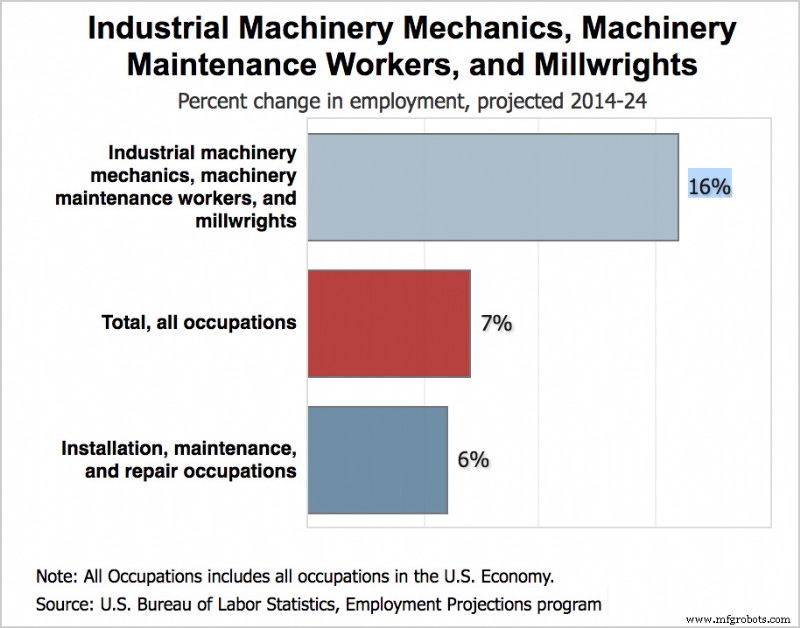 Source: Bureau of Labor Statistics, Occupational Outlook Handbook
The Bureau of Labor Statistics reports that in 2014 there were 464,400 skilled maintenance jobs—industrial machinery mechanics, maintenance workers, and millwrights—projected to grow by 16% between 2014‑2024, adding 73,400 positions. Yet the field remains largely unknown to the general public, causing many of those jobs to stay unfilled.
Executive Misunderstanding Breeds Reactive Maintenance
A MarketsandMarkets forecast reveals that executive ignorance often results in misaligned goals between regulatory mandates, corporate strategy, and the maintenance department. Consequently, budgets are cut and small fixes are postponed until larger failures emerge.
Organizations, including a large portion of U.S. infrastructure, are trapped in a reactive maintenance cycle that is both costly and risky. Yet the tools exist—maintenance management software and predictive analytics—that can shift focus from “run‑to‑failure” to proactive care.
Convincing leadership to invest in such solutions can be a challenge, as maintenance teams are typically burdened with day‑to‑day tasks and lack the bandwidth to build a business case. Without executive support, the problem persists.
Ignoring the Problem Won’t Make It Vanish
Infrastructure failures recur because of underfunded maintenance—a pandemic across the nation. Of ASCE’s 13 recommendations for closing the investment gap, four directly emphasize investing in and prioritizing maintenance.
We must abandon the “fix it when it breaks” mindset and recognize the value of preventive maintenance.
Want more from Fiix? Read our article on the state of American manufacturing.
Equipment Maintenance and Repair
- Cat® Air Filters vs. Competitors: Quick Video Guide
- Professional Storage Guidelines for Industrial Electronic Spares: Protect Your Components
- Understanding Work Orders: Essentials and Best Practices for Operations Management
- How to Select the Ideal Mini Excavator for Landcare Projects
- Maximize Your Fleet: Expert Guide to Compact Equipment Attachments
- Maximize Value: Strategies for Selling or Repurposing Used Heavy Equipment
- 8 Proven Strategies to Extend the Life and Performance of Your CNC Machine
- 5 Proven Ways Maintenance Teams Can Boost Production Efficiency
- Gluten Free Baking Company Expands Operations with eMaint Partnership
- Asset Infinity Blog – 2026's Top Enterprise Asset Management & Tracking Solutions