



Tracked vs. Wheeled Construction Equipment: Choosing the Right Machine for Efficiency and Safety
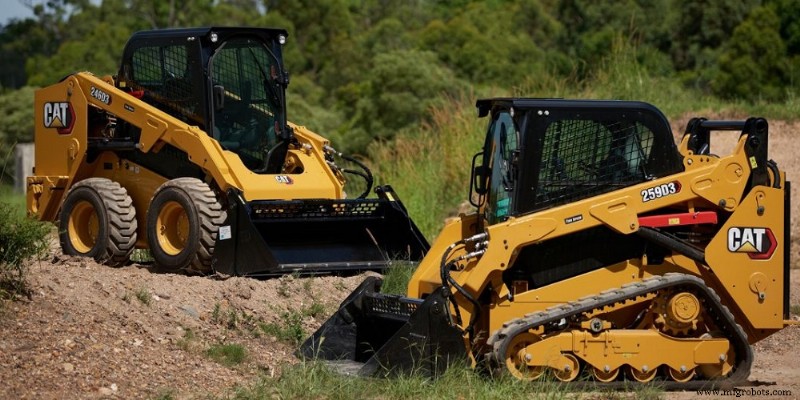
Selecting the appropriate machinery is crucial for maximizing productivity, ensuring operator safety, and managing costs on any construction site. Tracked and wheeled equipment offer distinct performance profiles; understanding these differences helps you invest in the best tool for your specific tasks.
Below we break down the key advantages and typical applications of wheeled and tracked skid steers, so you can make an informed decision.
Wheeled Skid Steers
Wheeled skid steers come in a wide range of sizes, with rear tires that can be larger, smaller, or equal to the front. The choice between a tracked or wheeled model depends largely on the terrain, travel distance, and operational requirements.
Advantages of Wheeled Skid Steers
- Cost-Effectiveness: Tires and wheeled platforms generally have lower upfront and operating costs than tracked systems.
- Reduced Maintenance: Tire wear is easier to manage, and replacement intervals are typically longer than track wear.
- Lightweight Design: Wheeled units are lighter, which simplifies maneuvering on level ground and reduces operator fatigue.
Common Applications
Wheeled skid steers excel on smooth, flat surfaces—concrete slabs, asphalt roads, or gently sloped sites. They also provide superior maneuverability in snowy conditions and are ideal for projects that require frequent relocation over short distances.
Because the rubber tires deliver a stable contact patch, these machines perform best where ground impact is minimal and traction on paved surfaces is paramount.
Tracked Skid Steers
Tracked skid steers distribute weight across a continuous track system mounted on idlers, delivering a different balance of power, pressure, and traction compared to their wheeled counterparts.
Advantages of Tracked Skid Steers
- Longer Track Life: Tracks typically outlast tires, cutting replacement costs over the machine’s life.
- Superior Traction: The larger surface area of tracks provides excellent grip on inclines, loose soils, and uneven terrain.
- Even Power Distribution: Tracks spread weight evenly, enabling smooth operation on challenging ground conditions.
Common Applications
Tracked skid steers shine on rough, uneven, or soft soils where tire-based machines might struggle or cause excessive ground disturbance. Their higher ground pressure allows them to operate on a wider range of surfaces, from steep slopes to muddy pits, without compromising stability.
They are increasingly favored for projects that demand versatility across varied terrains, eliminating the need to limit work to flat ground.
Choosing the Right Equipment for Your Project
When deciding between tracked and wheeled skid steers—or other machinery types—evaluate:
- Terrain type and slope
- Travel distance and site layout
- Operational safety and operator fatigue
- Maintenance budgets and downtime tolerance
- Overall project cost and return on investment
For uneven ground, steep inclines, or heavy-duty tasks, a tracked skid steer is usually the superior choice. If you prioritize minimal ground impact, lower operating costs, or frequent movement across flat surfaces, a wheeled model may serve you better.
NMC Cat offers a comprehensive inventory of both wheeled and tracked skid steers, as well as detailed consultations to match your unique project needs. Contact us today to find the machine that delivers maximum performance for your job.
Tags:
Equipment Maintenance and Repair
- Daily Walk-Around Inspection: Safeguard Your Cat® Equipment & Reduce Costs
- Benchmarking Maintenance Performance: How to Measure, Compare, and Improve
- How a CMMS Transforms Facility Management: Key Benefits Explained
- Valence NGS Energized by eMaint: Mobile Solutions for North Dakota Gas Producers
- Proven Maintenance Management Strategies for Organizational Asset Reliability
- Boost Equipment Reliability with Strategic Kitting: A Proven Approach
- Cold Mounting Your Bearings: Expert Tips for Safe, Precise Installation
- Modernizing Maintenance: MMP’s 99.6% Uptime Through ISO 9000 & CMMS
- Nordic Steel Mill Solution Cuts Water Treatment Costs by 35% with Innovative Dewatering & Filtration Systems
- 3 Essential Tips for Safely Storing Your Aviation Borescope