



Maximizing Value from Shutdowns, Turnarounds & Outages: A Strategic Guide
In many organizations, shutdowns, turnarounds, and outages (STOs) are viewed as routine maintenance tasks. The reality, however, is far more complex: STOs are large‑scale, business‑critical events that shape capital budgets, stakeholder confidence, and customer satisfaction.
When executed with precision, a well‑planned STO can become a source of competitive advantage—boosting revenue, elevating morale, and propelling careers. Conversely, a poorly managed outage can cost millions in lost output, inflate operating expenses, and damage reputations. In leaner, resource‑constrained environments, the stakes are higher and the opportunities greater.
Key Phases of an STO
- Comprehensive planning and organization
- Asset removal from production
- Inspection, repair, or improvement work
- Restart and return to optimal performance
STOs are unique because they always involve taking a plant, unit, or asset offline. Completion is not merely the finishing of work packages; it is the full restoration of the asset to its desired operational state.
Challenges That Undermine Success
Through decades of consulting, Kepner‑Tregoe has identified eight core obstacles that frequently derail STOs:
- Safety first – Large contractor teams often lack familiarity with site hazards and isolation procedures, creating high risk.
- Unclear processes – Fragmented or undocumented procedures lead to misalignment across departments and lost coordination.
- Scope creep – Unexpected work uncovered during inspection can derail schedules and budgets if not properly prioritized.
- Data gaps – Without real‑time metrics, decision‑makers cannot gauge progress or adjust resources on the fly.
- Misaligned business processes – Daily operating procedures rarely accommodate the surge of activity required for a major outage.
- Cost control deficits – Existing reporting lags until post‑STO, limiting proactive budget management.
- Resource complexity – Managing contractors, vendors, and internal teams simultaneously can inflate coordination overhead.
- Reactive culture – Celebrating “hero” fixes instead of systematic prevention hinders long‑term improvement.
Stakeholder expectations must also be managed early; ignoring this can expose the organization to reputational and financial risk.
Optimizing the STO Process
A holistic, process‑driven approach delivers the best results. The following framework—adapted from Kepner‑Tregoe’s proven methodology—breaks the journey into three interlocking phases:
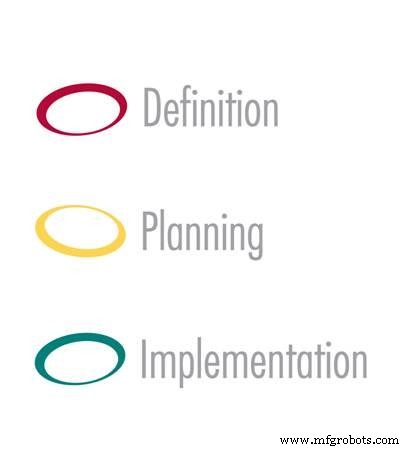
Definition Phase – Identify sponsors, customers, and key stakeholders; establish the scope, objectives, and change‑control protocols. This stage sets the feasibility and alignment of the entire project.
Planning Phase – Allocate resources, sequence tasks, and validate the viability of the schedule and budget. Crucial here is the alignment of business processes and the creation of a robust measurement system.
Implementation Phase – Execute work packages, monitor progress, and adjust as needed. Continuous communication and a data‑driven dashboard keep the team focused and enable rapid issue resolution.
Throughout all phases, a dedicated communication stream ensures information flows seamlessly, preventing siloed decision‑making and maintaining stakeholder confidence.
Real‑World Impact
- Process clarity – A global display manufacturer improved first‑24‑hour output by 318 % after adopting a visible, shared process.
- Data‑driven control – A steel mill’s daily dashboard delivered on‑time, on‑budget completion without lost time or injuries.
- Business process redesign – An international mining firm cut lockout/tagout incidents by 75 % and safety incidents by 30 % through targeted process improvements.
- Resource coordination – A Singapore refinery’s $200 M turnaround achieved clear ownership of work packages, reducing confusion and speeding decision‑making.
- Proactive culture – A building‑materials manufacturer shaved four days off a planned 30‑day outage by anticipating and mitigating risks ahead of time.
- Stakeholder alignment – A high‑production concentrator saw 60 % improvement in on‑time, on‑scope performance and 40 % cost savings after managing expectations and providing transparent metrics.
Achieving Shutdown Excellence with Kepner‑Tregoe
KT’s suite of shutdown solutions blends disciplined process, real‑time visibility, and risk‑oriented decision‑making to deliver projects on time and on budget. Key capabilities include:
- Shutdown definition facilitation
- Project management and training
- Lean shutdown implementation
- On‑site coaching and full‑time support
- Risk assessment, audits, and recommendations
Clients such as Bluescope Steel, Cement Australia, Rio Tinto, and Visy have leveraged KT’s expertise to reduce turnaround duration, cut costs, and accelerate startup times.
Case Study: Exceeding Expectations
After partnering with KT, a heavy‑manufacturing plant completed a shutdown 4.5 days ahead of schedule, saved $500 k, and reduced startup time from 10 days to 36 hours.
Get in Touch
Kevin Duffy, Global Vice President of Operational Excellence, Kepner‑Tregoe
Contact: kduffy@kepner-tregoe.com
Website: www.kepner-tregoe.com
Equipment Maintenance and Repair
- Mastering Preventive Maintenance: Building and Optimizing Fixed & Floating Schedules
- Lean Shutdowns: 10 Proven Strategies to Trim Costs and Optimize Operations
- Impact Pricing: Expert Guide to IoT Business Models & Pricing Strategies
- Leveraging IoT for Superior Quality Control in Manufacturing
- Unlocking Production Efficiency: Proven Data‑Driven Manufacturing Strategies
- Optimize 7 Key Warehouse Processes with Advanced WMS Solutions
- Operations Management: Principles, Strategies, and Best Practices for Efficiency
- Managing Facility Shutdowns During COVID-19 with CMMS Software
- Mastering High‑Speed PCB Design: Common Misconceptions and Proven Strategies
- Cut IT Costs: 11 Proven Strategies to Maximize Your Technology Budget