



The Time‑Zone Gap: Why Maintenance Planning Fails and How to Fix It
A primary reason for planning failures is that planners simply do not plan—they lack the time because they operate in the wrong time zone.
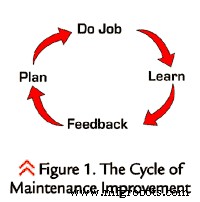
Figure 1 illustrates the cycle of continuous improvement that effective maintenance planning can unlock. A planner drafts a job plan, a technician executes the job, learns valuable on‑the‑job insights, and logs this information as feedback. When the same job reoccurs, the planner incorporates that feedback to refine the plan, thereby enhancing productivity and quality with each iteration.
For example, a leaking pipe flange might initially be addressed by a planner who schedules a flange break and gasket replacement. During the repair, the technician discovers that two gaskets are required and records this as feedback. Six months later, when the same flange leaks again, the planner’s updated plan already includes the second gasket, preventing another mistake.
Are maintenance jobs repetitive? Absolutely. The misconception that they are not often stems from different technicians handling similar tasks over time. While a crew may perform the same repair on a piece of equipment across several years, each time a different technician is involved. Maintenance, therefore, must adopt a long‑term perspective, recognizing that equipment will demand recurring, similar interventions.
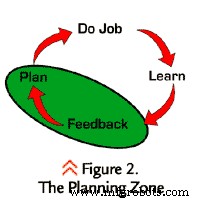
Figure 2 shows the planner’s realm: they exist simultaneously in the future and the past. In the future, they pre‑emptively schedule work before supervisors assign it, using their deep technical experience to mitigate potential delays. In the past, they act as research specialists, combing through the collective knowledge of 20–30 technicians to extract actionable insights.
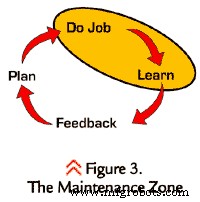
Figure 3 portrays the technician’s zone: the present. Technicians execute jobs, absorb lessons—such as specific wrench sizes, part numbers, and clearance nuances—that incrementally improve each subsequent job. These seemingly minute refinements accumulate over years, transforming maintenance performance and feeding back into the planner’s files.

Unfortunately, many planners are trapped in the present. Figure 4 depicts planners assisting technicians with jobs already underway. While this immediate support is valuable, it can divert planners from their primary role of future planning and historical research, thereby breaking the improvement cycle illustrated in Figure 5.
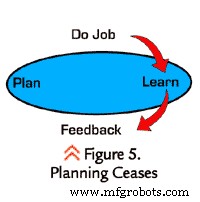
Figure 5 highlights the problem: planners overwhelmed by “chasing parts” for in‑progress jobs have no time for strategic planning or learning from past work. The continuous improvement loop collapses.
Management must shield planners from day‑to‑day interruptions, enabling them to remain firmly in the planning zone.
Doc Palmer, the author of the Maintenance Planning and Scheduling Handbook, is a certified CMRP with nearly 25 years of hands‑on experience in the maintenance departments of a major electric utility. From 1990 to 1994, he redesigned the utility’s maintenance planning organization, a transformation that led to its expansion across all crafts and stations.
Equipment Maintenance and Repair
- Digital Maintenance: Winning the Race Against Aging Equipment
- Mastering Maintenance Planning: From Reactive Fixes to Proactive Success
- Building a Seamless Partnership Between Maintenance Planning and Storeroom Operations
- Building a Learning Organization: Strategies for Effective Training and Growth
- Why Maintenance Departments Decline Over Time and How to Counteract It
- Creating Effective Maintenance Work Orders: A Complete Guide
- Strategic Maintenance Planning: Optimize Work Orders for Safety & Cost Savings
- How to Create a Comprehensive Preventive Maintenance Plan
- Mastering Maintenance Scheduling: Boost Efficiency & Cut Costs
- The Role of a Maintenance Planner: Optimizing Operations and Ensuring Reliability