



Operator‑Driven Reliability: Empowering Operators to Own Plant Equipment
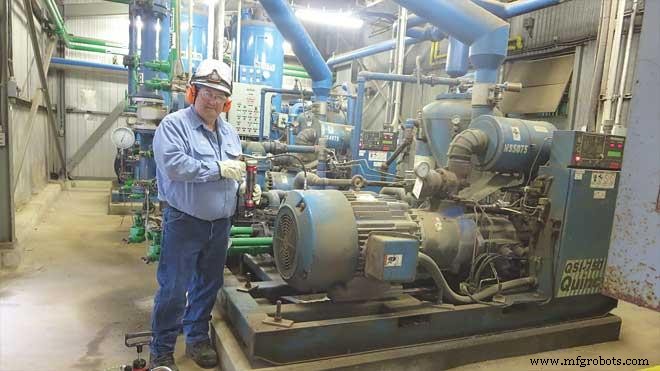
The U.S. paper industry has evolved dramatically over the past five years, driven by fierce foreign competition and a sluggish domestic economy. Consolidation has become the norm, leading to frequent plant closures and workforce reductions. In this environment, mills must look inward to maintain competitiveness, focusing on areas they can control—chief among them, reliability.
Reliability has emerged as a pivotal lever for cost reduction. Historically, operators spent most of their time on the shop floor, gaining hands‑on insights into equipment behavior and early failure signs. Today, most operators run mills through computer‑controlled systems. While this automation lowers costs and can improve product quality, it has not always integrated a proactive reliability strategy. Responsibility for first‑pass failure detection often falls back on maintenance teams, raising the question: should maintenance, not operators, own equipment health?
At International Paper, we recognized that reliability could unlock significant savings. We launched the Advantage project, reinstating a hands‑on approach to reliability. The initiative focused on operator‑driven reliability, meticulous planning and scheduling, root‑cause failure analysis, and precision maintenance equipment.
Our Augusta Mill already had planning and scheduling in place, as well as a company‑wide root‑cause failure analysis program. While vibration analysis, infrared thermography, acoustic monitoring, and preventive maintenance were well established, operator‑driven reliability had been absent since the era of manual checks.
We had “process rounds” that required operators to monitor gauges and meters, but formal reliability checks were missing. The era of operators inspecting bearings with a broom handle was long over. We realized that sustaining competitiveness hinges on operators who not only run equipment but also own its performance—just as every driver keeps their car running.
Once the vision is clear, the hardest part of launching an operator‑driven reliability program is behind you. With dedicated resources and a defined timeline, the financial benefits follow.
Strategic Planning
The first pillar is management buy‑in. Without leadership endorsement, the program lacks the time, funding, and support needed for success.
Create a mission statement and set measurable goals. Include program metrics, milestones, budgets, and clear responsibilities across the mill. The leadership team should appoint a champion—someone respected and visible—to drive implementation. This champion will identify roadblocks, report progress, assemble the operator‑driven reliability team, and maintain program visibility.
The champion then selects a representative from each critical operating area—woodyard, pulp mill, powerhouse, paper mill, finishing & shipping, water & waste—to form the reliability team. These team members are tasked with mapping equipment onto operator routes, defining walking orders, setting inspection frequencies, and developing area‑specific metrics and recognition plans.
Route developers can be hourly operators or newly hired engineers. At Augusta, we started with two hourly workers for the woodyard to ensure credibility, then expanded to four engineers for the remaining areas, leveraging their technical skills and fresh perspective. The best approach depends on your mill’s personnel mix.
Analytical Tools
Analytical tools enhance accuracy, provide real‑time trending, and lend credibility to the program. While they are not mandatory at launch, they should be incorporated as the program matures.
- Infrared temperature guns: Offer precise temperature readings without physical contact.
- Stroboscopes: Detect loose couplings, missing bolts, or material defects on rotating equipment.
- Vibration pens: Monitor bearing vibration trends from a consistent point.
- PDAs: Facilitate electronic routes, barcode checks, and instant exception logging.
Augusta began with infrared guns and paper routes, prioritizing safety and cost. As tools become affordable, the program will evolve to include digital instrumentation.
Communication
Consistent feedback is essential. Without it, operators may deem routes low priority and eventually abandon them. A written communication and recognition plan keeps everyone aligned.
Leverage existing departmental channels—personal conversations, bulletin boards, weekly updates—and involve the communications manager to tailor the plan to each area’s needs. The plan should outline roles, route timing, feedback mechanisms, training, and recognition.
Route Development
Routes must balance thoroughness with practicality. Operators need enough time to inspect equipment and use analytical tools without compromising their primary duties.
At Augusta, we set a 20‑minute rule of thumb for route length, adjusting for remote equipment where travel time dominates. The focus is on critical equipment that could cause process downtime, with additional checks for high‑cost, repeat‑repair items.
Inspection frequency should aim to identify failures before they occur. While ideal intervals are half the failure development period, real‑world manpower constraints often dictate a more focused approach that evolves based on root‑cause analysis.
Training
Training is often underestimated. Operators need to understand not just the “what” but the “why” behind each check.
We developed a four‑hour course based on IDCON’s condition‑monitoring standards, covering equipment purpose, required checks, execution methods, and the importance of maintenance. Hands‑on route walks and debrief sessions reinforce learning.
Managers receive one‑on‑one sessions covering equipment, process flow, communication plans, and their leadership role in the program.
Sustainability
The program must embed itself into mill culture. Continuous feedback, clear documentation, and recognition ensure operators see the value and own the process.
Augusta’s sustainability timeline transitions responsibilities from the project team to area leaders. A modest recognition program—$5 cafeteria vouchers for the “ODR employee of the month”—keeps the initiative visible and reinforces ownership. This cost‑effective incentive has proven successful in other mills.
Housekeeping
Clean equipment is foundational to reliability. Poor housekeeping inflates temperatures, masks leaks, and accelerates failures. It is often an emotional topic, but addressing it is crucial.
We incorporated housekeeping into training, providing tools such as wire brushes, rags, and flashlights in the reliability kit. Teams now photograph and discuss housekeeping issues in weekly meetings, turning cleaning into a shared responsibility.
An incremental approach works best: clean one piece of equipment per route cycle, then the next, until the entire area is tidy. A recent experiment at Augusta—thoroughly cleaning a motor and pump set in 30 minutes—demonstrated the lasting impact of this effort.
Conclusion
Market pressures persist, demanding higher quality at lower cost. Operator‑driven reliability is a proven strategy that empowers operators to own equipment, reduces downtime, and delivers measurable cost savings. A well‑planned, inclusive program transforms reliability from a maintenance function into a core operational competency, directly benefiting the bottom line.
About the author:
Chris Hykin is the Director of Operator‑Driven Reliability at International Paper, Augusta, GA.
Equipment Maintenance and Repair
- Defining and Clarifying Reliability in Manufacturing Operations
- Threadlock Adhesives: Ensuring Fastener Reliability and Reducing Downtime
- How to Quantify the Hidden Cost of Reliability Failures
- Eliminating Defects by Enhancing Equipment Reliability
- 5 Key Elements That Drive Equipment Reliability Through Maintenance Planning
- Master Your Farm Equipment: Essential Knowledge for Optimal Performance
- 6 Expert Tips to Boost Equipment Reliability and Reduce Downtime
- Ensure Peak Performance: Essential Engine Maintenance for Heavy Machinery
- Secure Your Jobsite: Prevent Theft, Weather Damage, and Boost Productivity
- Maximize Value: Strategies for Selling or Repurposing Used Heavy Equipment