



Extending Equipment Lifespan: Life‑Cycle Cost & Alignment Best Practices
In the previous three issues of Reliable Plant, I outlined how leadership can set a clear reliability agenda. In this series, I’ll pull specific best‑practice items from IDCON’s “Current Best Practices” document—nearly 300 elements—and invite you to audit your own plant against them.
At the heart of the approach is the life‑cycle cost (LCC) concept, which looks beyond the purchase price to include installation, operation, maintenance, and eventual disposal. Applying LCC early in design can reduce total ownership cost by 15‑20% on average, according to industry benchmarks.
Check 1: Life‑Cycle Cost (LCC)
Specify, design, and purchase assets with LCC in mind. LCC means evaluating the entire cost to own an asset, not just the upfront price.
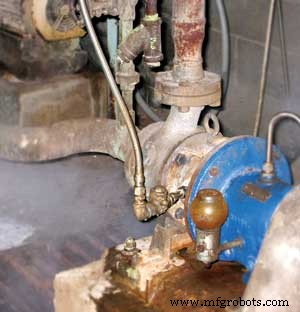
Design for reliability: Pump inlet should have 10 times the diameter of straight pipe to avoid turbulence and cavitation.
Early collaboration between operations, maintenance, and engineering is essential. A plant with a robust LCC process typically features equipment that is easy to maintain, reliable, and amenable to condition monitoring.
Concrete examples include: a single‑sided centrifugal pump with an inlet pipe 10 × the diameter to prevent turbulence, tank entry ports with hinges for quick, safe access instead of heavy lifting devices, and minimal bolt counts to reduce wrench time. Additional practices are oil sampling ports on all reservoirs, clearly marked gauge ranges, and jacking bolts on motors and gearboxes for accurate alignment.
Many facilities lack these LCC‑driven design elements because engineers are rewarded for completing projects on time and under budget, not for long‑term asset performance. Aligning incentives with LCC can unlock significant reliability gains.
Check 2: Alignment
While most plants have the basics—tools, training, and alignment procedures—true alignment excellence requires more. Time constraints, sub‑optimal design, and neglected foundations often lead to poor alignment. Standards such as heat‑checking and strain avoidance must be followed.
Walk around your plant and look for signs of misalignment: shaky foundations, missing jacking bolts, motors with beat marks from sledgehammers, oversized shim packs, bolt‑bound equipment or undercut bolts, and hot bearings.
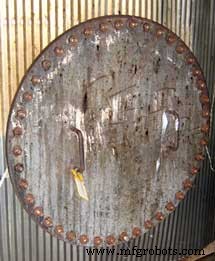
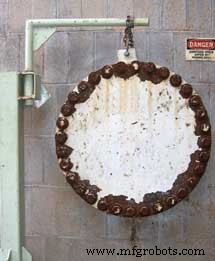
Design for maintainability: The tank entry port on the left has many bolts and no hinge. Adding a hinge and reducing bolts cuts wrench time dramatically (right).
Torbjörn (Tor) Idhammar is partner and vice president of reliability and maintenance management consultants at IDCON Inc. He specializes in preventive maintenance, condition monitoring, spare‑parts management, and root‑cause elimination. Tor is the author of "Condition Monitoring Standards" (Volumes 1‑3). He holds a BS in Industrial Engineering from North Carolina State University and an MS in Mechanical Engineering from Lund University (Sweden). Contact Tor at 800‑849‑2041 or email info@idcon.com. www.idcon.com
Equipment Maintenance and Repair
- Essential Checklist for Laser Alignment & Soft Foot Prevention
- Extending Coal Pulverizer Gearbox Life with Advanced Filtration and Synthetic Lubrication
- Optimizing Asset Longevity: Calculating Useful Life and Extending Performance
- How to Extend Bearing Life: Proven Repair Strategies and Savings
- Maximizing Machine and Component Longevity: Smart Strategies for Manufacturers
- How to Detect and Prevent Machine Failures: Boost Productivity & Save Costs
- Top 8 CNC Machine Failures & Expert Troubleshooting Guide
- Mitsubishi and Absolute Introduce the LoadMate Plus: A High‑Performance, Plug‑and‑Play Robotic Cell
- Extend Your Cat® Machine’s Undercarriage Life: A Quick Video Guide
- Maximizing Conveyor Component Longevity: Expert Tips for Mining Operations