



Unlock Asset Value with Design‑Operate‑Maintain (DOM) Integration Today
Design, Operate, Maintain (DOM) is a framework coined by ARC Advisory Group that gives engineers and operations teams a shared language for asset management, maintenance, repair, and daily operations.
Plant designers and those who run and maintain facilities must collaborate closely to drive efficiency and profitability. Historically, siloed systems—ERP, CMMS, CAD—have impeded this collaboration, but emerging integration points are beginning to close the gap.
In the 1980s, the rise of process‑control and systems‑engineering firms signaled that many industries were outsourcing plant engineering. While in‑house teams offered tighter control over design standards, corporate “rightsizing” and a move toward open standards made it possible to bring in outside vendors—industrial engineering firms, manufacturer reps, and system integrators—to design plants. The data generated by in‑house teams was often under‑leveraged, and the disconnect between designers and operators has widened as outsourcing has become the norm. According to the Control Systems Integrators Association, the independent control‑systems integration market grew to $12 billion by the year 2000, a sharp increase from two decades earlier.
As design and operations/maintenance teams become more separated, consulting engineers frequently design solely to meet a capacity target, creating data that lives on a different platform than the one used by maintenance personnel. An ISO 15926 standard is in development that will allow seamless data exchange between these disciplines. Until that standard is finalized, maintenance and plant operators can still adopt DOM practices to bridge the gap.
The Challenge
The switch is just flipped on a renovated production line. As temperatures rise and product flows, a head‑pressure fault appears in a critical compressor. Maintenance is dispatched, only to discover that the diagnostic data is buried on a stack of CDs left by consulting designers. The lack of communication leads to unplanned downtime while the information is located and the problem is diagnosed.
Alternatively, a new line may suffer the same design‑related stoppages that plagued the line it replaced. Maintenance records could have revealed the need for design changes, but the system engineers lacked the tools to mine that data for actionable insights.
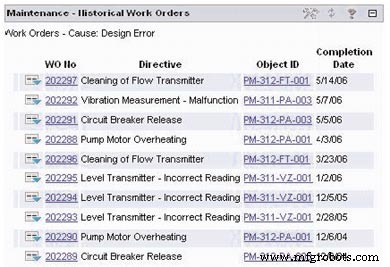
Figure 1: Enabling engineers to access maintenance history can prevent recurring production problems caused by design errors.
But not every issue is a fault of the industrial engineer. Imagine spending hundreds of hours designing a new mix‑and‑fill line, only to learn that maintenance had upsized several pumps on the line you’re replacing—a change not reflected in the as‑built information of the pre‑existing line. You’ve invested tens of thousands of dollars in a sub‑optimal system and now face the prospect of sharing the cost overrun caused by miscommunication.
Technology alone cannot solve the communication gap between industrial designers, plant operators, and maintenance managers. Integrated asset life‑cycle management (ALM) tools that span all three disciplines are only effective if designers also use the same tool or an interoperable platform. Even in‑house teams can falter if they fail to collaborate. Therefore, a proactive approach—supported by technology—is the most critical factor in adopting DOM.
Technology can standardize and automate parts of the DOM process, but it is the proactive, cooperative mindset that delivers lasting benefits. Here are three steps to realize DOM today.
Maintain a Flexible, Open IT System
Proprietary data standards block communication. Keep operation and maintenance data in open, easily accessible formats—Excel, XML, or other standardized files—and expose public APIs for controlled import/export. An asset‑management solution that supports configurable, file‑based data exchange gives you a strong foundation for DOM.
Adopt a layered architecture in your asset‑management system so you can view project information from design through construction. Each department can access the layers relevant to them and provide timely feedback, ensuring that the final design meets operational needs. Early access to design data also enables proactive preventive‑maintenance planning.
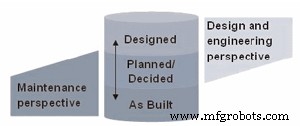
Figure 2: A layered asset‑management architecture lets you control what information is available to designers, engineers, and maintenance teams at each project stage.
Take Control of Your Information
Your plant’s operation and maintenance history is a strategic asset. To optimize processes, you must share this data with design engineers. Agree on a shared data format—whether spreadsheets, Access databases, or XML—and define the frequency of data exchange before work begins. Create a master list of each component or piece of equipment that will need ongoing management, and specify the data required for each item at each project milestone.
Even if designers and operators use different platforms, mapping spreadsheet contents to your existing system fields ensures a continuous flow of information from design into your asset‑management repository.
Establish Ongoing Dialogue
Data should flow from maintenance and operational history into the design process as well. Solicit feedback from designers on the data and formats that will provide them with the insight needed to optimize projects. As ISO 15926 becomes available, cross‑platform data structures will be standardized, but good habits—continuous dialogue, shared objectives, and transparent data exchange—must persist.
The ideal DOM workflow is collaborative: maintenance histories are freely available to designers, while plans and specifications are shared with operators and maintenance personnel throughout the project lifecycle. For instance, if a plant rebuild includes new pumps and compressors, you can choose to defer decommissioning existing equipment, order spare parts ahead of time, and begin integration work before the new line goes live.
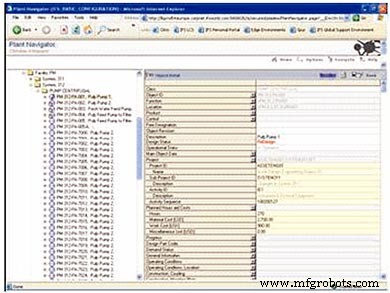
Figure 3: A tree browser allows maintenance planners to see design status and adjust preventive‑maintenance plans accordingly.
In large infrastructure projects, the owner often establishes a web portal open to design and contracting teams. That portal becomes the collaborative medium through which DOM thrives, whether the collaboration is internal, with external designers, or via an integrated ALM tool.
About the author:
Christian Klingspoor is a senior asset‑life‑cycle‑management advisor for IFS AB. With 20 years of experience in plant design, document management, maintenance management, and process automation, he has led the development of IFS’s asset‑life‑cycle solutions since the 1997 acquisition of IDOK.
About IFS
IFS, the global enterprise applications company, delivers solutions that enable organizations to respond quickly to market changes and achieve better business performance. Founded in 1983, IFS now employs 2,600 people worldwide and offers IFS Applications—its seventh‑generation component‑based ERP—in 54 countries and 20 languages.
Equipment Maintenance and Repair
- How Predictive Maintenance Drives Efficiency and Cuts Downtime
- Designing an Effective Maintenance Strategy: A Practical Roadmap
- Maximize Asset Reliability with Expert Maintenance Planning & Scheduling Training
- Strategic Asset Management: Driving Uptime, Cutting Costs, and Boosting Profits
- Cloud Maintenance: Unlocking Efficiency, Reliability, and Cost Savings
- Condition‑Based Maintenance: Core Principles and Key Advantages
- Unlocking Total Productive Maintenance: Core Principles & Tangible Benefits
- Why Prototyping PCBs Is Essential for Faster, Cost‑Effective Production
- Reactive Maintenance: Types, Benefits, and Best Practices
- Preventative Truck Maintenance: Long-Term Benefits That Drive Performance and Save Costs