



Variable‑Speed Drives Keep Cleveland Metroparks’ RainForest at Optimal Climate
Behind the scenes, a sophisticated blend of mechanical engineering and advanced HVAC technology sustains Cleveland Metroparks’ RainForest, a tropical oasis located just 40 miles from the Canadian border. The Cleveland (Ohio) Metroparks, a recreational authority renowned for its “emerald necklace” of woodlands, golf courses, hiking trails, and cultural landmarks, relies on state‑of‑the‑art equipment to preserve this unique habitat within the Zoo complex.
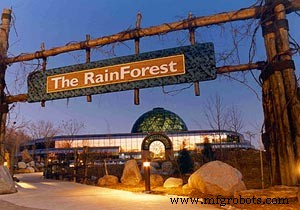
Opened in 1992, the RainForest is a domed biosphere spanning two acres of tropical flora and fauna. Its air‑handling system—featuring half‑ton heat wheels and ABB motors—conserves 18,000 pounds of water daily by transferring moisture from stale exhaust air to dry, incoming fresh air every 2.5 hours.
The RainForest hosts 600 animals, from birds and monkeys to reptiles and colorful fish, offering more than one million visitors annually the experience of walking through Central American, African, or Asian rainforests.
A Fragile Environment in a Rugged Climate
Despite the Great Lakes’ extreme temperature swings—from sub‑freezing “Alberta Clipper” storms in winter to sun‑blasted summer days topping 90 °F—visitors and inhabitants enjoy a near‑constant 76 °F and 76 % humidity. This stability is achieved by an HVAC system that has evolved to deliver 100 % reliability over the years.
The $30 million investment not only immerses guests in exotic surroundings but also serves as a powerful reminder of the urgency to protect rainforest acreage from overdevelopment.
Heat Wheel Application Critical to Constant Temperature and Humidity Control
Direct Air Systems Inc., based in Cleveland and Columbus, Ohio, and Zesco Inc., a Cleveland‑based electrical‑mechanical motion control specialist, provide HVAC service to the RainForest and other local landmarks, including the Rock ‘n Roll Hall of Fame.
The RainForest employs two 100 % outside‑air handlers. One, with a 60,000 cfm capacity, primarily cools the environment; the other, rated at 40,000 cfm, incorporates a pre‑heater and humidifier rack. Both units feature side‑by‑side, 10‑foot‑diameter, 1,000‑pound dry desiccant heat wheels that conserve 18,000 lbs of water daily by transferring moisture from exhaust air to the incoming stream every 2.5 hours.
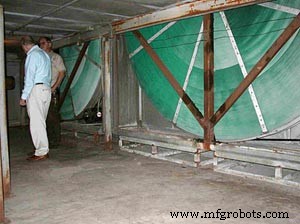
These 10‑foot heat wheels rotate 7–18 times per minute, powered by ABB motor/drive Direct Torque Control—eliminating the need for a gearbox and enhancing system reliability.
The term "desiccant" refers to the material bonded to the heat wheel surfaces that captures moisture and odors, which are then exhausted via the upper portion of the wheels.
Depending on humidity levels, the wheels rotate between seven and 18 revolutions per minute. Fresh process air is drawn in at the bottom, filtered through the wheels, and its temperature and humidity are moderated by the wheels’ slow rotation and the heat/moisture transfer from the interior. Heaters, when necessary, warm the air before it enters the RainForest’s interior, which contains more than 60 temperature zones, including offices, a cafeteria, and gift shops.
Air Handling Units Built into Facility
Unlike typical rooftop units exposed to the elements, the RainForest’s handlers are integrated into the structure to preserve efficiency during Cleveland’s hot summers and cold winters.
Efficiency and Simplicity Distinguish the System
The desiccant process was chosen for its 85 % efficiency and operational simplicity. Simple mechanical equipment typically yields greater reliability and easier maintenance. Initially, each wheel used a 1‑hp AC motor with a 5:1 gear reduction via a mechanical gearbox.
Over time, gearboxes failed at an alarming rate—one replacement was required annually, with no discernible pattern. The root cause was the low rotational speed, which prevented the gearbox’s splash lubrication from engaging properly, leading to premature wear.
Path to a Solution
Rather than continue with unreliable gearboxes, Direct Air Systems turned to an AC drive/AC motor solution that eliminates gearboxes altogether. This approach—now common in HVAC—offers proven engineering, cost‑effectiveness, and simplified maintenance.
Steve Snyder, president of Direct Air Systems, explains, "When gearbox lubrication proved unsustainable, we adopted a direct‑torque approach that was cost‑effective, easy to maintain, and simple to operate. The Cleveland Metroparks selected our bid for this public‑sector project."
The retrofit installed ABB’s Direct Torque Control (DTC) solution, featuring compact ACS 800 drives that occupy a much smaller footprint—crucial in space‑constrained areas. The original 1‑hp motor/gearbox was replaced with an ABB 5‑hp induction motor and low‑voltage drive. This direct‑drive arrangement eliminates the gearbox and pulse encoder, allowing full torque down to zero speed.
The ABB drives calculate motor torque and flux 40,000 times per second via an internal algorithm, eliminating the need for encoder feedback and reducing maintenance and downtime.
While each energy wheel system is controlled by individual Johnson Controls units, motor and drive status is monitored through the RainForest’s comprehensive Johnson Controls building management system. In the event of a control failure, the ABB ACS drives automatically revert to a preset RPM to maintain heat transfer. Spare motors are stored onsite, and drives are kept at Direct Air Systems’ nearby office.
Since the ABB motor/drive installation more than four years ago, the RainForest has enjoyed uninterrupted service. Direct Air Systems now actively employs direct‑torque control on other projects, citing its cost‑effectiveness, simplicity, and reliability.
A Model for Saving the Rainforests of the World
Visitor contributions, alongside efforts from organizations and governments, protect scarce rainforest acreage from overdevelopment. These protected areas not only serve as wildlife refuges but also enhance the planet by sequestering carbon dioxide and providing a source of future medicines.
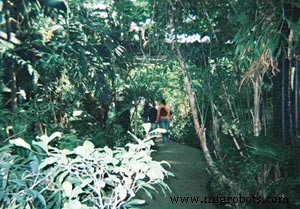
Over one million visitors annually enjoy the 76 °F/76 % humidity environment, while the air‑handling system underscores the need to protect native rainforests—currently shrinking at 1.5 acres per second due to deforestation.
Featured on Animal Planet, the RainForest is one of several attractions at the Cleveland Metroparks Zoo, which spans 168 acres and houses the largest collection of primate species in North America among its 3,000 animals.
About the author:
ABB, Automation Products, Low‑Voltage Drives, is the world’s largest manufacturer of electric motors and drives. In the U.S., an integrated channel of sales representatives, distributors, and system integrators based in New Berlin, Wisconsin, supplies a complete line of energy‑efficient electric drives and motors—from 1/8th to 135,000 horsepower—to a wide range of industrial and commercial customers. For more information, visit www.abb.us/drives.com.
Equipment Maintenance and Repair
- Professional VFD Maintenance & Troubleshooting: Expert Tips for Energy Savings & Reliability
- Boost Efficiency and Control with Variable Speed Drives
- Ensuring Machine Safety with Variable Speed Drives: Key Functions & Best Practices
- Mastering Current, Power, and Torque in Variable Speed Drives
- Selecting the Optimal Motor Cable for Variable Speed Drives (VSDs)
- Variable Speed Drives: Boosting Energy Efficiency – Part 2
- Maximizing Energy Efficiency with Variable Speed Drives – Expert Guide (Part 1)
- Heat Pump Advantages & Disadvantages: What You Need to Know
- Harness Compressed Air Heat: Boost Efficiency & Cut CO₂ Emissions
- Atlas Copco Explains Variable Speed Drives: Energy‑Saving Compressor Technology