



Integrating Asset Management Into Facility Design, Construction, and Startup: A Blueprint for Reliability and Profitability
In today’s high‑stakes industrial environment, the cost of neglecting asset management during the design, construction, and startup of new facilities is staggering. Unplanned downtime, quality lapses, and missed production targets can erode profitability by millions. By embedding robust business processes and operational planning from day one, these losses can be avoided and early‑stage performance dramatically improved.
At the core of this approach is Reliability, Availability, and Maintainability (RAM). Reliability measures the probability that an asset will perform as intended over a defined period under specified conditions. Availability reflects the proportion of time the asset is actually functioning. Maintainability captures the effort needed to keep or restore equipment to its required state. Together, these metrics dictate overall Asset Utilization (AU)—the true driver of operational efficiency.
Planning for future operations is equally critical. Establishing asset criticality, maintenance schedules, and spare‑parts inventory during construction guarantees a smooth startup and accelerates the achievement of consistent, design‑level performance. This also sets the stage for a well‑structured organization, clear recruitment plans, onboarding protocols, and targeted training.
In the Middle East, a surge of capital driven by the current crude‑oil market has spurred aggressive expansion of existing plants and the launch of new ventures. Competitive advantages—strategic location, low expatriate labor costs, and inexpensive energy—make these facilities attractive on the global stage. However, without a disciplined asset‑management foundation, the very investments that promise profit can become liabilities.
Academic studies, consultant feedback, and benchmarking reveal that the “lost asset utilization opportunity” is roughly evenly split across operations, maintenance, and design. While many firms focus on improving reliability in existing plants, shifting the focus to new facilities during the Design‑Construct‑Startup‑Operate cycle unlocks far greater production control. Early design enhancements that anticipate maintenance and operational needs create a smoother launch and enable staff to address residual issues with greater focus.
Project Design Phase
- Perform a comprehensive RAM assessment of the design.
- Develop a work‑management system that aligns with project goals.
- Conduct organizational design and staffing strategy development.
- Create a management framework for the startup and operations phase.
- Select and configure an ERP system tailored to the facility.
- Define clear expectations, goals, and performance measures for sustainable operations.
Project Construction Phase
- Recruit, onboard, and prepare the workforce.
- Configure, install, and test the ERP system; load asset and parts data.
- Establish asset criticalities, planned tasking, and spare‑parts/maintenance material requirements.
- Acquire, document, and store spare parts and operating materials.
- Develop a detailed startup and commissioning plan.
- Design business processes for operations, including asset healthcare, operations management, and logistics.
Project Startup and Operations
- Integrate the designed business processes—management system, asset healthcare, operations, and logistics.
- Set up the management system with KPIs, target values, and tracking mechanisms.
- Train all staff on the new processes and management system.
- Coaching and cultural embedding to ensure sustainability.
Transitioning from a project mindset to an operational one requires a deliberate shift. The AP/DISC Process (Assess‑Plan‑Design‑Install‑Sustain‑Certify) offers a structured framework that treats startup as a beginning, not the end. Beginning with a capacity‑triangle assessment, the process identifies gaps between current operations and world‑class standards. A business case is then developed, approved, and executed through design, construction, and startup, culminating in a stable, high‑performance facility.
Key visual tools— the SAMI Pyramid for asset healthcare, logistics management, and production management—provide a clear roadmap for each domain. (Images below illustrate these frameworks.)
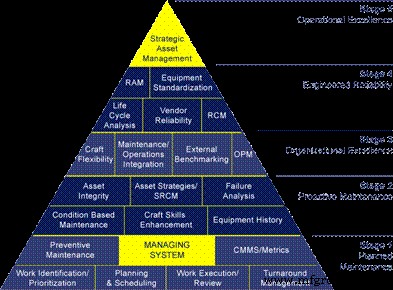
SAMI Pyramid for asset healthcare
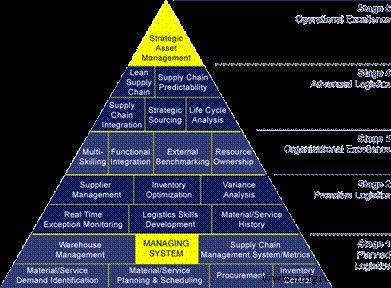
SAMI Pyramid for logistics management
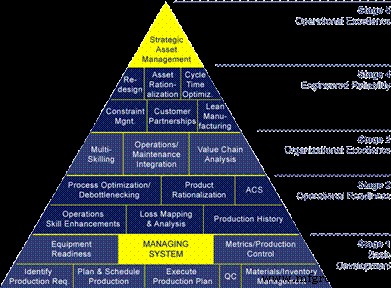
SAMI Pyramid for production management
About the Author
Jim Davis is the Managing Director of the Middle East for Strategic Asset Management Incorporated (SAMI). With over 30 years of experience in maintenance management, he specializes in crafting asset‑management strategies that unlock profitability through superior asset utilization. Visit SAMI Corp or email jdavis@samicorp.com.
Equipment Maintenance and Repair
- Modernizing Facilities Management: Key Trends for a 40% Construction Growth
- GE Digital Unveils Predictive Asset Management Software, Shifting Maintenance from Reactive to Proactive
- Reliability & Asset Management: Foundations for Production Excellence
- 7 Essential Tips for Choosing the Right Asset Management Software
- 6 Proven Strategies for World-Class Equipment Asset Management
- Combining BMS and CMMS: The Strategic Edge for Preventive Maintenance
- Construction Asset Management: A Practical Guide to Maximize ROI and Efficiency
- Mastering IIoT Asset Management: 4 Essential Tips & Common Challenges
- 4 Key Objectives for Effective Asset Management
- 48 Essential Inventory & Asset Management Resources for Schools & Educators