



Enhance Your HACCP Strategy: Key Maintenance Practices to Eliminate Food Safety Risks
Maintenance crews frequently cross between production zones, creating a silent threat to food safety. To keep Hazard Analysis and Critical Control Point (HACCP) plans effective, they must be realistic, inclusive, and rigorously followed.
When maintenance staff are part of the HACCP planning process, they gain a clear understanding of the risks and the procedures required to mitigate them. Pre‑planning each maintenance task, including a brief hygiene check, dramatically lowers the chance of cross‑contamination.
In a typical food facility, the layout is deliberately segmented to isolate specific hazards. For example, a precooked meat plant separates the raw side from the cooked packaging area by large ovens, while a beef processor splits its kill and packaging zones with cooling units. Pharmaceutical plants often enforce 100 % containment with “moon‑suit” standards all the way to the final packaging line. 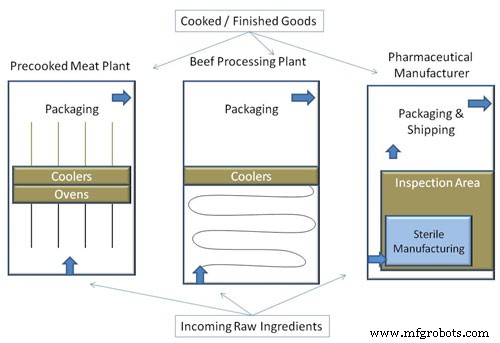
Figure 1
Production teams are routed through dedicated dressing rooms, restrooms, and even split lunch areas to maintain strict containment. The same discipline is rarely applied to maintenance crews, which can undermine the entire safety system.
Consider this scenario: at 3:35 p.m., the packaging manager discovers a jammed feed roll. The only maintenance person on site is Louie, who has been working on the raw side fixing a bacon slicer. He could cut through the oven rooms in 30 seconds, but that would violate the HACCP plan. Or he could spend 5–10 minutes sanitizing tools and moving to the next zone, staying compliant. What does he do? The outcome depends on management’s communication and the plant’s culture.
Maintenance teams are entrusted with dual responsibilities: keep equipment running and protect the product. Ideally, they should work on only one side of the plant, but exceptions happen. Plant leaders must reinforce food‑safety protocols during every shift change and avoid calling maintenance to cross‑zone work unless it is a genuine emergency.
Here are actionable items to embed in your HACCP plan if you haven’t already:
- Schedule regular HACCP refresher courses for maintenance staff and involve them in food‑safety committees.
- Promote knowledge sharing across maintenance groups to spread best practices.
- Include in every job plan:
- Explicit steps for maintaining a sterile environment.
- Clear dry‑clean procedures before work starts.
- Guidelines for cleaning tools and equipment afterward.
- Instructions for moving from one zone to another without contamination.
- Special considerations for jobs during third‑shift sterilization.
- Require documentation of food‑grade lubricants used and ensure tools are clean when applying them.
- If staff must work both sides, provide:
- Two color‑coded disposable gloves.
- Two color‑coded boot/shoe covers.
- Changeable jackets or coveralls at each entry point.
- Separate toolboxes or carts for each zone to reduce carry‑over.
- Appropriate waste containers for food product, hazardous material, contaminated food, and equipment parts.
- Duplicated sets of janitorial supplies, placards, and caution tape for each side.
- Disinfectant wipes in the toolbox for on‑the‑spot sterilization.

Contractors bring experience but also risk. Even seasoned contractors should undergo HACCP training, understand foodborne pathogens, and recognize high‑risk situations. Maintain a record of HACCP‑certified contractors and renew their training regularly.
Ultimately, maintenance is a critical pillar of food safety. By empowering crews with knowledge, tools, and clear procedures, plants can dramatically reduce cross‑contamination and protect consumers.
Equipment Maintenance and Repair
- 10 Proven Strategies for an Effective Preventive Maintenance Program
- Comprehensive Maintenance Contingency Planning for Manufacturers: Boost Resilience & Reduce Downtime
- Why an Annual Maintenance Contract Boosts Plant Reliability and Saves Costs
- Corrective Maintenance: Boosting Facility Reliability & Cutting Downtime
- Eight‑Step Blueprint for a Robust Preventive Maintenance Program
- Lean Maintenance: Eliminating Waste to Boost Reliability and Cost Savings
- How to Escape Budget Constraints and Boost Equipment Reliability
- September 2019 Maintenance Insights: Fiix & Industry Highlights
- Why Every Food Manufacturer Needs an HACCP Plan
- Cut Excavator Maintenance Costs: Proven Strategies for Long-Term Savings