



Predictive Vibration Analysis Saves Machines—and Money
Imagine knowing exactly when a machine component will fail—predictive maintenance turns that vision into reality.
According to DIN 31051, condition‑oriented maintenance goes beyond routine inspections; it also forecasts the remaining service life of machinery. This approach means that a rolling bearing need not be replaced simply because an inspection reveals inner‑raceway frequencies.
In this article we describe how a damaged bearing was kept running for several months under close observation, until the scheduled annual outage—an approach that proved both accurate and economical.
In January, a contractor was awarded a contract for mobile condition measurement of a double‑shaft extruder gear. Prior to the on‑site diagnostics, the gear construction data was compiled using the factory number, and bearing frequencies for the entire drive were calculated (Figure 1).
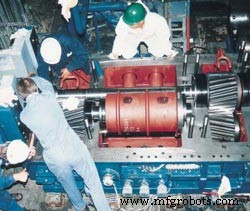
Figure 1
To perform the calculations, the contractor used a computer program capable of identifying almost all gear types, including those driven by variable‑speed drives. With the excitation frequencies in hand, the diagnostic specialist visited the site to assess the 7‑year‑old drive’s condition and identify any deviations.
Initial control measurements revealed distinct, though not yet critical, vibrations at an inner raceway frequency in the input shaft area. The gear condition was recorded, and the operator was advised to procure replacement parts for the intermediate shaft. Repeated monthly measurements were recommended to monitor whether the bearing needed replacement.
Figure 2 shows two envelope spectra recorded three months apart at the same measurement point.
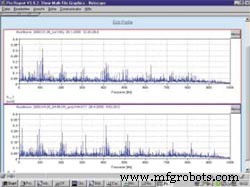
Figure 2. Measured Values Recorded at a Three‑month Interval
Because changes were only slight, an immediate bearing replacement was not required, and the decision was made to continue operation until the scheduled annual outage. The bearing was replaced five months later.
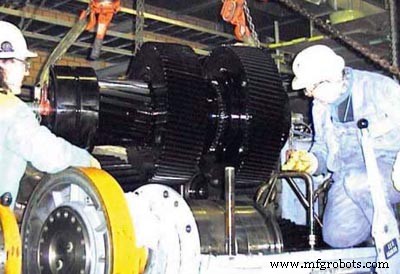
Figure 3. Dismantling the Intermediate Shaft
Upon dismantling, the inner raceway pitting initially diagnosed was confirmed—nine months after the first measurement. Pitting is clearly visible on the inner raceway.
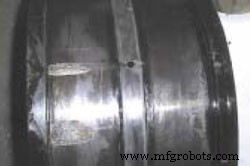
Figure 4. Inner Raceway with Diagnosed Pitting
The extruder was back in operation two days later as planned.
In hindsight, both the diagnosis and the predicted remaining service time were correct and economically prudent. A costly “crash repair” was avoided, and downtime was kept to a minimum—essentially a winning outcome in the world of maintenance.
About the author:
Mickey Harp is a vibration application engineer for Ludeca Inc. Ludeca is the exclusive distributor and factory‑authorized service and training center for PRUFTECHNIK alignment systems and condition monitoring products in the United States, the Caribbean and Venezuela. It also manufactures and distributes DotLine Laser and SheaveMaster Pulley alignment tools. The author can be reached at 305‑591‑8935 or Mickey.Harp@ludeca.com. For additional information, visit www.ludeca.com.
Equipment Maintenance and Repair
- Pentodes: The Fifth Element for Enhanced Tube Performance
- High Vibration in New Centrifugal Pump Traced to Faulty Motor Mounts
- The 10‑Second Indicator That Reveals Your Maintenance Program’s Health
- Harnessing Pareto Analysis to Optimize Maintenance Efficiency
- CN Tower Maintenance: Inside the Engineering Behind Toronto’s Iconic Landmark
- Vibration Analysis Fundamentals: A Practical Guide for Predictive Maintenance
- Diagnosing a Persistent Gearbox Noise: Lessons from a Refurbished Unit
- Eliminating Fan Vibration: A Practical On‑Site Balancing Solution
- Predictive Maintenance Evolution: From Reactive Failures to Proactive Success
- Silencing the Fan: How Vibration Analysis Eliminated a Booming Boiler Noise