



Bridging the Gap: Adding Cost to Overall Equipment Effectiveness (OEE)
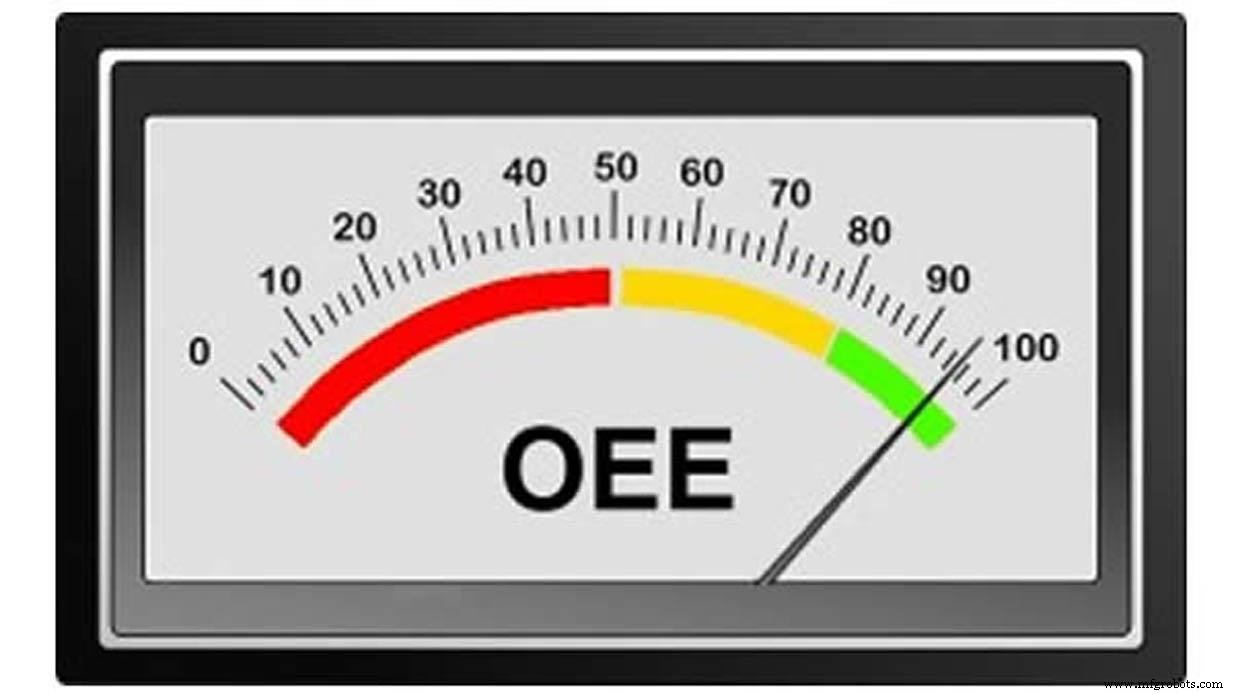

Overall Equipment Effectiveness (OEE) has long been a staple for measuring machine performance, defined as the product of speed, quality, and uptime. While it provides a clear snapshot of output, it falls short of accounting for the resources—time, money, and labor—required to achieve that output. With sufficient capital, any or all OEE factors can be improved, potentially masking underlying inefficiencies.
In earlier discussions, I highlighted the pitfalls of treating the three OEE components with equal weight. For instance, a plant that increased its quality adjustment seven‑fold turned a mere 1% decline into a 7% penalty on its OEE score. While rework costs were implicitly factored into the metric, the result remained purely a performance indicator.
So, if OEE is fundamentally a performance metric, what relevance does it hold for finance professionals? How does it translate into the dollar value of the resources invested? A metric that ties output to cost—think miles per gallon or units per labor hour—would bridge that gap.
To address this, I’ve developed a new measurement that fuses cost with OEE, offering a more actionable KPI for line managers, engineers, and CFOs alike.
Total costs = Cost per unit produced ÷ (Units produced × OEE)
This addition to your dashboard allows you to directly observe how reliability improvements impact the bottom line. When you tweak the denominator—whether by increasing OEE or altering throughput—you’ll see a corresponding shift in cost per unit.
During a recent staff meeting, an industrial engineer pointed out that the two variables in the denominator are not independent. If OEE rises by 4%, production typically rises by the same margin, potentially reducing unit cost by roughly 8%. Building on that insight, we can anchor the denominator to a fixed designed throughput, making cost variations a clearer reflection of OEE changes.
Total costs = Cost per unit produced ÷ (Designed throughput × OEE)
With this refined metric, the focus shifts from abstract performance to tangible cost drivers. OEE becomes a shared language that connects maintenance, operations, purchasing, and finance, fostering a holistic view of productivity and profitability.
Consider the implications when justifying increased maintenance spend. A metric that speaks directly to cost savings is far more persuasive to line managers and executives alike, enabling data‑driven decisions that benefit the entire organization.
Equipment Maintenance and Repair
- Maintenance Best Practices to Boost Overall Equipment Effectiveness (OEE)
- Rethinking OEE: Turning Equipment Efficiency into Business Success
- Drew Troyer on Maximizing Plant Reliability Through Overall Equipment Effectiveness (OEE)
- New Book: The OEE Primer – Mastering Equipment Effectiveness, Reliability & Maintainability
- Leveraging Overall Equipment Effectiveness (OEE) to Drive Plant Performance and Employee Engagement
- Unlocking Production Excellence: Mastering Overall Equipment Effectiveness (OEE)
- Mastering OEE: A Practical Guide to Maximizing Production Efficiency
- Your Complete Guide to Mastering OEE for Lean Manufacturing Success
- Mastering Overall Equipment Effectiveness: A Practical Guide for Manufacturers
- Mastering Overall Equipment Effectiveness: Boost Manufacturing Productivity