



Mastering OEE: A Practical Guide to Maximizing Production Efficiency
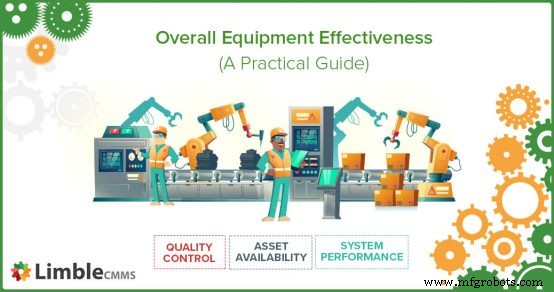
Overall Equipment Effectiveness (OEE) is the industry’s most trusted metric for quantifying how well your production lines are performing. By comparing your equipment’s ideal output to its real output, OEE gives you a single, actionable number that drives continuous improvement.
Even small gains—slipping a second off a cycle or reducing defects by 1%—translate into tens of thousands of dollars in savings each month. This guide walks you through the OEE concept, calculation, interpretation, and how to use it to tackle the six major sources of loss.
What Is OEE and Why It Matters
OEE is a composite KPI that blends three critical dimensions:
- Availability – the proportion of scheduled time that the machine is actually running.
- Performance – how fast the machine operates relative to its ideal speed.
- Quality – the percentage of good parts produced.
Each dimension is expressed as a percentage; the product of the three gives the overall OEE score. Unlike raw throughput figures, OEE accounts for downtime, speed variations, and defects, providing a holistic view of efficiency.
Preparing Your Data: The Foundation of Accurate OEE
Before you can calculate OEE, ensure you have reliable data for the following metrics:
1. Parts Metrics
- Good Count – units that meet quality standards.
- Total Count – all units produced, including rejects.
- Defective Count – units that fail quality inspection.
2. Time Metrics
- Planned Production Time – scheduled operating hours.
- Run Time – actual operating time, excluding downtime.
- Stop Time – downtime divided into planned (changeovers, maintenance) and unplanned (breakdowns, shortages).
3. Ideal Performance Metrics
- Ideal Cycle Time – theoretical minimum time to produce one part.
- Ideal Run Rate – maximum parts per minute under ideal conditions.
- Net Runtime – time required to produce a target quantity at ideal speed.
Collaborate with production managers and maintenance teams to set realistic ideals that reflect machine capacity, operator skill, material quality, and scheduling constraints.
Calculating OEE: Simple vs. Advanced Formulas
Always use the smallest unit of time (seconds) to avoid rounding errors. Below is a step‑by‑step example.
Simple OEE Formula
OEE = (Ideal Cycle Time × Good Count) ÷ Planned Production Time
Example: Ideal Cycle Time = 3 s, Good Count = 4 000, Planned Time = 18 000 s.
OEE = (3 × 4 000) ÷ 18 000 = 0.667 → 66.7 %
While easy to compute, the simple formula hides the root causes of inefficiency.
Advanced OEE Formula
Compute each dimension separately:
Availability = Run Time ÷ Planned Production Time
Performance = (Ideal Cycle Time × Total Count) ÷ Run Time
Quality = Good Count ÷ Total Count
OEE = Availability × Performance × Quality
Using the same example with a Run Time of 15 300 s, Total Count of 4 000, and 500 defects:
- Availability = 15 300 ÷ 18 000 = 0.85 → 85 %
- Performance = (3 × 4 000) ÷ 15 300 = 0.784 → 78.4 %
- Quality = 3 500 ÷ 4 000 = 0.875 → 87.5 %
- OEE = 0.85 × 0.784 × 0.875 = 0.583 → 58.3 %
Interpretation: A 58 % OEE is typical for a plant beginning OEE tracking; world‑class plants hit 85 % or higher.
Understanding the Six Big Losses
OEE directly reflects six categories of loss that can be addressed to lift performance:
- Equipment Breakdowns – unplanned downtime.
- Setup & Adjustments – planned downtime.
- Minor Stoppages – small, frequent slowdowns.
- Reduced Speed – operating below the ideal rate.
- Product Scrap – defective units.
- Startup Scrap – defects during initial runs of new equipment.
Mitigation strategies include preventive maintenance, predictive analytics (e.g., sensor‑driven CMMS like Limble), SMED for quick changeovers, operator training, and continuous process standardization.
Implementing OEE in Your Organization
Start with a focused pilot:
- Scope – choose a single machine or line.
- Timeline – collect data over enough shifts to capture variability.
- Analysis – calculate OEE, identify the largest losses, and prioritize improvement actions.
- Re‑measure – track progress after implementing changes.
Once the pilot demonstrates value, scale the program, automate data collection, and embed OEE into your TPM strategy.
Common Pitfalls and How to Avoid Them
- Focusing on the score instead of the underlying losses.
- Comparing dissimilar processes without context.
- Excluding changeovers from the calculation.
- Deploying OEE across the plant without adequate data quality.
- Collecting data too slowly, leading to inaccurate scores.
- Customizing the formula to fit personal preferences, which hinders benchmarking.
Next Steps
Ready to elevate your production? Start a free 30‑day trial of Limble CMMS, or request a demo to see how automated data collection can streamline your OEE calculations and continuous improvement.
Equipment Maintenance and Repair
- Maintenance Best Practices to Boost Overall Equipment Effectiveness (OEE)
- Rethinking OEE: Turning Equipment Efficiency into Business Success
- Drew Troyer on Maximizing Plant Reliability Through Overall Equipment Effectiveness (OEE)
- New Book: The OEE Primer – Mastering Equipment Effectiveness, Reliability & Maintainability
- Bridging the Gap: Adding Cost to Overall Equipment Effectiveness (OEE)
- Leveraging Overall Equipment Effectiveness (OEE) to Drive Plant Performance and Employee Engagement
- Unlocking Production Excellence: Mastering Overall Equipment Effectiveness (OEE)
- Your Complete Guide to Mastering OEE for Lean Manufacturing Success
- Mastering Overall Equipment Effectiveness: A Practical Guide for Manufacturers
- Mastering Overall Equipment Effectiveness: Boost Manufacturing Productivity