



A Practical Guide to Selecting the Right CMMS
Choosing a CMMS Software
This guide provides a step‑by‑step framework for evaluating, scoring, and selecting a Computer‑Aided Maintenance Management System (CMMS) that aligns with your business objectives, budget, and operational workflow.
Table of contents
- How to Use This Guide
- Phase #1: Assemble Your Team
- Phase #2: Define Your Goals
- Phase #3: Evaluate CMMS Options
- The Bottom Line
Choosing the correct CMMS can transform maintenance from a reactive chore into a strategic asset, saving time and capital. This article delivers proven tactics, scoring templates, and real‑world questions to guide you toward the best fit.
How to Use This Guide
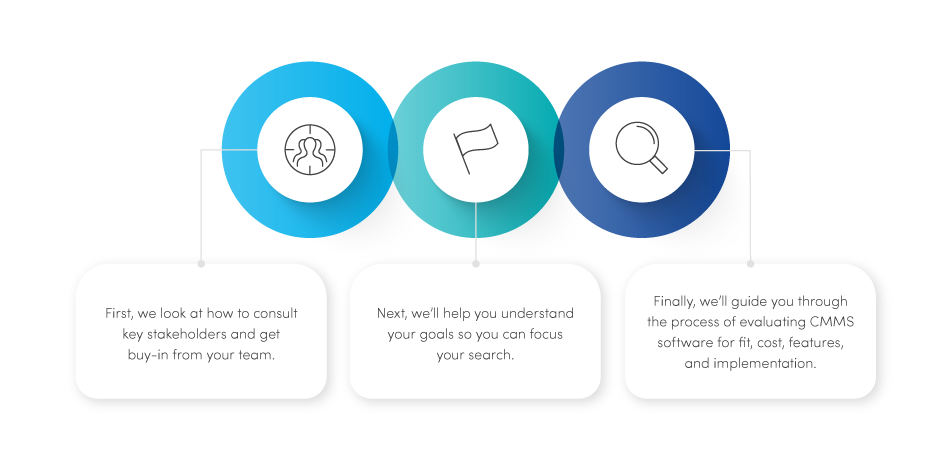
The three phases below mirror the entire selection process, from stakeholder alignment to final decision.
- Identify key stakeholders and secure buy‑in.
- Clarify organizational goals to narrow the search.
- Rigorously evaluate each CMMS against fit, cost, features, and implementation readiness.
Phase #1: Assemble Your Team
Success depends on the people who will use the system. Involve every role that interacts with maintenance data to ensure the final solution meets real‑world needs.
Who Should Be Consulted?
- System Administrators & Maintenance Managers – Oversee daily usage and adoption.
- Technicians – End‑users who demand intuitive interfaces and reliable functionality.
- Operators – Integral to work‑order creation and execution.
- Reliability Engineers – Drive preventive maintenance and asset reliability.
- Inventory Managers – Ensure accurate parts tracking and stock optimization.
- Health & Safety Personnel – Essential for compliance‑heavy environments.
- IT Team – Assess integration with existing infrastructure.
- Executives (CEO, CFO, etc.) – Use data for strategic decision‑making.
Key Questions for Stakeholder Insight
- What’s in it for me? Capture the perceived value for each user.
- Does our organizational culture support a CMMS rollout? Identify and address potential resistance.
- What resources can ease adoption? Consider policy updates, training, and demo participation.
When stakeholders understand the benefits and have ownership, adoption hurdles shrink and ROI accelerates.
Phase #2: Define Your Goals
Without clear objectives, you risk selecting a system that misses the mark. Use the following questions to uncover pain points and performance targets.
Defining Your Goals
- What are the short‑ and long‑term maintenance objectives?
- What is the biggest frustration of the maintenance team?
- Which KPIs (e.g., MTBF, downtime, labor hours) are critical?
- Do we operate multiple sites? How many assets and parts?
- What maintenance strategy are we using now and plan to adopt?
- What is the daily workload of the team?
- Which health and safety regulations apply?
Practical Tips
- Discuss success metrics with decision‑makers.
- Quantify current performance gaps and root causes.
- Audit existing processes and identify bottlenecks.
- Prioritize the top five goals for 1, 3, and 5‑year horizons.
By the end of this phase, you’ll know whether a new CMMS is necessary and what it must deliver.
Phase #3: Evaluate Your CMMS Options
With goals clarified, you can now scrutinize each candidate on concrete criteria: fit, cost, features, and implementation.
Choosing a CMMS that Fits Your Requirements
Key Requirement Questions
- What is the maximum annual spend?
- Can we measure asset performance effectively?
- What is the desired purchase‑to‑go‑live timeline?
- Do we have on‑premise IT capacity?
- What supporting processes are already in place?
Establishing Requirements
- Create a 5‑year budget envelope.
- Inventory assets and assess criticality.
- Set 30‑, 60‑, and 90‑day milestones.
- Consult IT on on‑prem vs. cloud feasibility.
- Review SOPs for gaps that affect adoption.
- Apply the “What’s in it for me?” lens to all users.
Matching the Right CMMS
Exclude options that exceed budget or lack essential capabilities. Prioritize on‑prem or cloud based on your IT resources.
Understanding the True Cost of a CMMS
Cost‑Analysis Questions
- What is the budget and its future drivers?
- How many users will the system support now and over five years?
- Which KPIs will measure ROI?
- What is the total cost of ownership (purchase, subscription, training, support, upgrades)?
- What pricing models exist—flexible or locked‑in?
- What are indirect costs (time, infrastructure, new hires)?
Cost‑Evaluation Tips
- Free tiers exist but often restrict users, assets, and support.
- User count drives subscription costs; plan for growth.
- Account for setup, IT, training, and ongoing support.
- Measure expected savings in inventory, labor, and downtime.
Budget‑Based Selection
Trim candidates that exceed the defined envelope or lack scalability.
Assessing Features and Benefits
Not all feature lists are created equal. Use a structured scoring approach to compare relevance and depth.
CMMS Features Scoring Template
Download our scoring template to evaluate each vendor’s capabilities.
Additional Evaluation Considerations
- Reach out for clarification on ambiguous features.
- Verify mobile app availability for on‑site work.
- Confirm integrations with existing ERP, MES, or safety systems.
- Check feature availability in the chosen pricing tier.
- Assess customization options for dashboards and reports.
- Ensure realistic resource alignment for feature use.
- Include training, documentation, and support in the assessment.
Value for Money
Eliminate solutions that score significantly lower despite lower prices. Focus on the top two to five contenders for deeper review.
Defining the Scope of Your CMMS Implementation
Implementation Success Factors
- Is the interface intuitive? Test with a free trial.
- What is the vendor’s support package (setup, training, help center)?
- What common implementation pitfalls exist? Ask vendors and current users.
- Define post‑purchase actions and timelines.
- Plan for ongoing monitoring, onboarding, and scaling.
Final Decision
After thorough research and stakeholder alignment, select the CMMS that best addresses your short‑ and long‑term needs while providing robust support for adoption and growth.
The Bottom Line
Selection can feel daunting, but follow these three steps to cut through the noise:
- Secure stakeholder buy‑in early.
- Define clear, measurable goals.
- Evaluate each option on fit, cost, features, and implementation feasibility.
With a systematic approach, you’ll uncover the CMMS that turns maintenance from a challenge into a competitive advantage.
Equipment Maintenance and Repair
- Maintenance Software vs Spreadsheets: Why CMMS Outperforms Manual Tracking
- How a CMMS Transforms Facility Management: Key Benefits Explained
- Mastering Manufacturing Production Software: Boost Efficiency & Control
- Elevate Your Maintenance: 5 Key CMMS Resolutions for 2024
- 5 Steps to Choose the Right CMMS Software
- Back to Basics: The Ultimate CMMS Guide – Part 3: Selecting Features for Successful Implementation
- Are Free CMMS Solutions Truly Cost‑Free? Uncover the Truth
- Choosing the Right Simple CMMS Software for Seamless Maintenance Management
- Choosing the Right CMMS: Free, Open Source, or Trial Software Explained
- How to Successfully Implement CMMS Software: A Proven Step‑by‑Step Guide