



Non‑Destructive Testing (NDT): Principles, Applications, and Industry Benefits

Testing is a cornerstone of reliable equipment maintenance. By examining a component’s material, geometry, or performance, technicians can verify that it meets design intent and safety standards. Depending on whether the test alters the part, the procedure is classified as destructive or non‑destructive testing (NDT).
Destructive methods consume the component to reveal flaws, whereas NDT preserves the item’s integrity, allowing it to continue service afterward. This article focuses on the diverse applications of NDT, why it matters, and the techniques most commonly employed across industries.
What Is Non‑Destructive Testing?
NDT refers to any inspection that does not compromise the structural or functional integrity of the part being examined. These techniques—also called non‑destructive evaluation (NDE) or non‑destructive inspection (NDI)—use principles from physics, chemistry, and mathematics to detect defects, measure dimensions, or assess material properties.
Consider a piston inside an engine. Cutting it open would reveal its condition but render it unusable—this is a destructive approach. In contrast, radiographic inspection with X‑rays or gamma rays can locate internal flaws while leaving the piston fit for operation, illustrating a true NDT process.
Where Is NDT Used?
NDT underpins quality control and condition monitoring in a wide spectrum of sectors, including:
- Aerospace – inspection of castings and critical components
- Automotive – durability testing of piston heads and structural parts
- Manufacturing – pre‑production quality assurance
- Medical Devices – verification of stent composition and integrity
- Military & Defense – ballistics and materials testing
- Packaging – leak detection and structural integrity
- Marine – corrosion identification on hulls and fittings
- Power Generation – weld defect detection in turbines and boilers
- Waste Management – sorting and reclaiming metals from waste streams
- Petrochemical – pipeline integrity assessment
Why Is NDT Used?
NDT offers several strategic advantages:
- Asset Longevity – Early detection of wear or corrosion reduces unplanned downtime and extends service life.
- Safety Assurance – Identifying hidden defects prevents catastrophic failures in critical systems.
- Quality Control – Rapid verification of production parts ensures compliance with tolerance specifications.
- Predictive Maintenance – Data from NDT feeds into condition‑monitoring systems, enabling proactive repairs.
These benefits make NDT indispensable in modern maintenance strategies.
Common Non‑Destructive Testing Methods
The choice of NDT technique depends on the material, component geometry, and the defect type sought. Below are the most frequently applied methods.
1) Visual Inspection
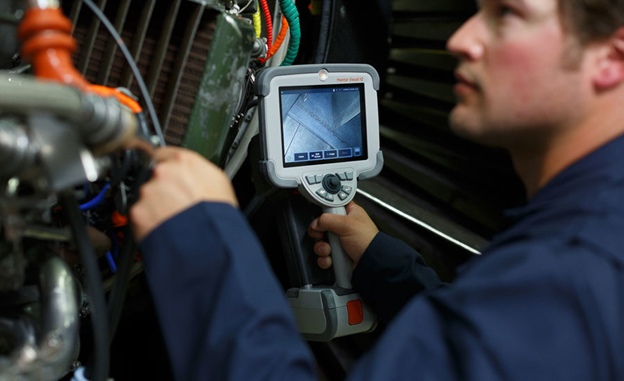
Visual inspection remains the simplest and most accessible NDT approach. Skilled technicians examine surfaces for cracks, corrosion, or surface discontinuities, often using magnification tools or borescopes. When direct access is impossible, robotic arms or drones equipped with high‑resolution cameras enable remote assessment. In high‑volume production, machine‑vision systems coupled with deep learning can automate defect detection, dramatically increasing throughput and consistency.
2) Ultrasonic Testing (UT)
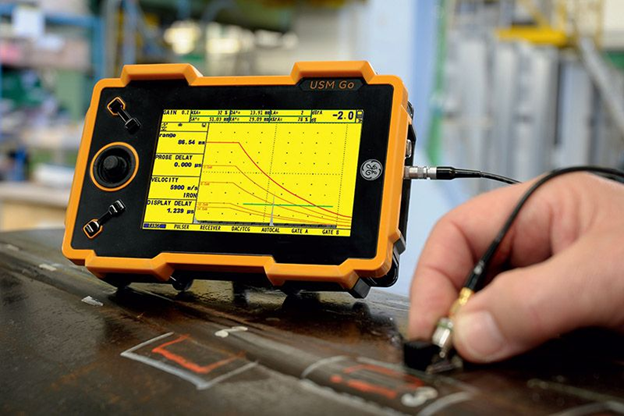
UT employs high‑frequency sound waves to probe a material’s interior. By measuring the time between transmission and echo, technicians can locate cracks, measure wall thickness, and evaluate material homogeneity. Various UT modes—such as pulse‑echo, through‑transmission, and phased‑array—enable targeted defect detection in complex geometries. Rail wheel and axle inspections, for example, routinely use UT to ensure structural integrity under heavy loads.
3) Vibration Analysis
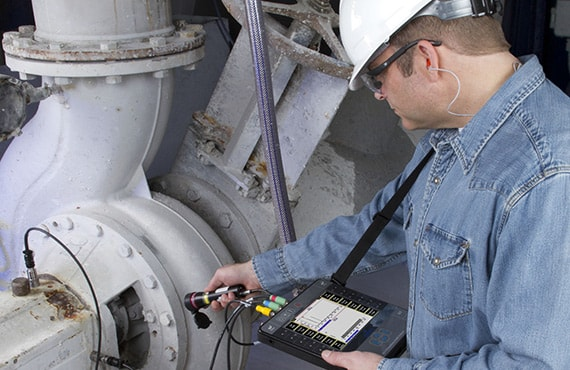
Rotating equipment emits characteristic vibration signatures. Sensors measuring displacement, velocity, or acceleration capture these signals. Analysis of frequency spectra reveals misalignments, imbalance, bearing wear, or looseness, enabling predictive maintenance actions before catastrophic failure occurs.
4) Magnetic Particle Testing (MT)
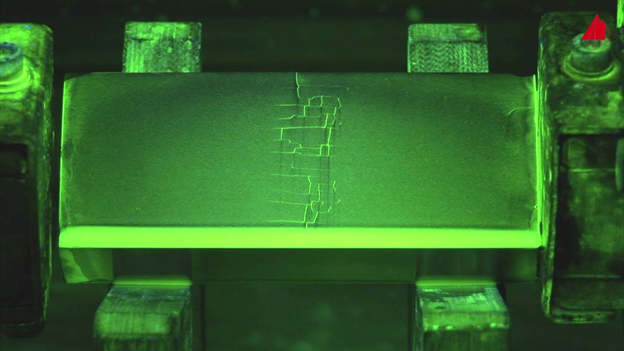
MT detects surface and near‑surface cracks in ferromagnetic materials. By magnetizing the part and applying a magnetic particle suspension, defects attract particles, revealing themselves as visible clusters. Ultraviolet illumination enhances visibility. The National Board Inspection Code (NBIC) lists MT’s applications, from boiler inspections to weld repairs on pressure vessels.
5) Penetrant Testing (PT)
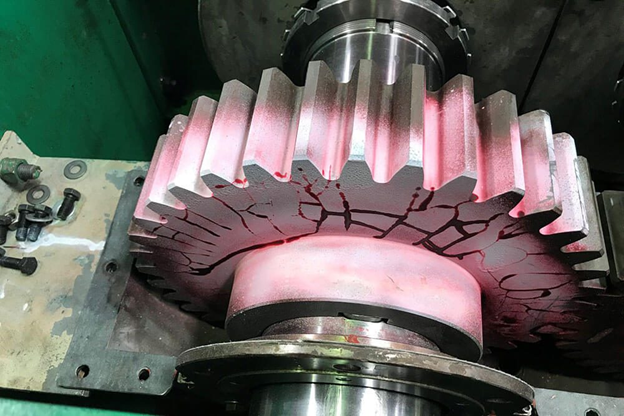
PT is ideal for non‑ferrous metals and situations where MT is unsuitable. A liquid dye penetrates surface fissures during a dwell period, then is removed and developed to reveal hidden defects through capillary action. Commonly used for welded surfaces, PT is a quick, cost‑effective method for quality assurance.
6) Eddy Current Testing (ECT)
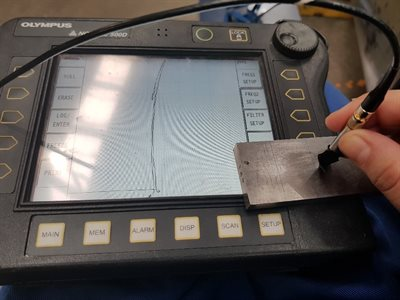
ECT relies on electromagnetic induction. A coil’s alternating magnetic field induces eddy currents in a conductive test piece. Defects disrupt current flow, altering impedance. Portable probes and conductivity meters capture these variations, allowing detection of surface cracks, corrosion, or material discontinuities. ECT is widely used for surface scanning, weld inspection, and tube integrity checks.
7) X‑Ray and Computed Tomography (CT)
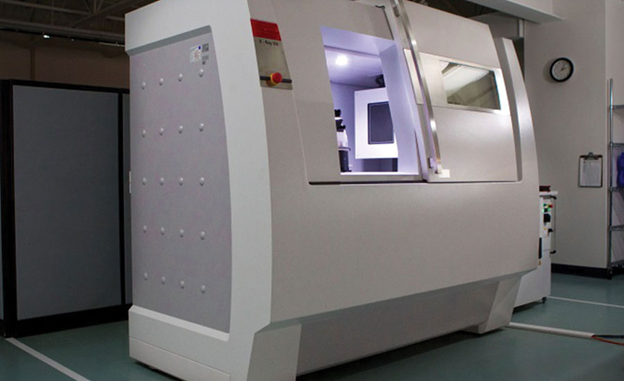
Radiographic methods—including X‑ray and CT—provide cross‑sectional images of a component’s interior. X‑rays pass through the part and are captured on film or digital detectors, revealing hidden weld defects, voids, or internal corrosion. CT extends this capability by rotating the source and detector, producing detailed 3‑D reconstructions that can be color‑coded by material composition.
8) Honorable Mentions
Beyond the seven core techniques, industry practitioners employ specialized NDT tools, such as:
- Guided Wave Testing – ultrasound propagation along long structures to detect distant flaws.
- Laser‑Based Techniques – holography, shearography, and profilometry for surface mapping and defect detection.
- Leak Testing – bubble, pressure‑change, halogen diode, or mass‑spectrometer methods for identifying fluid leaks.
- Magnetic Flux Leakage – analysis of magnetic flux variations in ferrous components.
- Neutron Radiography – low‑energy neutron beams for imaging dense or composite materials.
- Thermal/Infrared Imaging – surface temperature mapping to detect hotspots or insulation failures.
For a comprehensive list of condition‑monitoring techniques, consult the MRO magazine’s dedicated resource.
Who Performs Non‑Destructive Testing?
Proficiency varies by method. Routine visual checks can be carried out by entry‑level technicians, whereas advanced techniques—such as computed tomography—require specialized training in radiology and instrumentation. The responsible party often aligns with the testing objective: production line quality checks are handled by QA teams; in‑service condition monitoring falls under maintenance, with OEMs sometimes conducting scheduled inspections. Many organizations integrate NDT schedules into CMMS platforms, automatically logging data, generating alerts, and triggering maintenance actions.
Certifications from the American Society for Nondestructive Testing (ASNT) validate technician competence. ASNT offers training, examinations, and accreditation for individuals and companies.
The Future of Non‑Destructive Testing
As predictive and prescriptive analytics mature, the value of accurate, real‑time condition data grows. NDT, coupled with sensor‑based monitoring, supplies the high‑quality datasets necessary for robust failure‑prediction models. Consequently, the adoption of NDT is expected to accelerate across all sectors that prioritize reliability and safety.
Equipment Maintenance and Repair
- Coaching Cards: A Proven Tool for Sustaining Change Management Success
- CMMS Failure Codes: What They Are and How to Use Them Effectively
- Laser Ablation in Aerospace Manufacturing: Precision Material Removal Explained
- What Is Marketing Automation? How It’s Transforming Modern Campaigns
- Non-Destructive Testing (NDT): Comprehensive Methods & Applications
- Sheet Metal Explained: Uses, Materials, and Fabrication Techniques
- Compactors in Construction: Types, Functions, and Their Crucial Role in Foundation Stability
- Silicon Aluminum Bronze: Composition, Advantages, and Industrial Applications
- 1‑2‑3 Blocks Explained: Essential Tools for Precision Machining
- Ultrasonic Welding of Plastics: Process, Benefits, and Applications