



Guide to Precision Manufacturing: Processes, Benefits, And Applications
Take for instance you create a product and its parts fit perfectly so much the seam isn’t visible. This is what precision manufacturing entails – high accuracy when creating components. This has been the basis of modern reliability as we’ve seen in cases like smartphones, medical devices, etc. In this precision manufacturing guide, we’ll be discussing everything related to precision manufacturing, steps and processes involved, materials used, its applications, and more.
Precision manufacturing deals with the way of producing components that fit perfectly. It utilizes specialized machines that cut and shape materials, and gives a perfect finish, ensuring very low error margins throughout the process. This is necessary since sloppy parts could result in weak electronics, broken engines, etc.
Furthermore, factors use precision manufacturing when building airplanes, medical tools, and cars, due to the high level of accuracy required. Without this process, virtually everything we use on a daily basis wouldn’t function.
Steps in Precision Manufacturing
Precision manufacturing comes in different steps:
1. Design for Manufacturing Review
Before you start cutting, a DFM review is very important. Check the part’s design and ensure it can be manufactured accurately. This stage allows you to discover wrong features quickly, notice weak spots, ensuring that you save money and time.
2. CAD Modeling and CAM Programming
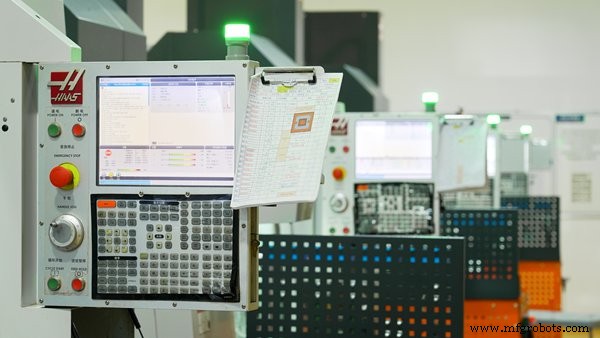
Here, you are creating a 3D model in detail, utilizing the CAD software. Next, the model is transformed into machine instructions using CAM programming. You instruct the machine where and how quickly it should move, and the depth of cut.
3. Choosing and Preparing the Material
Your choice of material, either plastic, aluminum, steel, etc., is dependent on what you want the part to achieve. Next, prepare the material by cutting it to a specific size and treating it with heat or cleaning it; this allows it to function consistently during processing.
4. Zero-setting and Fixturing
This involves fitting the material properly on the machine, ensuring that it is held still with a firm grip. Next, set the zero point of the machine; here is the reference point of all measurements. Once you miss this zero point, no matter how small, the entire part has gone wrong.
5. Machining, Casting, or Printing
This is the stage where you control the process. You may decide to mill the material, turn it, or grind it away. You could cast it inside a mold or print it one layer at a time. Whatever method you choose, you’re removing or adding material with high precision.
6. In-Process Inspection
You shouldn’t wait till the process is completed. Midway, stop and take measurements by using probes, gauges, or calipers for checking crucial dimensions. Once you notice any irregularities, this is the time to adjust them.
7. Finishing and Post-Processing
After completing the desired shape, smooth the rough edges and polish the surfaces before applying coatings. Here, you’re giving the part its eventual feel and look, and ensuring it slides perfectly.
8. Final Inspection and Quality Control
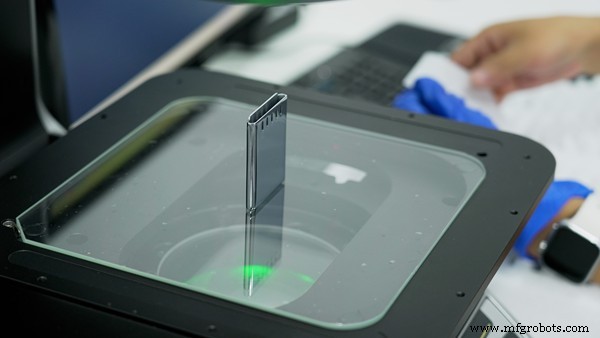
Here is the end of the process, and you have to measure everything once again. Get your design blueprint and compare all the features with what has been produced. Only parts that successfully pass all the tests will be presented for customer use. Those parts that fail the tests will be taken back for rework or discarded.
Main Processes of Precision Manufacturing
Precision manufacturing relies on a range of advanced production technologies, each offering unique advantages in terms of accuracy, efficiency, material compatibility, and production volume requirements.
Precision CNC Machining
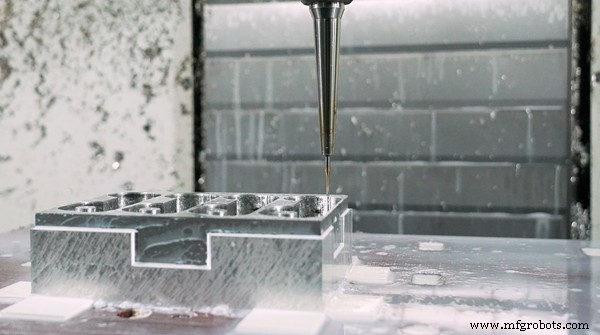
This process involves the use of computer-controlled machines such as routers and mills to get rid of pieces of material from a part. These machines operate based on specific instructions to remove tiny material until it achieves the required dimension. Precision CNC machining is a suitable choice for the production of plastic and metal parts.
Metal Casting
In this process, you put molten metal in a mold and allow it to cool and harden. After this, remove the solid metal, which at this time has taken the shape of the desired part.
Laser Cutting
Laser cutting requires you to use a laser beam on a sheet of material to achieve clean, smooth edges. The laser beam melts along an already programmed path to ensure accuracy.
Injection Molding
This process involves melting plastic material and injecting it into a steel mold with high pressure. Once the molten plastic cools off, you can remove it from the mold.
Additive Manufacturing
Additive manufacturing is a process that requires you to produce a part layer by layer according to 3D models. Here, you use an electron or laser beam to melt liquid material where required.
Wire EDM
Wire EDM is a common process used for cutting through hard metal. Here, an electrically charged wire cuts through hard metal. During this process, the wire doesn’t come in contact with the metal. It just produces sparks that move across a small gap and cut the material.
Materials Used During Precision Manufacturing
There are several materials used during precise manufacturing, which include metals, plastics, and composites. Let’s consider them.
Metals
Metals used for precision manufacturing include aluminum, steel, titanium, and alloys. Aluminum is useful when cutting something easy and light, such as drone frames, bicycle frames, aircraft fuselages, etc. This is because aluminum is fairly strong, light, and can be machined easily.
Steel is suitable for shafts and gears, building structures, rail tracks, car chassis, while Titanium is the best option for medical implants, jet engines, submarine components, heat exchangers, etc. Other alloys, such as Inconel or brass, are suitable for specific roles where salt water or heat becomes an issue.
Plastics
Plastics used for precision manufacturing include polycarbonate, Acrylonitrile Butadiene Styrene (ABS), Polyether ether ketone (PEEK), and Nylon. This option is suitable where you need flexibility, low weight, or insulation. Polycarbonate can absorb great impact without breaking apart, and this is why it is useful in safety shields.
Furthermore, ABS is suitable for housings, automotive components, pipes and fittings, etc. In addition, PEEK is suitable for medical parts, electrical and electronics, industrial machinery, food processing equipment, etc, while Nylon is useful in moving parts, including bushings.
Composites
Composites are materials made from the combination of at least two materials to create something that includes all the properties of the materials used. For example, carbon fiber provides more stiffness with very little or no weight; however, you must machine it carefully to prevent fraying. Fiberglass is less expensive but strong. Composites must be machined slowly using hard tools, i.e., diamond-coated tools, to prevent damage to the parts or cause the fibers to wear down quickly.
Benefits of Precision Manufacturing
The widespread adoption of precision manufacturing across industries is driven by its ability to improve product quality, production efficiency, and overall manufacturing reliability.
Better Precision
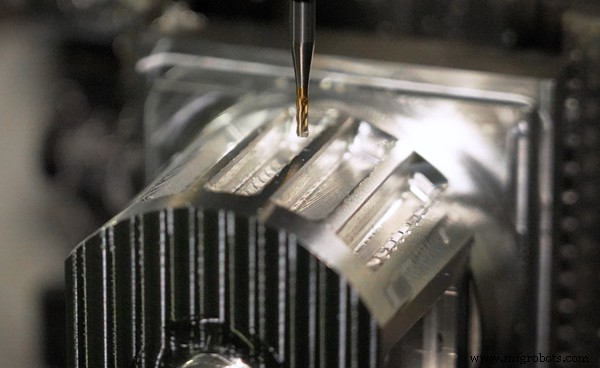
Precision manufacturing is a reliable process that helps engineers make precise parts. This process is great for maintaining tight tolerances, especially in small, complex parts. Since errors hardly occur, components align properly without the need for rework.
Design Flexibility
Precision manufacturing offers better design flexibility since it can create complex shapes that seem impossible to achieve with other methods. You can use this process to create intricate designs like curves, thin walls, undercuts, etc.
Greater Consistency
No matter the quantity of parts you want to produce, precision manufacturing ensures every part remains identical. This is because it ensures consistency throughout the steps involved.
Compatibility with different materials
With precision manufacturing, you can produce different parts from different materials. This process is compatible with a wide range of materials like plastics, metals, and even hard composites. It is an adaptable process that can meet the varying needs of different materials.
How to Manage Quality Control During Precision Manufacturing?
Inspection methods
It is easier to detect potential problems when you inspect at different stages of the manufacturing process. This usually begins with checking raw materials for quality before machining starts. You can detect any error during production by using in-process checks.
After the post-processing stage, make sure you check every critical part. You can use random sampling for high volumes. However, ensure you carry out a full inspection when dealing with high-risk parts.
Measurement Techniques
Make use of tools that align with your required tolerances. Coordinate measuring machines are useful for measuring complex shapes and micrometers regularly.
Use laser scanning machines to capture data points within seconds and ensure you calibrate all your tools often.
Standards and Compliance
There are standards you need to comply with to ensure quality control during precision manufacturing. For instance, ISO 9001 and AS9100 are popular standards that manufacturers adhere to. These standards define the best way to document machining processes and as well deal with non-conforming parts. Ensuring strict compliance helps to build trust in your products.
Design Factors to Consider During Precision Manufacturing
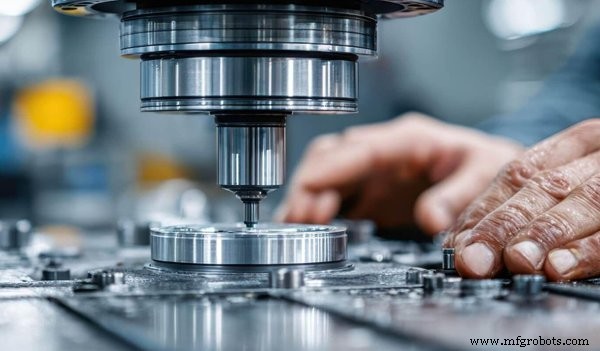
There are several design factors you should consider during precision manufacturing. These include material selection, tolerance requirements, and surface finish specifications.
Material Selection
Your choice of material has to match what the part is designed to serve and the process of manufacturing. For example, choosing a hard metal such as titanium provides strength, but causes the tools to wear out faster. Also, you can cut soft plastics easily, but they could warp under heat. Therefore, consider the strength, weight, cost, and behavior of the material when it undergoes machining.
Tolerance Requirements
Specify tight tolerances only where it is required. Every additional decimal point adds cost and time. A hole holding a bearing requires high accuracy, while simple clearance holes don’t. Make sure you can tell which parts have to be controlled and precise, and which can be more flexible without impacting the performance.
Surface Finish Specifications
You should decide how smooth your surface finish will be. Sealing surfaces have to come out smoothly, similar to a mirror-like finish. Parts that don’t come in contact with others can remain the way they are without any polishing or finishing. Rough finishes are usually faster to make and less expensive, so don’t be too strict with the requirements than necessary.
Geometric Complexity
Simple shapes are usually less expensive to make. However, to achieve undercuts, deep internal cavities, etc., there’ll be a need for more expensive processes such as additive manufacturing.
Manufacturing Process Compatibility
Design the part for the process you want to use. Parts designed for CNC machining must be accessible to the tools. Also, parts designed for injection molding require angled sides to come out of the mold. Disregarding this may make your lovely designs impossible to produce.
What are the Applications and Industries of Precision Manufacturing?
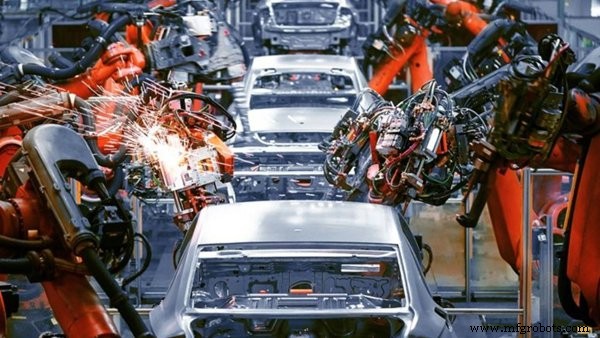
Because of its ability to produce highly accurate and consistent components, precision manufacturing has become an important production method across many high-performance industries.
Medical
Precision manufacturing is a popular process used in the production of medical products like dental devices, surgical tools, and implants. Medical parts must be consistent and accurate to ensure patients’ safety. For instance, a catheter must have a consistent and smooth surface to function properly. With precision manufacturing, engineers can produce medical parts that are safe for human use.
Aerospace
Critical parts like fuel nozzles and turbine blades must be very accurate to prevent accidents. Airplane engines usually operate at extreme speeds, making them a delicate part. Precision manufacturing offers precise shaping when producing these parts.
Automotive
This process can produce complex parts like sensor housing, brake rotors, and transmission gears with accuracy. These parts of a vehicle must be able to withstand extreme heat and vibration.
Robotics
Precision manufacturing offers a high level of accuracy when producing parts like gripper fingers and servo motors. This process offers consistency, thereby making every move predictable.
Electronics
From connector pins to camera lens barrels and smartphone frames, precision manufacturing helps engineers achieve a high level of precision. Consumer appliances like smartphones need a high level of accuracy because a slight error, like an extra space, can result in a thicker phone.
Precision Manufacturing vs Traditional Manufacturing: What are the Differences?
Here, we will be differentiating between precision manufacturing and traditional manufacturing, focusing on some features.
FeaturesPrecision ManufacturingTraditional ManufacturingInspectionContinuous checks and final measurementOccasional visual checks or samplingToleranceTighter (i.e. ±0.005 mm)Looser (i.e. ±0.5 mm)Material useHigh efficiency, meaning less wasteMore waste and rework requiredConsistencyExcellent across different partsVaries with partsSkill levelSetup technicians and skilled programmersMachine operatorsEquipment CostInitial investment is high for CNC or laser systemsLower investment cost for lathes and manual millsBest ForComplex parts such as implantsSimple parts such as spacersThings to Consider When Choosing the Right Partner for Your Precision Manufacturing
Selecting the right manufacturing partner is just as important as choosing the right process, as their capabilities directly influence part quality, lead times, and project success.
Technical Expertise
Look out for a company that understands everything about precision manufacturing. A reliable company will be able to see you through the whole process from material sourcing to the creation of the final product. Ask important questions about the type of materials, inspection methods, etc.
Industry Experience
Experience is an important factor you need to consider when choosing the best precision manufacturing partner. Check if the intended company has experience in producing the type of parts you intend to create.
Quality Assurance Standards
Certifications also matter when choosing a reliable company for precision manufacturing. Reputable companies have certifications like ISO 9001, indicating their strict compliance with certain specifications.
Production Capacity
It is important that you ask the volume of parts your company can produce within a specified time. Some companies don’t have the requirements to handle large-volume production. On the other hand, some companies may need more time to complete large orders.
Cost
Cost is an important factor to consider. While choosing a company based on your budget, don’t compromise quality for cost. You can compare the quotes of different reliable companies and choose the one that works with your budget.
Precision Manufacturing Capabilities at WayKen
At WayKen, we combine advanced CNC machining, 3D printing, rapid tooling, injection molding, sheet metal fabrication, and comprehensive finishing services to deliver high-precision components for demanding industries. Equipped with 3-, 4-, and 5-axis CNC machines, CMM inspection systems, and an ISO-certified quality management process, we support projects from prototype development to low- and medium-volume production while maintaining consistent quality, tight tolerances, and fast turnaround times.
Precision manufacturing is a reliable process that helps in producing parts with delicate designs. This process works with a wide range of materials like metals, plastics, and composites. Every step in this manufacturing process plays an important role in the quality of the final parts produced. Therefore, it is important to work with a reputable company that offers good precision manufacturing services.
CNC Machine
- Official Statement on Tackling Counterfeit Accounts and Products
- How to Create Precision Wood Signs with CNC Routing – A Complete Expert Guide
- Mastering Haas CNC Circular Interpolation: Practical G02/G03 Programming & Examples
- Reset All Offsets on Haas CNC Machines Using G10 G‑Code
- Our 6090 CNC Machine Matches Hand-Carved Quality
- SIRIUS UM+ Vertical Machining Center – High Speed, Ultra-Precision
- Rapid Prototyping: From Niche Innovation to Industry‑Standard Solution
- Expert Guide: Selecting the Right Laser Engraver for Your Business
- Preparing Your Workshop for a CNC Plasma Cutting Table: Electrical & Gas Requirements
- 2024’s Best CNC Router Machines – Top 10 Picks & Why They Excel