



Comprehensive Guide for Philippine Food Manufacturers: Meeting Labeling Regulations
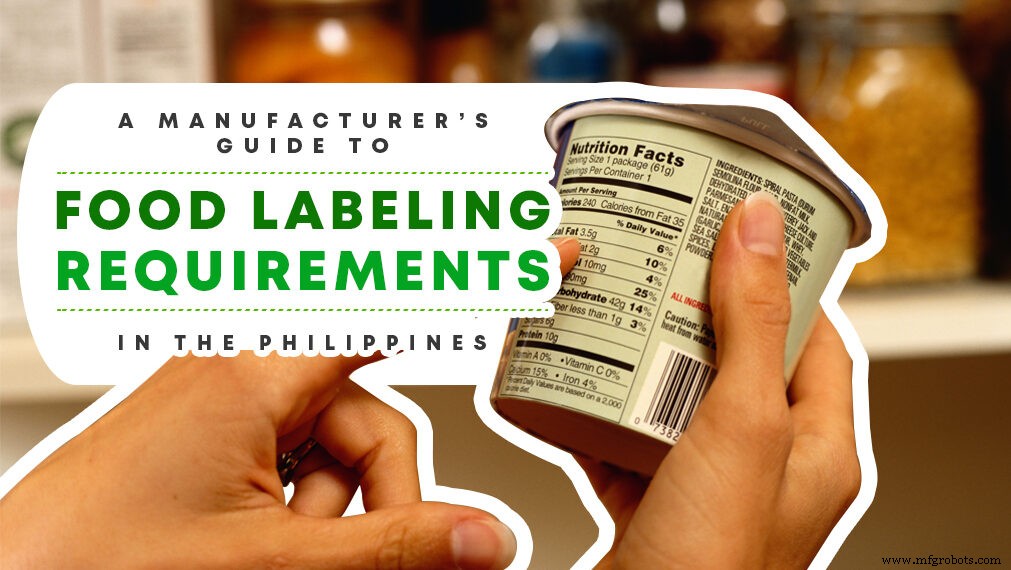
If you are new to the food and beverage industry, you should know that there are food labeling requirements in the Philippines that every manufacturer has to adhere with. In fact, due to the industry’s nature, food and beverage products have some of the most challenging coding and packaging requirements.
Here’s a quick guide to help you through the process.
Food Labeling Requirements in the Philippines: What to Include
1. Product Name
The name of the food should be visible on the product label. It should be specific and description may be added to clearly state the product’s characteristics. It may also include the treatment used for a product such as UHT, Sterilized, Freeze-Dried, and others.
2. Brand Name
The registered trademark of a company’s brand name must be printed on the label. This is a unique identifier and is registered with the FDA.
3. Ingredients
Food products should include labels that provide the complete details of the ingredients used. It should be presented in descending order or according to proportion.
IMPORTANT: Food allergen information must be visible below the list of ingredients. This should disclose the components used in a product. This should warn consumers of possible allergic reactions they may cause.
4. Net Content
To be clear, net weight and gross weight are two different things. Net weight is required on product labels to represent food volume minus the actual packaging. It must also be declared in units using the metric system.
NOTE: Drained weight is also required to be declared for food products packed in a liquid medium. It represents the actual weight of the food product once the aqueous solution is discarded.
5. Manufacturer Details
The name and the address of the manufacturer are vital for all locally manufactured items. The manufacturer’s contact details will give consumers a reference in case they have inquiries about the food product they purchase.
NOTE: For manufacturing companies with plants in different locations, the head address would be enough as long as a traceability code is added.
6. Lot Identification
This refers to the code that uses a mix of numbers and letters in reference to the batch of products. This is crucial for product identification and tracking.
7. Storage
To provide consumers with essential information, storage condition must also be found on product labels. This will guide them in properly stocking on food products after opening.
8. Best Before Date
Expiration and Use by dates are some of the most common information that consumers usually search for. It is an important marking that reassures product quality.
9. Instructions
The direction of use should be visible on the label especially for products that require certain instructions to be properly consumed.
10. Nutritional Information
Nutrients that are claimed to be in the product must be declared. It should include the number of nutrients and other vitamins and minerals that a product has.
ALSO READ: The Role of Inkjet Coders in the Manufacture of Essential Goods
If you are a manufacturer, you should be aware of the challenges that the food industry presents. Good thing, there are product coding and packaging equipment that can help you meet the requirements that both favor your business and the consumers.
Linx, one of the leaders in printing technologies offers industrial inkjet printers that allow printing of variable information and serial numbers on a range of surfaces. Send us an inquiry so we can assist you with your needs.
Industrial equipment
- Spring‑Energized Seals: A Practical Guide for Reliable High‑Pressure Applications
- Compression Springs Explained: A Beginner’s Guide to Mechanics and Applications
- A Beginner’s Guide to Double‑Ended Screws: Design, Use, and Installation
- Yoke Ends 101: How to Select, Secure, and Use Them Safely
- Spring Plungers Explained: Function, Materials, and Installation
- A Complete Guide to Self‑Closing Hinges: How They Work & Where to Use Them
- 8 Essential Quality Control Protocols Every Food Industry Leader Must Follow
- How Barcodes Drive Quality, Traceability, and Trust in the Food Industry
- Why Product Traceability Is Crucial for Food & Beverage Safety
- CMM Group Unveils Expert Guide to Infrared Cheese Melters