



Mastering Electric Circuit Design: A Beginner’s Guide
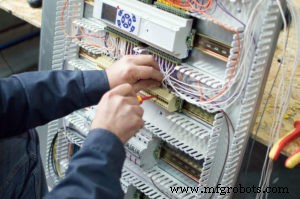
Building an electric motion circuit can be a daunting task to those unfamiliar with the technology, but it doesn’t have to be. With just five core components, you can begin building your first electric motion machine:
- Power Supply
- Drive
- Cables
- Motor
- Actuator
Power supplies seem like a no-brainer – without electricity, your electric circuit won’t work. Supplies come with a variety of considerations all their own, including voltage input/output, AC vs DC, stationary vs portable, IP rating, and much more. Employing an incorrect power supply can damage systems and reduce functionality.
Drives take the electrical energy from the power supply and convert it to controlled motion. A drive amplifies and delivers required voltage and current to the motor, allowing for greater speed and torque control than with pneumatics or hydraulics.
Cables carry electric impulses between the drive and motor, much in the same way that tubing carries compressed air through a pneumatic system. Without cables, there can be no communication, electricity never reaches the motor or actuator, and no work can be done.
Motors convert all these electric signals into actual mechanical motion. Paired with electric linear or rotary actuators, they create the final, desired motion of the whole machine. Electric motors and actuators come in a huge variety of models to accommodate all sorts of applications, from very basic pushing/pulling to incredibly complex 3D pick and place profiles.
When assembling an electric motion system, you should consider several factors that will help you choose which components you require:
- Required load
- Required speed
- Available power supply
- Duty cycle
- Machine footprint
Want to find out if electric motion is right for your application? Speak to one of our experts today to learn more!
Industrial equipment
- Understanding Electric Circuits: Continuous Charge Flow and the Impact of Breaks
- Understanding Power in Electric Circuits: Measurement & Significance
- Mastering Electric Circuit Simulation with SPICE: A Practical Guide for Designers and Students
- Building Resistor Circuits: From Alligator Clips to PCBs
- Building Series‑Parallel Resistor Circuits: From Breadboards to Terminal Strips
- Electrical Signal Propagation at Light Speed: A 186,000‑Mile Thought Experiment
- Choosing the Right Actuator: Electric vs. Hydraulic Solutions for Industrial Automation
- Mastering Digital Circuit Design: Your Complete Guide
- Understanding Breadboards: How They Work & Why They're Essential for Prototyping Electric Circuits
- Why Hydraulic Motors Outperform Electric Motors: Efficiency, Durability, and Power