



Boosting Hydraulic Strength: Proven Strategies for Increased Durability
Hydraulics are an important part of many modern industrial processes, from moving heavy objects to controlling water flow. But despite the widespread use of hydraulics, there are still some ways to make them stronger. In this article, we’ll explore some of the ways that you can make hydraulics more robust and resistant to failure.
One way to make hydraulics stronger is to use heavier parts. This can help to increase the overall strength and stability of the system. Additionally, using thick pipes and metal plates can also help to increase the overall strength of hydraulics.
Another way to make hydraulics stronger is to strengthen the seals and joints between components. This can help to prevent leaks and keep the system operating at its best. By properly sealing all of the joints, you can also reduce the amount of friction that is present in the system. This will help to reduce wear and tear on components, which can ultimately make hydraulics stronger.
Finally, you can also make sure that the hydraulic systems are properly maintained. By keeping the systems clean and free from debris, you can help to reduce the chances of failure. Additionally, by regularly checking for signs of wear and tear, you can quickly identify any problems before they become too serious. By taking these measures, you can make hydraulics significantly stronger.
What is hydraulics?
Hydraulics is the use of fluids to power machines, such as pumps and turbines. When these machines are used in industry or construction, Hydraulics can play an important role in moving materials, water, and air.
Hydraulics can be strengthened by using some common techniques, such as increasing the number of blades on a pump or by using a stronger fluid. Increasing the strength of hydraulics can help ensure that the machinery lasts longer and operates more efficiently.
How can you make hydraulics stronger
How hydraulics works
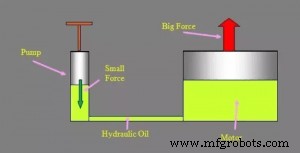
Hydraulics is the use of a fluid (water, oil, air, or other fluid) to transmit power. The working fluid is pressurized and forced through a channel, causing a reaction and generating motion. Hydraulics is used in a variety of applications, including aerospace engineering and manufacturing.
Hydraulic systems can be made stronger by using materials with specific qualities. For example, steel alloys are often used in hydraulic systems because they are strong and resistant to wear. Another way to make hydraulics stronger is by using more powerful pumps.
Types of hydraulics
Hydraulics are a type of engineering that use fluids to move objects. Hydraulics can be used to power machines, lift heavy objects, and even turn gears. There are many different types of hydraulics, each with its own strengths and weaknesses. Here we will discuss three common types of hydraulics: fluid power, pneumatic power, and hydraulic motors.
Fluid Power
One type of hydraulics is based on the use of fluids to move objects. Fluid power hydraulics use a liquid or gas as the working medium. The main advantage of using fluid power is that it is very efficient. This means that you can use a smaller amount of fluid to move an object than you would if you used other types of hydraulics. Fluid power also has a wide range of applications, including industrial machinery, agricultural equipment, and water pumps.
One disadvantage of using fluid power is that it is difficult to control the flow of the fluid. This can lead to problems such as leaks and stuck valves. Additionally, fluid power is not suitable for high-speed applications.
Pneumatic Power
Pneumatic power refers to the use of air pressure to
Hydraulics basics: pressure and velocity
Pressure is the amount of force applied to an object per unit area. Velocity is the speed of an object at a given point in space. When pressure and velocity are in balance, the object is stationary. When pressure exceeds velocity, the object moves faster. In hydraulics, we use pressure and velocity to move fluids.
When we increase the pressure on a fluid, it moves faster through a pipe. This is why you can hear air leaking when you apply too much pressure to a tire: the air is moving faster than the sealant around the tire can keep up.
This mechanism works in reverse as well- when you reduce the pressure on a fluid, it moves slower through a pipe. This is why you can see water flowing slowly out of a faucet when you release the pressure: the water is moving slower than the hole in the faucet can let it escape.
Hydraulic fluids are composed of two parts- liquid and gas. The gas occupies most of the volume, while the liquid occupies only a small fraction. This means that when you increase or decrease pressure on a hydraulic fluid, you are actually changing both its volume and its composition (for example, from water to oil
Statistical Methods for Evaluating Hydraulic Systems
Few hydraulic systems can withstand the kind of extreme loading that can be caused by an earthquake, and even fewer are able to operate under those conditions over extended periods of time. To ensure that these systems can handle the rigors of an earthquake, it is important to understand how they perform under normal operating conditions. In this article, we will describe two statistical methods for evaluating hydraulic systems: the Shapiro-Wilk test and the Anderson-Darling test.
The Shapiro-Wilk test is used to identify whether a group of data follows a normally distributed pattern. A normal distribution is a type of distribution that is most commonly found in measuring data that falls within the range of human experience. The Shapiro-Wilk test determines whether the data exhibits a uniformity or dispersion across the range of values. If there is significant dispersion, then the data may not follow a normal distribution and may be more likely to experience fluctuations during operation.
The Anderson-Darling test is used to determine whether a set of data clusters together. Cluster analysis is used to identify groups of observations that have similar characteristics. When performed on data that has been randomly generated, the Anderson-Darlingtest should return results that are consistent with those obtained from
How can you make hydraulics stronger
Why do hydraulics fail/wear out/not work well?
hydraulics can fail for a variety of reasons. Some common causes are: corrosion, over-torqueing, worn gears and bearings, and insufficient fluid pressure. In order to make hydraulics stronger, it is important to understand the various factors that can cause failure. Additionally, it is important to take steps to prevent these failures from occurring in the first place.
One of the most common causes of hydraulics failure is corrosion. Corrosion can occur on the metal parts of the hydraulics system, especially if they come into contact with water or other corrosive substances. Over-torqueing is also a common cause of hydraulics failure. This occurs when the force applied to the hydraulics system exceeds the strength of the system. Worn gears and bearings can also cause hydraulics to fail. This happens when the gears and bearings become too worn to operate properly. Insufficient fluid pressure can also cause hydraulics to fail. This occurs when the pressure inside the hydraulic system isn’t high enough to push fluids through the system.
How to make hydraulics stronger
There are a few ways to make hydraulics stronger. One way is to use a metal-to-metal seal. This seals the gap between the two parts of the hydraulics, making it less likely for water or oil to leak into the system. Another way is to use a thicker material for the pipes and hoses. This makes it more difficult for water or oil to leak into the system.
Additionally, it is important to maintain the hydraulics system by regularly cleaning it and checking for leaks. This will keep the system strong and prevent damage from occurring.
Conclusion
Hydraulics are an important part of many industrial and construction applications, and as such, they need to be able to withstand a great deal of abuse. One way to make hydraulics stronger is by ensuring that they are properly rated for the conditions under which they will be used. This rating can help you choose the right hydraulic system for your application, and it can also help you determine when it is time to upgrades or replace your equipment.
There are a few ways to make hydraulics stronger. One way is to use a metal-to-metal seal. This seals the gap between the two parts of the hydraulics, making it less likely for water or oil to leak into the system. Another way is to use a thicker material for the pipes and hoses. This makes it more difficult for water or oil to leak into the system. Overall, making hydraulics stronger is a combination of both techniques. By using a metal-to-metal seal and thicker pipes, you make the hydraulics more resistant to leaks. However, you cannot make hydraulics completely immune to leaks, so always use caution when working with hydraulic systems.
How can you make hydraulics stronger, please clickhttps://topkitparts.com/ to learn more
Industrial equipment
- Maximize Project Success with Comprehensive Equipment Training
- Cut Energy Bills by Optimizing PDP Levels in Your Air System
- Using Weldless, Threadless Plumbing in Fluid Power Systems: Benefits & Best Practices
- Calculating Pressure Drop in Hydraulic Fittings: A Practical Guide
- How to Detect a Faulty Hydraulic Pump: Key Indicators
- Boost Your Log Splitter’s Power: Proven Strategies for Heavy‑Duty Performance
- Reduce Hydraulic Pump Noise: Proven Tips & Solutions
- How to Spot and Repair Bad Hydraulic Fluid in Your Vehicle
- Assessing Hydraulic Pump Efficiency: Key Indicators & Best Practices
- Boost Hydraulic Cylinder Speed: Proven Strategies for Enhanced Performance