



Boost Your Log Splitter’s Power: Proven Strategies for Heavy‑Duty Performance
There are many reasons why you might need a powerful log splitter. For example, if you have a lot of trees to chop down or logs to process, you’ll want to make sure that your log splitter is able to handle the job. In this article, we’ll teach you how to make your log splitter more powerful so that it can meet your needs.
What is a log splitter?
A log splitter is a machine that separates logs into different sizes by cutting the logs in half. This allows you to more easily find logs that are of a specific size.
A log splitter can be very useful for businesses and homeowners who want to keep track of their energy consumption. It is also helpful for people who want to split wood for their stove or fireplace.
If you are looking for a log splitter, here are some tips on how to choose the best one for your needs.
1. Consider your needs. A log splitter can be used for a variety of purposes, so it is important to decide what you need it for before shopping. Do you need it to split logs into small pieces? Do you need it to break large logs into smaller ones?
2. Consider the size of your logs. Some log splitters can handle small logs while others can handle large ones. Make sure you choose the right model for your needs.
3. Consider the features of the log splitting machine. Some machines have more features than others, such as being able to cut several logs at once or having a larger cutting area.
4. Consider the price of the machine.
How does it work?
Splitting logs is an essential step in any wood-fired or pellet stove installation – and a log splitter is the perfect tool for the job. There are several types of log splitters on the market, each with its own advantages and disadvantages. In this blog post, we’ll explore how a simple log splitter works and which models are best for different purposes.
How Does a Log Splitter Work?
A log splitter splits logs by breaking them in half along the length of the log. This process is done with either a rotating drum or an Axe Head. The drum-based splitter uses a series of sharp blades to slice through the log while the axe head simply chops off the top of the log. The two halves are then pulled apart and the wood inside can be processed as needed.
Advantages of a Log Splitter:
•Splitting logs is an easy task that can be done by almost anyone
•There are several models available, all with their own specific advantages
•Some models are large enough to handle difficult logs
Disadvantages of a Log Splitter:
•Logs need to be
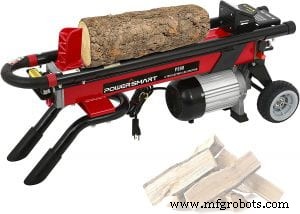
How can I make my log splitter more powerful
What are the different types of models of the log splitter?
There are different types of log splitters, each with its own benefits and drawbacks. Here’s a look at the most common models:
– Manual: Requires someone to operate the splitter. Can be bulky and difficult to move around. Often has a lower power output.
– Powermatic: Compact, lightweight design that easily moves around. Has a high power output.}
– Electric: Very compact design with low power requirements. May not be able to handle large trees.}
– Gasoline Powered: More powerful than electric models, but also more expensive and difficult to operate. Requires gasoline or diesel fuel.}
The best option for your specific needs depends on the size of the tree you plan to split, your personal preferences, and the type of wood you’re splitting.
Differences Between Conventional and Compression Splitters
When it comes to splitting logs, the two most popular types are compression and conventional splitters. Here’s a look at the key differences between these two methods:
Conventional Splitters: Conventional splitters use a blade to chop logs into smaller, more manageable pieces. This method is typically slower than compression splitters, as the blade has to move across the log multiple times. Additionally, conventional splitters can be less powerful, as they require more strength to operate.
Compression Splitters: Compression splitters use a compressing mechanism to break down logs into smaller pieces. This method is faster than traditional splitters, as the blades do not have to move across the log multiple times. Additionally, compressionsplitters can be more powerful, as they are able to break down larger logs into smaller pieces.
Why is the log splitter clogged?
If your log splitter is clogged, you may be able to fix the problem by clearing the splitter’s auger. To do this, remove the log from the auger and use a screwdriver to loosen the metal screws that hold the auger in place. Next, use a hammer and a chisel to break up the large chunks of wood that have built up on the auger wheel. Finally, clean the wheel with a brush and a bucket of water.
How can I clean my log splitter?
If your log splitter is dirty, it will not perform as well. To clean it, first remove the cover and the blade. Use a brush to scrub the cover and the blade. Then use a vacuum cleaner to suck the dirt and debris off of the cover and blade. Finally, use a cloth to wipe down the cover and blade.
What are some alternatives to the log splitter?
There are many alternatives to the traditional log splitter. One alternative is a hydraulic log splitter. Hydraulic log splitters are more powerful than traditional log splitters and can handle larger logs. Another alternative is a chain saw log splitter. Chain saw log splitters are less powerful than hydraulic log splitters, but they are faster and easier to use.
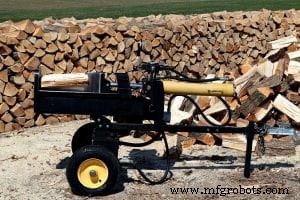
How can I make my log splitter more powerful
How can I make my log splitter more safe?
Most log splitters only cut logs into four pieces. However, some may also cut logs into six or eight pieces. A more powerful log splitter would allow the user to select how many pieces they would like the log to be cut into. This could make it safer as the user would not be able to overload the machine and cause it to malfunction. Additionally, this feature would allow larger logs to be cut without having to break them down into smaller pieces first.
How to make your log splitter more powerful
If you’re looking for a way to make your log splitter more powerful, there are a few things you can do. First, make sure that the log splitter has the appropriate horsepower. Second, make sure that the blade is sharp and in good condition. Third, invest in a good log splitter stand. Fourth, add attachments to the log splitter to make it easier to work. fifth,train your operators on how to use the log splitter effectively.
Conclusion
Assuming you already have a log splitter in your home, the next step is to decide what power level you would like it to work at. If you are only using it occasionally for larger chunks of wood, then a lower power setting might be sufficient. However, if you plan on using it more often for smaller pieces of wood or for splitting logs into two pieces, then you will want to invest in a higher-powered model. Once you know the type of wood that will be getting split and the power level required, finding the right model can be easy.
How can I make my log splitter more powerful, please click topkitparts see more
Industrial equipment
- Maximizing the Impact of Condition‑Based Maintenance: A Practical Guide
- Maximize Value from Machine Data: A Practical Guide to Insight & Efficiency
- USSD: A Low‑Cost Catalyst for Global IoT Connectivity
- Reducing Carbon Footprints: Proven Strategies for SMB Trucking Carriers
- Boost CNC Efficiency & Profitability with the OB7 7-Axis Collaborative Robot
- Boost Efficiency of Your Air Compressor Systems: Proven Tips & Strategies
- Master Office Organization in Manufacturing Plants: Proven Tips for Efficiency & Reduced Stress
- Boosting Hydraulic Strength: Proven Strategies for Increased Durability
- Boost Your Log Splitter’s Power: Proven Strategies for Heavy‑Duty Performance
- Reduce Hydraulic Pump Noise: Proven Tips & Solutions