



Assessing Hydraulic Pump Efficiency: Key Indicators & Best Practices
If you’re in the agricultural or construction industries, you might be familiar with hydraulic pumps. These machines are used to move things like water, rocks, and sand. And according to one study, they’re also one of the most energy-efficient ways to move these materials. So how do you know if your pump is efficient?
What is a hydraulic pump?
A hydraulic pump is a machine that uses the force of hydraulic fluid to transfer energy from one point to another. A hydraulic pump can be used in a variety of applications, including mining, construction, agriculture, and manufacturing.
How can you tell if a hydraulic pump is efficient?
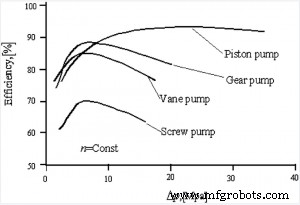
To determine whether a hydraulic pump is performing effectively, you need to understand its operating principles. A well-functioning hydraulic pump converts mechanical energy into fluid energy and then uses this fluid energy to do work. The most important factor affecting a pump’s efficiency is the volume of fluid that it can move per unit of time. In order to maximize efficiency, you’ll want to make sure that the volume of fluid that the pump can move is as large as possible.
There are a number of factors that you can use to measure a pump’s efficiency. One common method is to calculate the pumping power (PP) required to achieve a given flow rate. Another measure of efficiency is the pumping speed (PS). PS reflects how quickly the pump can move the fluid forward and indicates how efficiently the motor is working. You can also calculate the horsepower (HP) required to drive the pump. HP reflects both the pumping power and the speed at which the motor operates
How can you tell if a hydraulic pump is efficient
How does a hydraulic pump work?
A hydraulic pump is a device that uses the energy of a fluid flowing through it to generate mechanical energy. This mechanical energy is used to power a variety of applications, such as moving liquids and gases. A hydraulic pump can be broken down into three main parts: the casing, the cylinder, and the pistons.
The casing is the housing of the pump. The interior is usually filled with a lubricant to reduce friction between the moving parts and ensure smooth operation. The casing also helps protect the internal components from external damage.
The cylinder is the component that actually moves the fluid. It typically has several pistons that are connected by rods. When you press down on the piston, it compresses the fluid inside it. This compression causes a loss of energy in the form of heat. The heat is then used to power the pump, which in turn moves the fluid forward.
The efficiency of a hydraulic pump depends on a number of factors, including its design and construction. A well-designed pump will use less energy to move a given amount of fluid than an ineffective pump will. Additionally, an efficient pump will operate at lower temperatures than an ineffectual one, which will reduce its overall operating costs.
Uses of a hydraulic pump
Hydraulic pumps are commonly used in various industries to help move fluids and materials. There are many different ways that a hydraulic pump can be used, and each has its own advantages and disadvantages. Here are a few examples:
One common use for a hydraulic pump is in agriculture. A hydraulic pump can be used to help move water, fertilizer, and pesticides between different parts of a farm. This is especially beneficial in areas where there is limited access to other forms of transportation.
Another common use for a hydraulic pump is in construction. A hydraulic pump can be used to move large quantities of water or concrete around a construction site. This is especially helpful in areas that are difficult to access or have limited infrastructure.
Finally, a hydraulic pump can also be used in manufacturing. A hydraulic pump can be used to move large quantities of liquids or powders around a manufacturing plant. This is helpful in areas where it is difficult to move materials manually.
The Efficiency of the Hydraulic Pump
hydraulic pumps are an important part of any hydraulic system and their efficiency is vitally important. If a hydraulic pump is not efficient, it can result in decreased system performance and even failure. There are a number of ways to measure the efficiency of a hydraulic pump, but the most common is to use the reciprocating cycle test. This test measures how much power the pump consumes over a set period of time and compares it to the power required to operate the pump at its rated speed.
How to decide if a pump is efficient
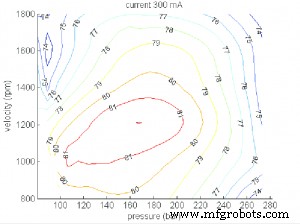
There are a few ways to determine if a hydraulic pump is efficient. One way is to use the power required to operate the pump over its lifetime. Another way is to use the pump’s efficiency rating. These ratings take into account the type of fluid being pumped, the pressure and flow rate at which it is being pumped, and other factors.
How can you tell if a hydraulic pump is efficient
How can you tell if a hydraulic pump is efficient?
Hydraulic pumps are a vital part of many industrial processes, and as such, it is important to make sure that they are as efficient as possible. There are a few simple ways to measure the efficiency of a hydraulic pump, and by taking these measures you can ensure that your pump is running at its full potential.
One way to measure the efficiency of a hydraulic pump is to use its power output in terms of horsepower. A pump with a high power output will be more efficient than one with a low power output.
Another measure of the efficiency of a hydraulic pump is its specific speed. A pump with a high specific speed will be more efficient than one with a low specific speed. This is because a high specific speed means that the pump can move more fluid per revolution than a low specific speed pump.
Finally, another way to measure the efficiency of a hydraulic pump is to look at its thermal efficiency. A pump with an high thermal efficiency will be more efficient than one with a low thermal efficiency. This is because a high thermal efficiency means that the pump can convert more energy into work than a low thermal efficiency pump. Taken together, these four measures provide an overall score for the Efficiency of the hydraulic Pump.
What are the pros and cons of using a hydraulic pump?
When it comes to using a hydraulic pump, there are many pros and cons to consider. Some of the benefits of using a hydraulic pump include: being able to move large objects with ease, being reliable, and being efficient. However, there are also some drawbacks to consider when using a hydraulic pump. One of the biggest drawbacks is that hydraulic pumps can be quite costly, which may not be practical for all applications. Additionally, if the pump is not properly maintained, it can become inefficient or even stop working altogether.
Conclusion
In this article, we will discuss the different types of hydraulic pumps and how you can tell if they are efficient. We will also provide some tips on how to improve their efficiency. Finally, we will provide a few examples of how you might use an efficient hydraulic pump in your own business or project.
How can you tell if a hydraulic pump is efficient, please clickhttps://topkitparts.com/ to learn more
Industrial equipment
- How to Detect a Faulty Hydraulic Pump: Key Indicators
- Reduce Hydraulic Pump Noise: Proven Tips & Solutions
- How to Effectively Test a Hydraulic Pump for Optimal Performance
- How to Reverse the Rotation of a Hydraulic Pump: Safe & Efficient Methods
- Calculating Hydraulic Pump Compressor Capacity (CC): A Step‑by‑Step Guide
- Can a Hydraulic Motor Serve as a Pump? Exploring Dual-Function Fluid Power Systems
- How to Accurately Determine a Hydraulic Pump’s GPM
- How to Verify Hydraulic Pump Pressure for Optimal Performance
- Step-by-Step Guide to Cleaning a Hydraulic Pump for Optimal Performance
- Essential Guide to Maintaining Your Hydraulic Pump: Tips, Troubleshooting & Longevity