



Understanding Single vs. Double Stage Hydraulic Pumps: Key Differences Explained
Hydraulic pumps are used in a variety of industries to move fluids, including industrial, agricultural, water supply and wastewater treatment. A single stage pump moves a fluid only one way, while a double stage pump can move the fluid in both directions. Understanding the difference between these two types of pumps is essential for understanding how they work.
A single stage pump is a simple device that uses pressure and hydraulic force to move a fluid. It has one moving part, the piston, which moves up and down inside the cylinder. When the piston reaches the top of the cylinder, the pressure inside causes it to push the fluid out of the cylinder.
A double stage pump works differently. It has two moving parts: the piston and a cage called a impeller. The impeller rotates around the piston, pushing and pulling the fluid in opposite directions. This combination of motion allows the pump to move larger volumes of fluid than a single stage pump can.
What is a Single Stage Hydraulic Pump?
Single stage hydraulic pumps are the simplest type of hydraulic pump. They use one chamber to store pressurized fluid and deliver it through a single shaft to a single output. This makes Single Stage Hydraulic Pumps very efficient and reliable, but they aren’t as powerful as double stage or triple stage pumps.
Double stage hydraulic pumps use two chambers – one to store pressurized fluid and deliver it through a first shaft to a first output, and another to store pressurized fluid and deliver it through a second shaft to a second output. Double Stage Hydraulic Pumps are more powerful than Single Stage Hydraulic Pumps, but they’re also more complex and require more maintenance. Triple stage hydraulic pumps use three chambers – one to store pressurized fluid and deliver it through a first shaft to a first output, one to store pressurized fluid and deliver it through a second shaft to a second output, and one to store pressurized fluid and deliver it through a third shaft to an intermediate output. Triple Stage Hydraulic Pumps are the most powerful type of hydraulic pump, but they also require the most maintenance.
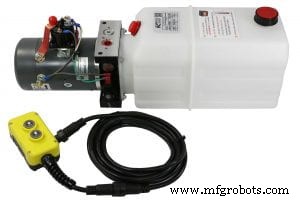
What is the difference between a single stage and double stage hydraulic pump
What is a Double Stage Hydraulic Pump?
A double stage hydraulic pump is a type of hydraulic pump that features two stages: the lower stage for delivering pressurized fluid to the engine, and the upper stage for delivering pressurized fluid to the work area. This design allows for improved overall performance and efficiency, as well as increased output capability.
One primary benefit of a double stage pump is that it can handle higher pressures than a single stage pump. This is beneficial, as it allows the pump to deliver larger quantities of fluid with less strain on the system. Additionally, a double stage pump can operate at a lower temperature than a single stage pump, meaning it will be less likely to damage components during operation.
Another advantage of a double stage pump is that it can handle more diverse types of fluids. This is due to the fact that the lower stage can deliver pressurized water or oil, while the upper stage can deliver compressed air or gas. This versatility makes a double stage pump ideal for applications that require multiple types of fluid flow, such as welding and industrial machinery.
How does a hydraulic pump work?
A hydraulic pump is a mechanical device that uses hydraulic pressure to move fluid or objects. Hydraulic pumps are typically classified according to the type of pressure they use to move the fluid: single stage pumps and double stage pumps.
Single stage pumps use only atmospheric pressure to move the fluid; double stage pumps use two different types of pressure, atmospheric pressure and hydraulic pressure. The difference between a single stage and a double stage pump is how the two pressures are used to power the pump. A single stage pump uses only atmospheric pressure to power the pump, while a double stage pump uses both atmospheric pressure and hydraulic pressure.
The advantages of using a double stage pump over a single stage pump are that a double stage pump can handle higher pressures and can operate at lower speeds. Additionally, a double stage pump can be more efficient because it can use both atmospheric pressure and hydraulic pressure to power the pump.
What are the purposes of a hydraulic pump?
A hydraulic pump is a machine that uses hydraulic pressure to move fluids. There are two types of hydraulic pumps: single stage and double stage.
The purpose of a single stage pump is to move a fluid from one point to another. A single stage pump works by using the pressure of the fluid flowing through it to create motion. This type of pump is best used for lower pressure applications, as high pressures can damage it.
The purpose of a double stage pump is to move a fluid from one point to another and also to increase the pressure of the fluid. A double stage pump uses two pistons, one after the other, to create the pressure increase. This type of pump is best used for higher pressure applications, as low pressures can damage it.
How do single stage and double stage hydraulic pumps differ?
A single stage pump is a one-stage hydraulic pump which uses a plunger to transfer fluid from the reservoir to the discharge. A double stage pump is a two-stage hydraulic pump which uses hydraulics to alternately lift and drop a piston between two chambers, thus transferring fluid more efficiently. Single stage pumps are typically less expensive than double stage pumps, but they can’t handle as much fluid. Double stage pumps are more expensive, but they can handle more fluid and are often more reliable.
Pros and Cons of a Single Stage Pump
A single stage pump is a more common type of hydraulic pump that uses one cylinder to move fluid. This type of pump is often cheaper to operate and maintain than a double stage pump, but it can generate less power. Additionally, single stage pumps are typically unable to move very viscous fluids, which can be a limitation in some applications.
On the other hand, a double stage pump has two cylinders and can move more viscous fluids more efficiently. This type of pump is often used in high-power applications where increased efficiency is important. Additionally, double stage pumps are more expensive to purchase and operate than a single stage pump, but they’re usually more reliable.
Pros and Cons of a Double Stage Pump
When it comes to choosing a hydraulic pump, there are two main types: single stage and double stage. A double stage pump has two separate chambers that work together to move fluid. This is great for larger projects where two chambers can work in tandem to move more fluid than a single stage pump. However, there are some downfalls to using a double stage pump. First, they are typically more expensive than a single stage pump. Second, they can be more difficult to operate and maintain.
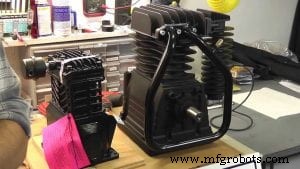
What is the difference between a single stage and double stage hydraulic pump
How to identify which type of pump you have?
When it comes to hydraulic pumps, there are two main types: single stage and double stage. Single-stage pumps work with a single cylinder, while double-stage pumps use two cylinders. Here’s a quick overview of the differences between the two types:
Single-stage pumps: Single-stage pumps are less expensive and smaller in size than double-stage pumps. They are also less powerful, meaning they can only move a certain amount of fluid at a time.
Double-stage pumps: Double-stage pumps are more powerful and larger than single-stage pumps. They can move more fluid at once, making them faster and more efficient. They’re also more expensive than single-stage pumps.
Conclusion
In this article, we will be discussing the difference between a single stage and double stage hydraulic pump. We will also discuss some of the benefits of each type of pump and what factors you should consider when choosing one. Ultimately, this article will help you make an informed decision about which kind of pump is right for your application.
What is the difference between a single stage and double stage hydraulic pump?
A single stage pump uses only atmospheric pressure to move fluid, while a double stage pump uses both atmospheric pressure and hydraulic pressure to power the pump.
What is the difference between a single stage and double stage hydraulic pump, please clickhttps://topkitparts.com/ to learn more
Industrial equipment
- Mass Production vs. Custom Production: Key Differences Explained
- Python 2 vs Python 3: Key Differences and Choosing the Right Version
- Shuttering vs. Formwork: Key Differences Explained
- Concrete vs. Cement: Understanding Their Distinct Roles in Construction
- Asphalt vs. Concrete: Key Differences and Choosing the Right Material
- Electronic vs Electric: Clarifying Their Distinct Meanings
- Understanding Two-Stage Hydraulic Pumps: Function and Applications
- Single‑Stage vs Multi‑Stage Pumps: Key Differences & How to Choose
- Single-Acting vs Double-Acting Pumps: Key Differences Explained
- Hydraulic Pump vs Motor: Key Differences Explained