



Single‑Stage vs Multi‑Stage Pumps: Key Differences & How to Choose
Pumping is a critical process in manufacturing, and often times, it’s necessary to run multiple pumps in parallel in order to achieve the desired flow rate. This article will explain the difference between single-stage and multistage pumps, and help you choose the right one for your needs.
Single-stage pumps are the simplest type of pump, and they work by moving fluid from one point to another through a single chamber. This means that the pump only has one moving part – the piston – which makes it relatively easy to operate.
Multistage pumps, on the other hand, are more complicated than single-stage pumps. They have multiple chambers or cylinders, each of which can move fluid independently. This allows the pump to transfer greater volumes of fluid at faster speeds, which is why they’re often used in manufacturing applications.
Ultimately, the decision whether to use a single-stage or multistage pump depends on your specific needs. If you only need to transfer small volumes of fluid at low speeds, a single-stage pump might be adequate. But if you need to transfer larger volumes of fluid at high speeds, a multistage pump might be a better option.
What is a single-stage pump?
A single-stage pump is a type of pump that uses one impeller to move the liquid or gas. This is the simplest type of pump and is the most common type of pump in use.
A multistage pump is a type of pump that uses more than one impeller to move the liquid or gas. This allows the pump to move more fluid at once, which is useful for tasks like water filtration or cleaning.
There are pros and cons to both single-stage and multistage pumps, so it’s important to understand what they are before making a decision.
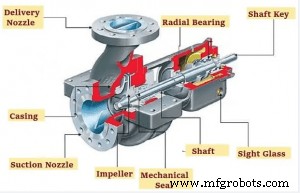
What is the difference between single-stage and multistage pump
Single-stage pump: The one you have at home
– Single-stage pumps use one impeller to move the liquid up the pump and then the next impeller to move the liquid down the pump. This is because a single-stage pump only has one inlet and one outlet.
– Multistage pump: This type of pump has more than one impeller, which means it can move more liquid at once. This is good because it can handle more fluid at once, which means it can work faster.
– Two-stage pump: This is a type of multistage pump that has two impellers. This helps the pump move more fluid at once, but it also means that the two impellers create two bubbles of air. This makes it harder for the pump to move fluid and can cause problems like cavitation.
What is a multistage pump?
A multistage pump is a type of pump that can perform more than one function at the same time. This is different from a single-stage pump, which is just a pump that can only perform one task.
Multistage pumps are beneficial because they can handle more volume and pressure than a single-stage pump. This means they can be used in more difficult applications, such as pumping water up an uphill slope. Additionally, multistage pumps are often quieter than single-stage pumps, making them ideal for industrial settings.
Multistage pump: The kind used in hospitals and other medical facilities
A multistage pump is a type of pump that uses multiple stages to move fluid or gas. These pumps are used in hospitals and other medical facilities because they are able to move large amounts of fluid or gas very quickly. They are also able to handle high pressures, which means that they can be used to circulate blood or other fluids around the body.
Multistage pumps are usually powered by electricity, which means that they can be used anywhere there is an outlet. They are also relatively small and easy to transport, which makes them a good option for use in medical facilities.
One downside of multistage pumps is that they can be a bit expensive to buy and install. They also require regular maintenance, which can be difficult to do without specialist equipment.
What are the differences between single-stage and multistage pumps?
Multistage pumps provide many benefits over single-stage pumps. These include: increased efficiency, improved performance, and reduced emissions. Here are the main differences between these two types of pumps:
Single-stage pumps are limited in their ability to move fluid because they use one or more cylinders. Multistage pumps have multiple cylinders that can move larger volumes of fluid at once, which makes them more efficient.
Single-stage pumps also have a limited range of speed because the cylinders are fixed. Multistage pumps have variable speeds, allowing them to match the speed of the fluid being pumped. This means that they can move faster when needed but also slower when it’s not necessary. This is important because it allows the pump to run more quietly and less often need to be replaced.
Multistage pumps also emit less pollution than single-stage pumps. This is because they use fewer moving parts and therefore generate less noise. Additionally, multistage pumps can be configured to operate at higher pressures than single-stage pumps, which allows them to move more fluid with fewer strokes.
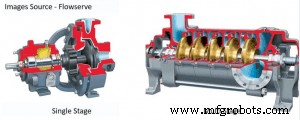
What is the difference between single-stage and multistage pump
Pros and Cons of the single and multistage pumps, including advantages, disadvantages, and safety considerations
The single-stage and multistage pump are two types of pumps that are used in many industries. Here is a look at the pros and cons of each type:
Single-stage pumps: Single-stage pumps are the most common type of pump. They have one moving part, which is the impeller. This makes them simple to operate and less likely to malfunction. They also have a smaller footprint, making them easier to install.
Multistage pumps: Multistage pumps have more than one moving part. The first moving part is the impeller. Then there may be a second impeller or paddles that move the liquid up from the bottom of the tank to the top. This type of pump is generally more efficient than a single-stage pump, but it can be more complex to operate and may require more maintenance. Additionally, multistage pumps can be more expensive than single-stage pumps.
Advantages: Single-stage pumps are simpler to operate and less likely to malfunction. They also have a smaller footprint, making them easier to install.
Disadvantages: Multistage pumps are more efficient than single-stage pumps but can be more complex to operate and may
Which is better for you?
Single-stage pumps are typically cheaper than multistage pumps and they work well on smaller systems. However, multistage pumps can handle larger applications more efficiently.
Single-stage pumps are typically better for small applications. Multistage pumps can handle larger applications more efficiently.
Conclusion
In short, single-stage pumps are less powerful and designed forslowinfluxrates. Multistage pumps are more powerful and can handlehigherinfluxrates.
Single-stage pumps are simpler to operate and less likely to malfunction. Multistage pumps are more efficient than single-stage pumps but can be more complex to operate and may require more maintenance.
What is the difference between single-stage and multistage pump, please clickhttps://topkitparts.com/ to learn more
Industrial equipment
- Mass Production vs. Custom Production: Key Differences Explained
- Python 2 vs Python 3: Key Differences and Choosing the Right Version
- Metal Fabrication vs. Welding: Key Differences Explained
- Shuttering vs. Formwork: Key Differences Explained
- Concrete vs. Cement: Understanding Their Distinct Roles in Construction
- Asphalt vs. Concrete: Key Differences and Choosing the Right Material
- Electronic vs Electric: Clarifying Their Distinct Meanings
- Understanding Single vs. Double Stage Hydraulic Pumps: Key Differences Explained
- Single-Acting vs Double-Acting Pumps: Key Differences Explained
- Hydraulic Pump vs Motor: Key Differences Explained