



Understanding 1-Stage Pumps: Design, Function, and Industrial Applications
A 1 stage pump is a type of pump that moves water or other fluid substances up a pipe by capillary action. They are simple in design and can be used to move liquids or gases up to high pressures.
What is a stage pump?
A stage pump is a type of pump that is used to move liquids or gas up or down a pipeline. It is also known as a suction pump, negative displacement pump, or displacement pump. Stage pumps are used in large industrial plants and oil refineries to move products from one part of the plant to another.
Stage pumps work by using the power of gravity to move the liquid or gas up or down the pipeline. They are usually mounted on a moving platform, which travels along the pipeline. The platform has two sets of blades that rotate around a central axis. These blades cause the liquid or gas to be forced through the pipeline.
Stage pumps are very versatile and can be used for a variety of tasks. They are especially useful for moving liquids and gas up and down pipelines.
How does a stage pump work?
A stage pump is a type of pump used in the oil and gas industry. It is used to move fluids between different stages of production.
Stage pumps are typically used in oil and gas production facilities. They are used to move fluids between different stages of production. These stages can include, among others, production wells, processing plants, and storage facilities.
Stage pumps work by using the suction power of the pump to draw fluid up through the pump shaft. The fluid is then pushed out of the pump through the discharge port. This process repeats until the desired amount of fluid has been transferred.
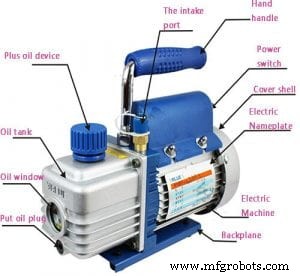
What is a 1 stage pump
Why buy a 1 stage pump?
A stage pump is a type of air pump that is used to inflate and deflate sporting equipment like footballs, basketballs, soccer balls and other sports equipment.
A stage pump is different than a standard air pump because it has two chambers. The first chamber is the inflation chamber and the second chamber is the deflation chamber.
When you use a stage pump, you first inflate the inflation chamber using your compressor. Then, you can use the deflation chamber to deflate the sports equipment.
Stage pumps are great for inflating and deflating sports equipment quickly and easily. They are also perfect for inflating and deflating sports balls quickly and evenly.
How to identify a good 1 stage pump?
A stage pump is a device used to inflate or deflate air mattresses. It comes in two main types: single-stage and dual-stage pumps.
Single-stage pumps work with one inflator cartridge. Dual-stage pumps have two inflator cartridges, which lets you inflate and deflate the mattress simultaneously.
The best stage pump for you depends on your needs and preferences. Here are some things to consider when shopping for a stage pump:
1. The type of inflator cartridge. Single-stage pumps use inflator cartridges that are disposable. This means you will need to replace the cartridge every time you use the pump. Dual-stage pumps have inflator cartridges that are reusable. This means you will only need to replace the cartridge once, if at all.
2. How many stages the pump has. A stage pump with two inflator cartridges has double the number of stages as a stage pump with one inflator cartridge. This means that it can more accurately inflate or deflate an air mattress.
3. The size of the mattress. A stage pump with two inflator cartridges will be larger than a stage pump with one inflator cartridge, because it needs
What are the benefits of a stage pump?
A stage pump is a type of pump that is used to move liquid or gas substances up or down a pipeline.
The benefits of using a stage pump include the following:
1. They are fast and efficient. Stage pumps can move large amounts of fluid quickly and with minimal effort. This makes them ideal for use in pipelines that have high demand, or in pipelines that need to be moved quickly from one location to another.
2. They are versatile. Stage pumps can be used to move different types of liquids and gases, making them perfect for use in a variety of applications.
3. They are safe. Stage pumps are designed with safety in mind, which means that they are reliable and safe to use.
What are the disadvantages of a stage pump?
A stage pump is a type of pump that is used to move liquids and gas. It has several disadvantages that should be considered when purchasing one.
The first disadvantage of a stage pump is that it is not as efficient as other types of pumps. It takes more time and energy to push the liquid or gas through the filter and into the pipeline than with other types of pumps.
Another disadvantage of stage pumps is that they are difficult to move around. They are bulky and have a limited range of motion, which makes them difficult to use in tight spaces.
Overall, stage pumps are good for small-scale applications but are not as efficient or versatile as other types of pumps.
How much does a stage pump cost?
A stage pump is a type of pump used in the production and distribution of fluids. It is a key component of many industrial processes, including oil and gas extraction and water treatment.
Broadly speaking, a stage pump consists of three main parts: the motor, the impeller, and the suction tube. The motor rotates the impeller, which causes the fluid to be pumped through the suction tube. The impeller has many blades that create a powerful vortex. This vortex draws the fluid up through the suction tube and into the motor, where it can be used to power other machines.
Stage pumps can be expensive, but they are worth their price because they are versatile and efficient. They are often used in large industrial plants because they can handle large amounts of fluid quickly. They are also common in oil and gas extraction, where they are used to push oil and gas out of wells.
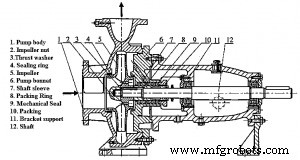
What is a 1 stage pump
Buyer’s Guide to Buying a 1 stage pump
A 1 stage pump is a type of pump that is used to inflate air mattresses, air beds, and camping tents. They are also commonly used to raise water levels in boats or other water vessels.
There are a few things to consider when buying a 1 stage pump. The first thing to consider is the size of the pump. Some pumps are smaller than others, so make sure you buy the right size for your needs.
The next thing to consider is the type of pump. There are two types of 1 stage pumps: piston and diaphragm pumps. piston pumps work by using air pressure to push the water up, while diaphragm pumps use a rubber bladder to expand and contract with the air pressure, which causes the water to rise or fall.
The final thing to consider is the features of the pump. Some pumps have features like automatic shutoff, which prevents accidents from happening, and multiple ports for connecting accessories like hoses and filters.
Conclusion
A 1 stage pump is a type of positive displacement pump that uses a single impeller to move the fluid through the system. They are used in applications where high pressures and low volumes are required, such as water pumps, oil pumps, gas compressors and refrigeration systems.
What is a 1 stage pump, please clickhttps://topkitparts.com/ to learn more
Industrial equipment
- Understanding Jockey Pumps: Essential Pressure Maintenance for Fire Sprinkler Systems
- Turbine Pumps Explained: Design, Operation, and Applications
- Understanding Hand Pumps: How They Work and Their Uses
- Understanding Discharge Pressure: Key to Pump Performance
- Understanding the Water Pump Pulley: Function, Importance, and Replacement Tips
- Understanding Multistage Pumps: Function, Uses, and Benefits
- Understanding Submersible Pumps: How They Work and Their Key Benefits
- Understanding Two-Stage Hydraulic Pumps: Function and Applications
- What Is a 3-Stage Pump? A Comprehensive Guide
- Decoding 'N' in Pump Calculations: Its Role and Significance