



Choosing the Right Steel Hook: 2‑Screw vs 4‑Screw – Which Delivers Superior Strength and Space Efficiency?
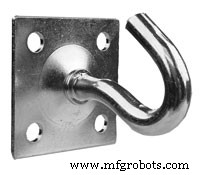
Steel hooks are a staple in warehouses, workshops, garages, and retail spaces, offering a simple yet reliable way to store tools, equipment, and everyday items. When selecting a hook, the mounting configuration—two screws or four screws—can significantly affect its performance and suitability for a given environment.
Identifying 2‑Screw and 4‑Screw Steel Hooks
Both styles are crafted from heavy‑duty steel, but they differ in the number of mounting holes. A 2‑screw hook features two vertically aligned holes, while a 4‑screw hook presents a grid of four holes. This distinction dictates the mounting method and the overall load distribution.
Weight Capacity
For heavier items, a 4‑screw hook is typically the better choice. With twice as many fasteners, the load is spread more evenly, reducing the stress on each screw and allowing the hook to support heavier weights than its 2‑screw counterpart.
Stability
Stability is closely tied to the mounting pattern. The grid layout of a 4‑screw hook provides a broader mounting surface, which enhances resistance to tipping or wobbling under load. In contrast, the two‑hole design offers less inherent stability, especially when used to hang substantial objects.
Installation
Installation is generally quicker with a 2‑screw hook. The process requires only two pilot holes and two screws, making it ideal for rapid setups or environments where time is critical. A 4‑screw hook, while more robust, demands four pilot holes and screws, extending the installation time slightly.
Wall Space and Space‑Saving Solutions
Space constraints can influence your decision. A 2‑screw hook occupies less horizontal wall area, making it suitable for tight spaces such as enclosures, small rooms, or densely packed workstations. A 4‑screw hook, though more space‑consuming, delivers the added weight capacity and stability that may be essential for industrial or high‑load applications.
Industrial equipment
- Choosing the Right EDM Machine for Your Metal Fabrication Needs
- Expert Guide to Seamless Machinery Relocation: What to Expect
- Shell Mold Casting Demystified: A 6-Step Process for Precision Casting
- Top 5 Essential Oil Rig Safety Guidelines for Protecting Workers
- Refrigerant Charging Explained: Why Proper Gas Levels Matter
- Virtual Manufacturing Explained: Enhancing Design & Production with Simulation
- Why Barcoding Is Essential for Pharmaceutical Product Integrity
- Enhance Bore Surface Tribology with Mechano-Chemical Burnishing
- Understanding Weld Joint Types: Selecting the Right Connection for Strength and Performance
- Choosing Banjo Hose Fittings: When and Why They're Essential