



Choosing Between Skid Steers and Compact Track Loaders: A Practical Guide
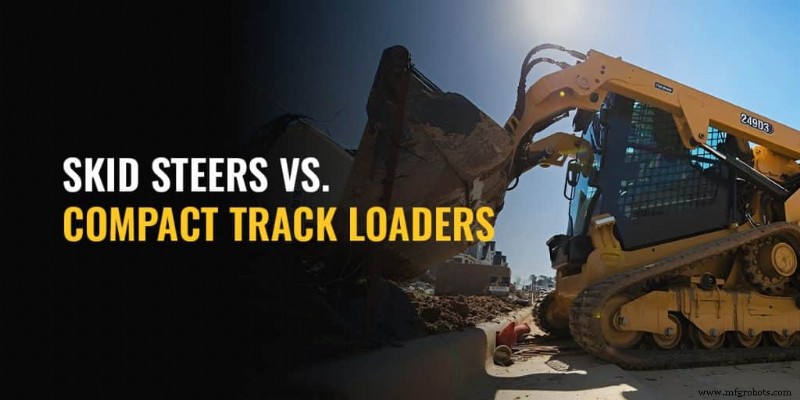
Construction sites thrive on dependable machinery that delivers speed, precision, and cost‑effective performance. Whether you need a compact, agile machine or a rugged, high‑traction workhorse, the decision between a skid steer and a compact track loader can shape your project’s success.
Both machines share a front‑mounted attachment system and a compact footprint, but their drive mechanisms—wheels versus tracks—create distinct advantages and limitations. Below, we compare key factors to help you choose the right equipment for your specific needs.
What Is a Skid Steer?
A skid steer is a wheeled compact loader that excels in maneuverability and transportability. Its four large wheels allow for tight turning radii, making it ideal for confined workspaces and hard‑surface sites. Skid steers are commonly used for loading, lifting, sweeping, trenching, and snow removal.
Wheels provide excellent traction on solid surfaces such as concrete and asphalt, while keeping maintenance costs low and operation simple. Their lightweight design translates to lower fuel consumption and faster deployment.
What Is a Compact Track Loader?
A compact track loader (CTL) replaces wheels with continuous tracks, spreading the machine’s weight across a broader area. This design delivers superior traction and reduced ground pressure, allowing the loader to operate on soft, muddy, or uneven terrain without sinking.
Tracks also offer enhanced stability during heavy lifting, though they demand more frequent maintenance and higher replacement costs compared to wheels.
Key Differences Between Skid Steers and Compact Track Loaders
While both machines share similar attachment compatibility, their movement systems influence performance across several dimensions:
1. Terrain
Skid steers are best suited for hard, even surfaces. They provide a smooth, fast ride on concrete, packed gravel, and asphalt. CTLs, on the other hand, excel on soft or unstable ground—mud, sand, loose soil—thanks to their tracks. They also maintain better traction on slopes and slippery surfaces, offering greater control on uneven terrain.
2. Speed
Skid steers, being lighter and wheel‑based, move quickly on solid ground and can pivot tightly, making them ideal for urban or indoor projects. CTLs are inherently slower due to their track weight, but this slower pace results in smoother operation and improved traction on challenging terrain.
3. Power and Stability
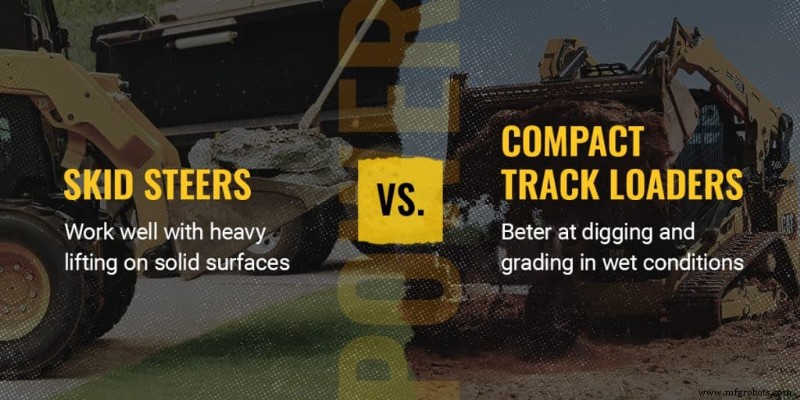
Both machines can run the same attachments, but CTLs generally deliver more pushing power and a lower center of gravity. Their heavier weight enhances traction and lifting capacity, giving them an edge in high‑load applications. Skid steers can still handle heavy lifting on solid surfaces but struggle in wet or loose conditions.
4. Cost
Skid steers typically have a lower upfront cost, simpler transport, and lower maintenance expenses. Their tires are easier to inspect and replace. CTLs require higher initial investment and incur higher maintenance, especially for track wear on hard surfaces. However, CTLs’ durability on demanding terrain often justifies the added cost.
5. Attachment Availability
Both machines accept a wide range of attachments—buckets, forks, augers, trenchers, and more. Attachment compatibility hinges on matching couplers and hydraulic flow. CTLs’ enhanced traction makes them preferable for high‑horsepower tools such as mulchers and cold planers, delivering better performance in heavy‑resistance tasks.
When to Choose a Skid Steer
Opt for a skid steer when your projects involve:
- Street repair, indoor demolition, paved area cleanup, or yard material handling.
- Dry conditions where fast, efficient movement is paramount.
- Sites requiring frequent relocation—lighter weight reduces trailer and fuel costs.
- Tasks demanding tight maneuverability and smooth handling on hard surfaces.
When to Choose a Compact Track Loader
Select a CTL for:
- Grading, site preparation, landscaping, or new construction on soft or uneven ground.
- Heavy‑duty work that benefits from superior traction and stability.
- Wet or muddy conditions where track‑based traction prevents slippage.
Explore Skid Steers and Compact Track Loaders at Blanchard Machinery Company
Blanchard Machinery Company offers a full line of new Cat® compact equipment, built for power, precision, and productivity. With over 40 years of industry expertise in South Carolina, we provide reliable advice and lasting support for all your equipment needs.
Need help deciding? Our experienced team will walk you through your options, offer approved attachments, repair and parts services, and financing plans that fit your budget. Visit your nearest Blanchard Machinery Company location and let’s get to work.
Industrial equipment
- 5 Proven Strategies to Minimize Waste in Manufacturing
- Chevalier FB-510MC Slant-Bed Lathe: Dual-Chuck, 12.5" Spindle for Precise Rough & Fine Turning
- How April Showers Affect Compressors: Prevention Tips
- The Critical Role of Condition Monitoring in Selling Used Industrial Machinery
- September 2021 Employee of the Month: Jason Evers
- Reduce Energy Bills: How to Detect and Fix Compressor Leaks
- Eliminate Microorganism Risk in Compressed Air: Proven Best Practices
- 3D Systems NextDent 5100: High‑Speed, Accurate Dental 3D Printing Solution
- Essential Equipment for Rapid Heavy Machinery Transport
- 10 Proven Ways to Cut Compressed Air Costs