



Choosing the Ideal Material for Your Handwheel: A Practical Guide
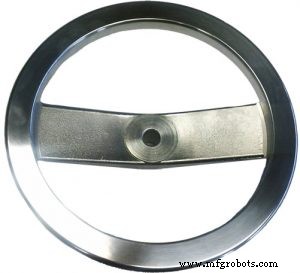
Choosing a handwheel is more than just picking a shape; it’s about selecting the right material to match your application’s demands. Handwheels—rotating wheels that are turned manually—control valves, adjust machinery, and execute precision tasks in industrial settings. Understanding each material’s strengths helps you make a decision that balances weight, durability, corrosion resistance, and cost.
Aluminum
Aluminum handwheels are prized for their lightweight construction and natural resistance to corrosion. Because aluminum does not rust—only iron and its alloys do—these wheels remain clean and functional even in damp environments. Their low mass also reduces operator fatigue during repetitive tasks.
Plastic
Plastic handwheels offer an ultra‑lightweight option that is completely impervious to rust, solvents, oils, and greases. However, pure plastic tends to be less robust than metal alternatives, making it ideal for valve control where force requirements are moderate but not for heavy‑duty machine adjustments that demand higher impact resistance.
Duroplastic
Duroplastic blends traditional plastic with reinforcing fibers such as nylon or glass. The added fibers increase tensile strength and wear resistance while maintaining the chemical stability of plastic. Duroplastic handwheels are therefore a good compromise for applications that need both durability and chemical resistance.
Stainless Steel
Stainless steel—an iron alloy with roughly 11 % chromium—forms a self‑protecting chromium‑oxide layer when exposed to air, giving it superior corrosion resistance. Beyond that, it is the strongest of the common handwheel materials, outlasting aluminum, plastic, and duroplastic in high‑force environments. Its heavier weight is offset by its longevity and reliability.
Cast Iron
Cast iron, an iron alloy containing at least 2 % carbon, delivers the greatest raw strength, surpassing even stainless steel in static load capacity. While it offers limited corrosion protection and is heavier, it remains a favorite for heavy‑duty machine adjustments where ultimate strength is paramount.
Industrial equipment
- Choosing the Right Material for Your Project: A Practical Guide
- Selecting the Perfect Abrasive for Metal Fabrication: A Practical Guide
- Selecting the Ideal Material for CNC Machining: A Practical Guide
- Selecting the Ideal Pneumatic Actuator: A Practical Guide for Reliable Automation
- Choosing the Ideal Hydraulic Power Unit: Expert Guidance for Reliable Machinery
- Choosing the Best Brake Pad Material for Optimal Performance and Safety
- Selecting the Ideal Crane for Your Construction Project: A Practical Guide
- Choosing the Right Plastic for CNC Machining Projects: A Practical Guide
- Choosing the Right Air Filter: A Practical Guide for Optimal Compressor Performance
- Selecting the Ideal Scraper System for Your Conveyor Belt: A Practical Guide